Top natural tips for quality rest: Evidence-based guidance for healthier sleep
Top natural tips for quality rest generally focus on improving sleep habits rather than relying immediately on medication. Consistent schedules, daytime movement, reduced evening stimulation, and a comfortable bedroom can support the body’s natural sleep-wake rhythm, while persistent insomnia or breathing problems during sleep require medical attention.
1. Anchor the body clock with consistent timing
Going to bed and waking at approximately the same times each day helps reinforce the circadian rhythm, the internal cycle that influences sleep and wakefulness. Health guidance commonly recommends keeping this pattern on weekends as well as weekdays because irregular timing can make it harder for the body to anticipate sleep. A stable wake time is particularly useful as a daily anchor for the sleep schedule. 1
Adults generally need at least seven hours of sleep, although sleep needs vary with age, health, lifestyle, and individual patterns. Sleep includes non-REM and REM stages, and healthy rest requires moving through the different stages rather than simply spending time in bed. Adequate sleep supports energy, learning, memory, immune function, tissue repair, and cardiovascular health. 2
2. Use daylight and activity during the day
Morning light provides an important environmental signal for the sleep-wake system. Johns Hopkins guidance identifies morning light as a practical way to help regulate the body clock, while broader sleep hygiene guidance also emphasizes managing light exposure across the day. Spending time in natural light earlier in the day can therefore support clearer separation between daytime alertness and nighttime rest. 3
Regular daytime physical activity can make it easier to sleep, but vigorous exercise close to bedtime may be disruptive for some people. Daytime movement also helps build the biological drive for sleep. Napping can reduce that drive, so short naps earlier in the afternoon are less likely to interfere with nighttime sleep than long or late naps. 4
3. Reduce evening stimulants and sleep disruptors
Caffeine can remain active for several hours, making afternoon and evening intake a potential source of delayed sleep or nighttime disruption. Guidance from the National Heart, Lung, and Blood Institute and MedlinePlus also identifies nicotine and late caffeine as factors to limit near bedtime. Checking coffee, tea, energy drinks, and other caffeinated products is a practical part of evaluating evening habits. 5
Alcohol may make falling asleep feel easier, but it can fragment sleep later in the night. Large meals and late-night fluids may also be uncomfortable for some people, while electronic devices and bright light can interfere with the transition toward sleep. A useful evening pattern is to reduce stimulating activities, dim the environment, and reserve the final part of the day for quieter routines. 6
4. Create a bedroom that supports rest
A cool, dark, quiet bedroom is consistently recommended in sleep hygiene guidance. These conditions reduce common environmental disruptions and help signal that the room is intended for sleep. A comfortable mattress and pillows also matter because discomfort can contribute to waking or difficulty settling. Noise, light, temperature, and bedding are therefore relevant practical factors when assessing sleep quality. 7
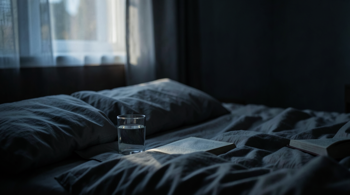
The bedroom environment should be paired with a regular wind-down routine rather than treated as a standalone solution. Reducing screen exposure before bed, keeping lights low, and choosing calm activities can help the body shift away from daytime alertness. If a bedroom remains associated with worry, work, or prolonged wakefulness, changing the pre-sleep routine may be as important as changing the physical setting. 8
5. Try food, drinks, and relaxation practices carefully
Johns Hopkins Medicine identifies warm milk, chamomile tea, and tart cherry juice as options some patients try for sleep difficulty. The same source notes that scientific evidence for these nighttime drinks is limited, although they may be reasonable choices for people seeking approaches without medication. Chamomile is caffeine-free, while tart cherry juice has been discussed in relation to melatonin production and sleep-cycle support. 9
Dietary patterns may also relate to sleep quality. The National Center for Health Research describes a Mediterranean-style pattern rich in fruits, vegetables, lean meat, olive oil, vegetable fats, and whole grains, and reports that a 2020 study of more than 400 women found 30% fewer reported sleep problems among those who followed the pattern most closely. Relaxation methods such as meditation, deep breathing, and progressive muscle relaxation may help reduce pre-sleep stress. 10
6. Recognize when natural measures are not enough
Sleep hygiene can address routines and environmental barriers, but it cannot identify every cause of poor rest. Ongoing sleep difficulty may occur alongside anxiety, depression, chronic pain, medication effects, or other health concerns. Poor sleep is associated with impaired concentration, memory problems, mood changes, daytime drowsiness, and increased risks involving obesity, type 2 diabetes, heart disease, and high blood pressure. 11
Professional evaluation is appropriate when insomnia persists or when symptoms suggest a sleep disorder. Important warning signs include loud snoring, gasping during sleep, and significant daytime sleepiness. A clinician can review symptoms, medications, routines, and possible medical causes. Sleep aids, including over-the-counter products and supplements, should not automatically be considered harmless because interactions, side effects, and suitability can vary by person. 12
Putting the habits into a practical routine
A consistent plan can combine the strongest themes across the guidance: maintain a regular wake time, obtain daytime light, exercise during the day, limit late caffeine and alcohol, reduce evening screen exposure, and keep the bedroom cool, dark, quiet, and comfortable. Relaxation practice can be added before bed if stress is a recurring barrier. These steps work by reducing common disruptions and strengthening predictable signals for sleep.
Results are not necessarily immediate, and individual responses differ. Tracking bedtime, wake time, caffeine, naps, exercise, nighttime awakenings, and daytime alertness can help reveal patterns without assuming that one remedy will solve every problem. If changes do not improve persistent symptoms, or if breathing-related signs appear, medical assessment is more appropriate than continuing to experiment independently.
Sources
- Johns Hopkins Medicine, Natural Sleep Aids: Home Remedies to Help You Sleep
- MedlinePlus, Healthy Sleep
- National Council on Aging, Best Natural Remedies for Sleep
- Healthline, Healthy Sleep Hygiene Tips
- National Heart, Lung, and Blood Institute, Sleep Deprivation
- Medical News Today, Ways to Fall Asleep Quickly and Naturally
- Sleep Foundation, How to Sleep Better
- National Center for Health Research, Natural Sleep Solutions Guide
- Johns Hopkins Medicine, Natural Sleep Aids: Home Remedies to Help You Sleep
- National Center for Complementary and Integrative Health, Relaxation Techniques for Health
- Johns Hopkins Medicine, Natural Sleep Aids: Home Remedies to Help You Sleep
- National Institute on Aging, Good Night’s Sleep
Authored by 24Trendz team