Effective ways to manage emotional eating naturally: An Evidence-Based Guide
Understanding the emotional eating cycle
Emotional eating occurs when food is used to cope with stress, anger, boredom, loneliness, sadness, fatigue, or other feelings rather than physical hunger. Common triggers include relationship conflict, work pressure, money concerns, health problems, and everyday hassles. Food may provide comfort or distraction briefly, but the underlying emotion often returns, sometimes followed by guilt or shame. The pattern can become automatic when a particular feeling repeatedly leads to a familiar snack or meal. 1
- Physical hunger usually develops gradually and can be satisfied by various foods. 2
- Emotional hunger often appears suddenly, feels urgent, and focuses on a specific food. 9
- Eating quickly or continuing beyond fullness can indicate that the behavior is serving an emotional purpose. 9
Use awareness before changing behavior
Awareness creates a decision point between an emotional trigger and eating. A food-and-mood journal can record the time, food, physical hunger, emotion, situation, and feelings afterward. Reviewing these entries may reveal patterns such as evening cravings after stressful workdays, eating during loneliness, or increased snacking after inadequate meals. The purpose is observation rather than self-criticism, because shame can intensify difficult emotions and make the cycle harder to interrupt. 6
- Ask whether hunger developed gradually or appeared suddenly.
- Identify the emotion and the unmet need, such as rest, comfort, connection, or relief.
- Notice whether the urge is linked to a specific food or to whatever food is available.
Apply a mindful pause to cravings
Mindful eating focuses attention on bodily sensations, thoughts, emotions, and the experience of eating. Before reaching for food, a pause of about 10 to 15 minutes can create time for the emotional surge to change. During that interval, slow breathing, a short walk, meditation, or another calming activity may help clarify whether food is needed for energy or being used to alter mood. A pause does not require rejecting food; it supports a more conscious choice about when, what, and how much to eat. 3
- Rate physical hunger and emotional intensity separately.
- Take several slow breaths and observe the craving without labeling it as failure.
- If eating remains the preferred choice, eat with attention and stop when comfortably satisfied.
Reduce stress with non-food coping tools
Stress can influence appetite, food choices, and cravings, while persistent stress may reinforce food as a coping mechanism. Harvard Health describes food as potentially comforting, distracting, or sedating, particularly when a person is not fully aware of the underlying emotion. Deep breathing, meditation, yoga, movement, journaling, and conversations with supportive people provide alternative responses to distress. These strategies do not remove difficult circumstances, but they can reduce reliance on eating as the primary way to regulate emotion. 3
- Use slow breathing when the urge appears during acute stress.
- Schedule regular movement as a mood-supporting activity rather than as punishment for eating.
- Contact a trusted person when loneliness or conflict is the main trigger.
Support appetite with regular nourishment and sleep
Restrictive dieting and prolonged under-eating can increase preoccupation with food and make eating feel more urgent. A consistent pattern of satisfying meals can reduce the physical deprivation that is sometimes mistaken for a lack of control. Fiber-rich foods, including vegetables and legumes, may support fullness and steadier energy. Hydration also matters because thirst can be confused with hunger. Sleep is another relevant factor: general guidance commonly recommends 7 to 9 hours for adults, and sleep affects appetite regulation through hormones associated with hunger and satiety. 2 5
| Supportive factor | Practical focus |
|---|---|
| Meal pattern | Avoid severe restriction and plan satisfying meals. |
| Food quality | Include fiber-rich vegetables and legumes. |
| Hydration | Consider water when hunger signals are unclear. |
| Sleep | Work toward a regular 7 to 9 hour sleep opportunity. |
Change the environment and habit loop
Emotional eating is often reinforced through a trigger, a behavior, and a short-term reward. For example, stress may lead to a sweet or salty food, followed by temporary relief. Repeating the sequence teaches the brain to associate the emotion with eating, which explains why willpower alone may be unreliable. Environmental changes can create useful friction, such as storing highly tempting foods less visibly, portioning food before eating, and keeping practical alternatives available. These steps are not rigid prohibitions; they reduce automatic behavior while awareness develops. 5
- Keep a record of high-risk times and situations.
- Pre-portion foods instead of eating directly from a package.
- Place calming or connecting activities within easy reach.
- Practice the pause even when the urge is mild, not only during episodes.
Know when additional support is appropriate
Natural self-management strategies may help with occasional emotional eating, but persistent or distressing patterns warrant professional assessment. Warning signs include eating that feels out of control, secretive episodes, intense shame, repeated restriction after eating, purging, or major interference with daily life. Cognitive behavioral strategies can help identify thoughts, triggers, and learned responses while developing more flexible coping skills. A qualified healthcare professional, registered dietitian, or mental health clinician can also assess anxiety, depression, sleep problems, medication effects, or other factors that may be contributing. 7 8
- Seek clinical guidance when episodes are frequent, escalating, or difficult to interrupt.
- Avoid compensatory fasting, purging, or extreme exercise after eating.
- Treat setbacks as information about triggers rather than evidence of personal failure.
What sustainable progress generally looks like
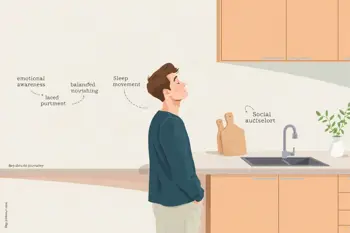
Progress is better measured by increased choice and reduced automaticity than by perfect avoidance of comfort foods. A person may still eat for celebration, connection, or occasional comfort while becoming more able to identify physical hunger, tolerate emotions, and stop at satisfaction. The central objective is to expand the number of available coping responses so food is not the only source of relief. Regular meals, adequate sleep, stress regulation, mindful pauses, and social or clinical support work together rather than functioning as isolated solutions. 2 10
- Track improvements in awareness, pauses, and recovery after difficult moments.
- Maintain flexibility instead of creating increasingly strict food rules.
- Reassess the plan when stress, sleep, health, or relationships change.
Sources
- Mayo Clinic
- Healthline
- Harvard Health Publishing
- HelpGuide
- Sleep Foundation
- Cleveland Clinic
- American Psychological Association
- Eating Disorder Hope
- Dietitian Şeyda Ertaş
- LIT Wellness Solutions
Authored by 24Trendz team