Best sciatica treatment options United States: A reporting-based guide to evidence-backed care choices and when escalation is needed
Sciatica is pain caused by irritation or compression of the sciatic nerve, felt in the lower back, butt and leg, and most people recover with stretching, medication, or physical therapy, while severe cases may need surgery. 1 The treatments described below reflect that stepwise model, grounded in US clinical references and complementary, non-surgical options that are commonly used before invasive care. 1
What sciatica is, and why treatment depends on the cause
Sciatica describes nerve pain caused by irritation or compression of the sciatic nerve, and symptoms can include pain plus numbness or tingling that may radiate down the leg. 1 Harvard Health notes that sciatica results when the sciatic nerve is compressed or injured, with common drivers including inflammation, bony enlargement due to arthritis, or a displaced (herniated) disc in the lower spine. 2
In practice, many treatment plans start by identifying whether the pain is coming from a spinal nerve root compression versus sciatica-like conditions that feel similar but have other causes. 1 This matters because the best fit among options such as exercise-based physical therapy, medications, injections, or surgery often depends on the specific underlying structure and the severity and duration of symptoms. 1
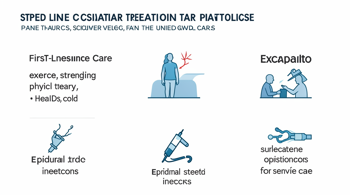
First-line options in the United States: movement, physical therapy, and basic symptom control
Most people recover without surgery, and the most commonly cited first-line approach is conservative care that emphasizes stretching and physical therapy. 1 Cleveland Clinic similarly frames recovery around stretching, medication, or physical therapy for most cases, with surgery reserved for severe cases. 1
Physical therapy is also described as a central tool for sciatica management because it can reduce nerve-related pain and improve function, often combining mobility work with strengthening and posture or movement retraining. 3 One conservative, practical expectation is that many cases improve within weeks rather than months, with NINDS describing recovery trajectories where most sciatica improves with conservative treatment without surgery. 4
- Structured exercise and physical therapy, including stretching and strengthening, are emphasized as core elements of conservative sciatica care. 3
- Over-the-counter NSAIDs such as ibuprofen or naproxen are commonly used to manage mild to moderate pain and inflammation in sciatica. 5
- Heat and cold are commonly used for temporary symptom relief, with cold often used for acute phases and heat used for muscle relaxation during recovery. 6
Medications and risk tradeoffs: what they can do and why they are usually paired
Medication strategies for sciatica typically aim to reduce pain and inflammation while the underlying nerve irritation is addressed through activity and therapy. 5 Along with NSAIDs, prescription options described in general medical education include muscle relaxants and neuropathic pain agents such as gabapentin for nerve-related symptoms. 78
Because sciatica is nerve pain that can include tingling, numbness, or weakness, medication choice is often constrained by symptom pattern and tolerance rather than treating the term “sciatica” itself. 2 This is also where conservative care remains important: medications may help reduce symptoms enough to allow mobility work and physical therapy participation, which are commonly treated as long-term protective steps. 3
When medication is not enough
Cleveland Clinic describes escalation pathways when conservative measures are insufficient, with epidural steroid injections providing temporary relief for many people. 9 In other words, medication alone is often treated as part of a layered approach, not the sole driver of recovery. 9
Other references also frame the overall hierarchy as progressive rather than one-size-fits-all, where the goal is to reduce nerve irritation, restore function, and prevent symptoms from becoming chronic. 10
Interventional care: epidural steroid injections and related procedures
Epidural steroid injections are commonly used when conservative care does not provide adequate relief, with Cleveland Clinic noting that injections deliver corticosteroids to the affected area and can provide meaningful, temporary pain reduction for many patients. 9 This approach targets inflammation around nerve structures rather than relying only on systemic pain medication. 9
Clinical decision-making often hinges on symptom duration and severity, including whether leg pain remains intense or function remains significantly limited after initial conservative steps. 10 In evidence summaries for sciatica care patterns, injections are also positioned as one of the intermediate options before surgery. 11
| Step in typical care pathway | Common goal | Example interventions referenced in sources |
|---|---|---|
| Conservative first-line | Improve function and calm nerve irritation | Stretching, physical therapy, OTC NSAIDs, heat or cold 156 |
| Interventional escalation | Reduce inflammatory pain at the nerve root region | Epidural steroid injections 9 |
| Surgical consideration (selected cases) | Address severe or persistent nerve compression | Procedures such as microdiscectomy or laminectomy for severe cases 12 |
Surgery and advanced options: when escalation may be justified
Surgery for sciatica is generally reserved, and Cleveland Clinic frames severe cases as the scenario where surgery may be needed after other approaches. 1 NINDS describes that most sciatica improves with conservative management without requiring surgery, with only a minority of patients proceeding to operative care. 4
When surgery is considered, the underlying driver often matters, such as a herniated disc or spinal stenosis producing severe persistent symptoms or neurologic deficits. 12 Johns Hopkins Medicine describes surgical decompression options in that context, including procedures such as laminectomy or microdiscectomy when significant nerve compression is present. 12
Eligibility criteria and friction points
Eligibility for escalation is not based on pain alone because sciatica is a symptom description, not a single diagnosis. 1 Clinicians often evaluate whether serious neurologic deficits, progressive symptoms, or red-flag concerns are present before selecting imaging or moving beyond conservative treatment. 13
Another friction point is that diagnostic clarity can affect treatment selection: some sciatica-like syndromes mimic nerve pain patterns but originate from different nearby nerve sources or musculoskeletal contributors. 1 That is one reason stepwise escalation is typically guided by symptom pattern, exam findings, and the suspected anatomic source. 10
Complementary approaches and what to expect from non-surgical add-ons
Complementary options are commonly used alongside conventional care, but the evidence and expected role can vary by modality. 14 Penn Medicine notes that acupuncture and chiropractic are used by some patients as complementary approaches alongside other sciatica treatments. 14
Some educational summaries describe chiropractic spinal manipulation as producing clinically meaningful improvement in a substantial fraction of cases, but these figures are often reported in patient education contexts rather than as a universal guarantee. 15 The practical risk management point is that complementary care is not a substitute for appropriate medical evaluation when symptoms include severe neurologic changes or red-flag features. 1513
Activity modification and self-care within conservative care
Beyond formal therapy visits, self-care steps such as posture correction and ergonomic modifications are described as part of reducing sciatica nerve strain during daily activities. 16 This is consistent with the general conservative concept that movement and controlled loading are favored over prolonged rest. 17
Cold or heat can also be used as temporary symptom relief while recovery progresses, supporting sleep and function enough to participate in more restorative activity. 6 These self-management tools are best viewed as supportive measures rather than definitive treatments for the underlying compressive cause of nerve pain. 1
A structured decision framework for patients and clinicians in the US
A useful way to compare sciatica treatment options is to view care as progressive and matched to severity, with the goal of restoring function rather than only reducing pain. 10 Many approaches begin with exercise-based physical therapy and symptom control, then escalate to injections, and only selected cases proceed to surgery based on persistent severe symptoms or significant deficits. 112
VA/DoD low back pain guidance summaries also emphasize structured clinician-directed exercise for patients and advise imaging when neurologic deficits are progressive or other red flags are present, while recommending against routine imaging for acute cases without focal neurologic deficits or red flags. 13 While sciatica is more specific than generic low back pain, these principles often influence when clinicians escalate evaluation and treatment. 13
When conservative care is appropriate, the expectation described in multiple references is improvement within weeks for many people, and conservative care is often treated as sufficient without surgery for the majority of cases. 41 When symptoms do not improve as expected, escalation aims to identify and treat the specific nerve irritation driver, not to repeat the same low-yield step. 10
Sources
- https://my.clevelandclinic.org/health/diseases/12792-sciatica
- https://www.health.harvard.edu/pain/sciatica-a-to-z
- https://www.mangiarellirehabilitation.com/blog/sciatica-how-physical-therapy-can-help
- https://www.ninds.nih.gov/health-information/disorders/sciatica
- https://www.mayoclinic.org/diseases-conditions/sciatica/diagnosis-treatment/drc-20377220
- https://orthoinfo.aaos.org/en/diseases--conditions/sciatica
- https://medlineplus.gov/sciatica.html
- https://www.healthline.com/health/sciatica
- https://my.clevelandclinic.org/health/diseases/12804-sciatica
- https://www.microspinemd.com/2026/07/06/best-treatments-for-sciatica/
- https://www.psadocs.com/how-to-treat-sciatica-without-surgery/
- https://www.hopkinsmedicine.org/health/conditions-and-diseases/sciatica
- https://reference.medscape.com/cc2/p10/guideline-low-back-pain-2026a1000807
- https://www.pennmedicine.org/for-patients-and-visitors/patient-information/conditions-treated-a-to-z/sciatica
- https://medximity.com/blog/chiropractor-for-sciatica-how-chiropractic-care-treats-sciatic-nerve-pain
- https://www.acatoday.org/patients/health-wellness-information/back-pain-and-sciatica
- https://acibademinternational.com/how-modern-medicine-is-changing-sciatica-treatment-for-american-patients/
Authored by 24Trendz team