Finding appropriate specialty care by state: A research-based navigation guide
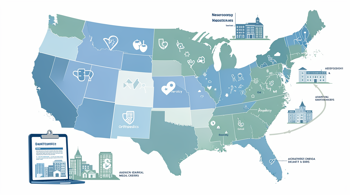
Finding appropriate specialty care by state involves more than locating a physician nearby. State-level specialty counts, shortage-area data, provider directories, credentials, hospital quality measures, insurance participation, referral pathways, and telehealth rules all affect whether care is accessible and suitable.
Understanding specialty availability by state
The number and distribution of professionally active specialists differs across fields and states. KFF State Health Facts organizes physician information by specialty area, providing a framework for comparing fields such as cardiology, neurology, psychiatry, gastroenterology, oncology, and orthopedics rather than treating the entire physician workforce as one category. State totals should be interpreted as a starting point because they do not necessarily show appointment capacity, clinical focus, geographic distribution, or whether a doctor accepts a particular insurance plan.1
National provider counts also require careful interpretation. One NPI-based analysis reported 9,190,202 healthcare providers across the 50 states and the District of Columbia, with California listed at 1,160,606, New York at 650,496, Florida at 641,903, Texas at 595,898, and Ohio at 400,785. Those figures cover healthcare providers broadly, not only specialty physicians, so they cannot by themselves establish access to a specific service or diagnosis.2
Using shortage-area information
The Health Resources and Services Administration provides an online tool for identifying Health Professional Shortage Areas by state and specialty. HPSA information can help explain why a rural county, remote community, or particular service area may have fewer specialists and longer travel requirements. It is a population-level access indicator, however, not a guarantee that an individual patient will obtain an appointment, receive a referral, or find a clinician who participates in a particular plan.3
Shortage information is most useful when combined with location and care-complexity questions. A patient seeking routine follow-up may have different geographic options from someone needing a rare procedure, pediatric expertise, advanced surgery, or multidisciplinary treatment. The Abdominal Cancers Association notes that complex CRS and HIPEC care may justify consultations in other metropolitan areas or nearby states, and that second or third opinions can be important when treatment candidacy is disputed.3
Checking insurance and provider directory details
Medicare Care Compare is the federal resource identified for searching doctors, clinicians, and hospitals by specialty and location. Insurance status still requires separate verification because a provider appearing in a public directory may not be accepting new patients or participating in a specific plan at the time of inquiry. Patients should distinguish a clinician’s specialty from the exact procedure, condition, age group, and facility privileges relevant to the referral.4
Provider directories maintained by health plans are subject to network-adequacy and data-maintenance expectations, but directory information can change. CMS guidance addresses provider-network data and the availability of directories for insurance plans. Practical verification includes confirming the exact plan name, network tier, office location, referral or authorization rules, hospital affiliation, and whether the specialist is currently scheduling the required service.5
Verifying credentials and regulatory history
The American Board of Medical Specialties’ Certification Matters portal is designed to verify board certification in recognized specialties. Certification can clarify whether a physician has completed the relevant specialty pathway, but it does not independently measure communication quality, appointment availability, outcomes for every procedure, or compatibility with a patient’s needs. Credential review should therefore be treated as one part of a broader comparison process.6
State medical boards provide searchable information about physician licensure and disciplinary history, and the Federation of State Medical Boards maintains links to state-level boards. A credential review should confirm the physician’s license status in the state where care will occur, the listed specialty, practice details, and any publicly reported regulatory actions. Records may not answer every clinical question, so diagnosis-specific expertise and institutional experience require additional verification.7
Considering referral routes and complex-care centers
Community health centers can help patients who lack an established specialty-care pathway by facilitating referrals and serving populations that may face financial or geographic barriers. The National Association of Community Health Centers provides a directory for locating these facilities. The directory identifies community health-center access points, but the receiving specialist, insurance arrangement, wait time, and referral requirements must still be confirmed independently.8
Academic medical centers often function as regional hubs for highly complex specialty care and maintain their own referral systems. The Association of American Medical Colleges provides resources related to academic medical centers, which may offer subspecialty teams, multidisciplinary evaluation, clinical research, or advanced procedures. These institutions may be located outside a patient’s state, and their intake processes can require medical records, imaging, pathology, referrals, or insurance authorization.9
Evaluating hospitals, telehealth, and travel options
Hospital selection should account for more than proximity. Healthgrades reports state-level specialty rankings covering more than 30 eligible states and 18 critical service areas, while Mayo Clinic’s HealthLocator describes comparisons using national quality, patient safety, infection, and patient-experience measures for more than 5,000 hospitals. These tools use different methodologies, so ratings should be read as comparative information rather than a universal ranking of every specialist or treatment outcome.10
Telehealth may expand access when local specialists are scarce, but regulations vary by state and cross-state care depends on licensure and the provider’s authorization to treat the patient’s location. Some specialty-care directories also identify telehealth clinics by state when local services are not found. Travel and virtual consultations can introduce friction involving records transfer, follow-up examinations, prescriptions, testing, emergency coverage, and coordination between clinicians, making continuity questions important before care is arranged.3
Sources
- KFF State Health Facts, Professionally Active Specialist Physicians by Field
- NPIScan, Healthcare Providers by State
- Health Resources and Services Administration, Shortage Area Data
- Medicare.gov, Care Compare
- Centers for Medicare & Medicaid Services, Provider Network Data
- ABMS Certification Matters
- Federation of State Medical Boards, State Medical Boards
- National Association of Community Health Centers, Find a Health Center
- Association of American Medical Colleges
- Healthgrades and Mayo Clinic HealthLocator
Authored by 24Trendz team