Warning signs of kidney stones: A clinical guide to symptoms and red flags
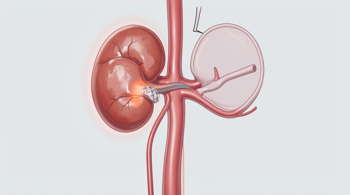
Warning signs of kidney stones include sharp pain, changes in urine, urinary difficulty, nausea, vomiting, fever, and chills. Symptoms may begin when a stone leaves the kidney and enters the ureter, where blockage can produce severe pain or interfere with urine flow. Small stones may pass with little or no discomfort, while a trapped stone can cause bleeding, obstruction, or infection. 1
Sharp pain in the back, side, or abdomen
The most recognizable warning sign is sharp pain in the back, side, lower abdomen, or groin. Pain commonly begins below the ribs and may move as the stone travels through the urinary tract. A stone that remains in the kidney may cause few symptoms, but movement into the narrow ureter can obstruct urine flow and trigger intense discomfort. 1 2
Kidney stone pain can last briefly, persist for an extended period, or come and go in waves. The location may shift from the flank toward the lower abdomen or groin as the stone advances. Obstruction is an important reason pain can become severe, because urine cannot pass normally through the affected section of the urinary tract. 2 3
Painful or difficult urination
Burning or pain during urination is another possible sign, particularly when a stone has moved lower in the urinary tract. A person may also feel a constant or frequent need to urinate. These symptoms can overlap with a urinary tract infection, so they do not establish that a stone is the cause without clinical assessment. 1 4
A larger or lodged stone can restrict the flow of urine. Warning signs of significant blockage include being unable to urinate or producing only a small amount of urine. The combination of urinary difficulty and severe pain is more concerning than mild, temporary discomfort and warrants prompt evaluation because obstruction can contribute to further complications. 1 3
Blood or unusual changes in urine
Kidney stones can scrape or irritate the walls of the urinary tract, causing blood in the urine, a condition known as hematuria. The urine may appear pink, red, or brown, although the amount of blood is not necessarily related to the intensity of pain. Visible blood should be assessed because several urinary conditions can produce the same finding. 1 5
Cloudy or bad-smelling urine is also listed among possible kidney stone symptoms. These changes may be associated with urinary irritation, infection, or both. Urine appearance alone cannot identify the size, location, or type of stone, and it cannot reliably distinguish a stone from other urinary conditions. Laboratory testing and imaging may be used by clinicians to clarify the cause. 1 4
Nausea and vomiting with pain
Nausea and vomiting frequently accompany intense kidney stone pain. These symptoms can occur as part of the body’s response to acute obstruction and severe renal colic. They may appear alongside flank or abdominal pain rather than as an isolated warning sign. The presence of vomiting can make it difficult to maintain normal fluid intake while symptoms continue. 1 3
Persistent vomiting is particularly important because it can prevent a person from drinking and keeping down fluids. Cedars-Sinai identifies uncontrollable pain accompanied by persistent vomiting as a reason for emergency assessment. Vomiting does not prove that a stone is present, but when it occurs with severe, wave-like pain, urinary changes, or reduced urine output, the combination requires medical attention. 3
Fever, chills, and possible infection
Fever and chills can signal an infection occurring alongside a kidney stone. A blocked urinary system can create a serious situation when infection is present because urine cannot drain normally. NIDDK lists fever and chills among symptoms associated with kidney stones and advises professional assessment for kidney stone symptoms, particularly when these signs occur with pain or urinary changes. 1 6
Fever, chills, uncontrolled pain, persistent vomiting, or inability to urinate are red flags rather than routine signs to monitor casually. Cedars-Sinai also identifies a single kidney or another serious medical condition as a reason for emergency evaluation when kidney stone symptoms occur. These circumstances can increase the consequences of obstruction and infection, making timely clinical judgment important. 3
How symptoms vary by stone size and movement
Not every kidney stone causes warning signs. Stones may be as small as grains of sand or as large as a pea, and small stones can pass through the urinary tract with little or no pain. Larger stones are more likely to become stuck and block urine flow, although symptom severity cannot be determined reliably from pain alone. 2 5
Kidney stones form when high levels of minerals and other substances crystallize in urine. Calcium, oxalate, and phosphorus are among the substances associated with stone formation, while low fluid intake is a major risk factor. Penn Medicine notes that stones are more likely when urine production falls below 1 liter, or 32 ounces, per day. 1 4
When symptoms need professional assessment
Severe pain or bleeding should be evaluated by a health care professional because a trapped stone may block urine and lead to additional problems. Assessment can help determine whether the symptoms result from a stone, infection, or another condition. A urologist or other clinician may evaluate pain, urinary function, and evidence of obstruction before selecting appropriate treatment. 5
Emergency evaluation is especially relevant when pain cannot be controlled, urine cannot be passed, or fever, chills, or persistent vomiting accompany suspected stone symptoms. People with a single kidney or a serious underlying medical condition also face higher stakes if urine flow is obstructed. Symptoms can overlap with other illnesses, so diagnosis should not rely on pain location or urine appearance alone. 3 6
Sources
- National Institute of Diabetes and Digestive and Kidney Diseases, Symptoms & Causes of Kidney Stones
- Harvard Health Publishing, Kidney Stones
- Cedars-Sinai, Kidney Stones: What Are the Signs and When to Seek Treatment?
- Penn Medicine, Kidney Stones
- National Institute of Diabetes and Digestive and Kidney Diseases, Definition & Facts for Kidney Stones
- NCBI Bookshelf, Endotext: Nephrolithiasis and Kidney Stone Emergencies
Authored by 24Trendz team