Best hospitals for Physical Medicine: A Data-Based Guide to Rehabilitation Care
People researching the best hospitals for Physical Medicine are generally comparing rehabilitation centers that restore mobility, independence, and daily function after illness, injury, surgery, or neurological events. The available evidence includes national rankings, specialty programs, accreditation, patient-experience measures, and the clinical populations each center serves.
How leading physical medicine programs are evaluated
Physical medicine and rehabilitation, commonly called PM&R, combines physician-directed care with therapies intended to improve function rather than treat only an isolated symptom. Montefiore Einstein describes a multidisciplinary model using nonsurgical diagnostic and treatment approaches across the lifespan, with goals including mobility, independence, and participation at home, work, and in the community. 1
Recognition systems measure different aspects of performance. Newsweek and Statista’s rehabilitation designation considers professional recommendations, accreditation information, quality measures, and patient experience, while U.S. News evaluates hospitals using measures such as risk-adjusted mortality, preventable complications, and nursing care. These distinctions are useful comparison points, but they do not establish that one facility is appropriate for every diagnosis. 3 10 11
Hospitals with notable reported rehabilitation distinctions
Several facilities in the supplied data have received specific national or regional recognition. Rancho Los Amigos National Rehabilitation Center was reported as No. 23 nationally, No. 2 in the Los Angeles metropolitan area, and No. 3 in California in the 2026-2027 U.S. News rehabilitation rankings. Santa Clara Valley Medical Center’s Rehabilitation Center was reported as eighth nationally and as the leading rehabilitation hospital in California and the West Coast in a 2026 report. 4 10
Other reported distinctions include Montefiore Einstein’s Burke Rehabilitation Hospital ranking in the top 1% of U.S. hospitals for rehabilitation, according to the organization’s cited U.S. News description, and Cleveland Clinic’s Avon rehabilitation program ranking No. 29 nationally in its 2026-2027 announcement. Atlantic Rehabilitation Institute was ranked first in the Northeast region on Newsweek’s 2025 list of America’s Best Physical Rehabilitation Centers. 1 7 6
| Facility | Reported distinction or scope |
|---|---|
| Rancho Los Amigos | No. 23 nationally; No. 2 in Los Angeles; No. 3 in California |
| Santa Clara Valley Medical Center | No. 8 nationally in the cited 2026 report |
| Burke Rehabilitation Hospital | Top 1% of U.S. hospitals for rehabilitation, according to Montefiore Einstein |
| Atlantic Rehabilitation Institute | First in the Northeast region on Newsweek’s 2025 list |
Programs for neurological and complex conditions
Specialty fit is central when comparing rehabilitation hospitals. Orlando Health Advanced Rehabilitation Institute lists dedicated programs for amputation, brain injury, spinal cord injury, and stroke, and reports more than 35 years of brain injury experience. Atlantic Rehabilitation Institute identifies neurological rehabilitation, stroke, brain injury, spinal cord injury, and amputation as core areas, with technology that includes bionic-assisted movement systems and a daily-living activities suite. 2 6
Nationally recognized specialist centers also cover distinct clinical needs. Shirley Ryan AbilityLab provides adult and pediatric inpatient and outpatient rehabilitation, while Craig Hospital focuses on spinal cord injury and traumatic brain injury. Shepherd Center lists spinal cord injury, brain injury, multiple sclerosis, and related neurological conditions, and TIRR Memorial Hermann describes programs for brain injury, spinal cord injury, stroke, amputation, and other disabling conditions. 12 15 16 17
Academic and multidisciplinary PM&R care
Academic medical systems may be relevant when rehabilitation requires diagnostic evaluation, subspecialty consultation, or coordinated care across several disciplines. Penn Medicine lists amputee, cancer, neurorehabilitation, pain, pelvic-floor, and electrodiagnostic services, including electromyography and nerve-conduction studies for nerve and muscle conditions. Its PM&R department also describes inpatient and outpatient care delivered by subspecialty-trained physiatrists. 5
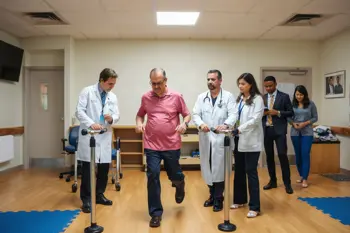
Mayo Clinic describes PM&R as care designed to restore function and improve quality of life after injury, illness, or disability. Cleveland Clinic reports PM&R services for neurological, musculoskeletal, and other conditions affecting movement and function, while Johns Hopkins describes multidisciplinary services for disability, injury recovery, and chronic medical conditions. Stanford’s program combines clinical care, education, and research for musculoskeletal and neurological disorders. 18 7 19 20
Accreditation, outcomes, and operational measures
Accreditation can provide an external framework for evaluating rehabilitation processes. Montefiore Einstein reports that its PM&R programs received a three-year designation from the Commission on Accreditation of Rehabilitation Facilities, known as CARF. Orlando Health’s institute also identifies CARF accreditation as part of its national recognition for rehabilitation care. Accreditation should be considered alongside clinical outcomes, staffing, equipment, and the hospital’s experience with the relevant diagnosis. 1 2
Grand Strand Medical Center was reported among the top 10% of 892 inpatient rehabilitation facilities evaluated by Netsmart for cases discharged between October 2024 and September 2025, marking six consecutive years of that recognition. The evaluation used a case-mix-adjusted and severity-adjusted Program Evaluation Model drawing on data from more than 80% of inpatient rehabilitation facilities. The model included efficiency and effectiveness indicators from the IRF-PAI framework used in Medicare’s inpatient rehabilitation payment and quality programs. 8
Practical limitations when comparing hospitals
Rankings and awards have important limits. A national position may combine outcomes, reputation, accreditation, and patient experience, but it does not show whether a hospital has capacity for a particular patient, accepts a specific referral, or provides the required level of inpatient, outpatient, pediatric, or community-based therapy. Program eligibility and admission decisions vary by facility, diagnosis, medical stability, functional needs, and treatment setting, so published recognition is not a substitute for clinical assessment. 3 11
Geography and continuity also create practical friction. A highly specialized center may be distant from family caregivers or follow-up clinicians, while a regional hospital may offer easier coordination after discharge. Patients and referring professionals can compare the relevant diagnosis programs, physician and therapy disciplines, CARF status, inpatient versus outpatient services, assistive technology, caregiver education, and long-term follow-up. Sheikh Khalifa Medical City, for example, describes adult and pediatric services spanning neurological, musculoskeletal, cardiopulmonary, pain, prosthetics, physiotherapy, occupational therapy, and speech and language therapy. 9
How to interpret the available evidence
The strongest comparison uses several evidence categories rather than a single ranking. A facility’s relevance depends first on whether it treats the condition involved, followed by the setting required, the availability of coordinated therapies, and the transparency of quality information. Public hospitals may also be important access points: Bellevue’s cited Newsweek recognition emphasizes rehabilitation care for serious injuries, illnesses, and neurological conditions, along with a longstanding public-hospital role. 3
Overall, the supplied research identifies a broad field rather than one universal winner. Rancho Los Amigos and Santa Clara Valley have prominent reported U.S. News results; Burke, Atlantic, Cleveland Clinic Avon, Orlando Health, and Grand Strand have documented distinctions or program measures; and Shirley Ryan AbilityLab, Spaulding, Kessler, Craig, Shepherd, TIRR, Mayo Clinic, Penn Medicine, Johns Hopkins, and Stanford represent major specialty or academic rehabilitation providers. The appropriate comparison remains diagnosis-specific and setting-specific. 4 10 1 6 7 8 12 13 14 15 16 17 18 19 20
Sources
- Montefiore Einstein, Physical Medicine & Rehabilitation
- Orlando Health, Advanced Rehab Institute
- NYC Health + Hospitals/Bellevue, Newsweek 2026 recognition
- County of Los Angeles, LA Health Services hospital honors
- Penn Medicine, Physical Medicine and Rehab
- Atlantic Health, Atlantic Rehabilitation Institute 2025 recognition
- Cleveland Clinic, 2026-2027 Best Hospitals announcement
- Grand Strand Medical Center, Netsmart inpatient rehabilitation recognition
- Sheikh Khalifa Medical City, Physical Medicine & Rehabilitation Institute
- San Jose Inside, Santa Clara Valley Medical Center report
- U.S. News & World Report, Rehabilitation rankings
- Shirley Ryan AbilityLab
- Spaulding Rehabilitation
- Kessler Institute for Rehabilitation
- Craig Hospital
- Shepherd Center
- TIRR Memorial Hermann
- Mayo Clinic, Physical Medicine and Rehabilitation
- Johns Hopkins Medicine, Physical Medicine and Rehabilitation
- Stanford Medicine, PM&R
Authored by 24Trendz team