Best hospitals for deep brain stimulation: Clinical standards and patient considerations
Deep brain stimulation (DBS) represents a sophisticated neurosurgical intervention used to manage movement disorders such as Parkinson’s disease, essential tremor, and dystonia 2. Rather than a cure, DBS acts as a method to regulate abnormal brain activity through the surgical implantation of electrodes and a pulse generator 4. Identifying a suitable medical facility requires an understanding of multidisciplinary integration, as successful outcomes depend on the collaboration between neurologists, neurosurgeons, and neuropsychologists 7. This article examines the clinical ecosystem, geographic variations in treatment availability, and the fundamental criteria used to evaluate candidates for these procedures.
Clinical Infrastructure and Program Integration
High-performing DBS programs are defined by their ability to provide comprehensive, integrated care throughout the patient’s journey. A primary indicator of an effective program is a multidisciplinary team approach that includes neurologists, neurosurgeons, and neuropsychiatric professionals who conduct rigorous pre-operative screenings 7. Such screenings are critical because DBS is not suitable for every patient; candidacy is generally determined by factors such as diagnosis, the patient's cognitive status, overall health, and a documented response to medication 11. Centers of excellence often employ standardized protocols for these evaluations to ensure that only eligible patients proceed to surgery.
Technical infrastructure is another pillar of a qualified DBS center. Successful implantation relies on advanced neuroimaging, including high-resolution MRI fusion, and specialized surgical techniques like intraoperative microelectrode recording (MER) to ensure precise electrode placement 3. Following the physical surgery, long-term postoperative care is essential. This includes repeated programming visits to calibrate the pulse generator and optimize electrical parameters, which helps in managing symptoms while minimizing potential side effects 5. Patients should prioritize facilities that provide a clear pathway for this ongoing, lifelong device management 11.
Global Market Dynamics and Treatment Hubs
The landscape for DBS surgery has expanded globally, with specific regions emerging as high-volume centers due to advancements in medical technology and expert training. India, for example, has become a prominent destination for DBS, performing a large volume of these surgeries annually using modern technology such as robot-assisted targeting and rechargeable pulse generators 3. Research indicates that Indian institutions frequently utilize internationally trained surgeons, many of whom have completed fellowships at renowned clinical centers in the United States and Europe 3.
For international patients, these hubs often provide end-to-end coordination services, including medical visa assistance, airport transfers, and localized logistical support 3. The cost structure in these regions differs significantly from Western standards, often influenced by the type of device used and the specific case complexity 1. Regardless of location, prospective patients are advised to provide comprehensive medical reports for a case-specific review by a neurosurgeon before confirming a treatment plan, as the final recommendation always depends on individual patient data 1.
Evaluating Surgical Candidacy and Expectations
Understanding the limitations and realistic outcomes of DBS is vital for any prospective patient. While the procedure can provide significant relief for medication-resistant motor symptoms, it does not stop the progression of underlying conditions like Parkinson’s disease 1. Data suggests that well-selected, levodopa-responsive patients might experience approximately 30% to 60% improvement in motor scores when medication is in the off-state, though individual results vary significantly 1. Setting accurate expectations is a foundational component of the initial consultation process.
Beyond motor symptoms, surgical candidacy involves an assessment of the patient’s psychological health and social support systems. Because the device requires ongoing adjustments and maintenance, patients must have the ability to commit to long-term follow-up visits 11. Facilities often assign a dedicated coordinator to help patients navigate these requirements, ensuring that the scheduling of neuroimaging, neuropsychiatric testing, and surgical consultation is handled efficiently 7. This administrative support is as essential to the patient’s success as the surgical precision of the operating team.
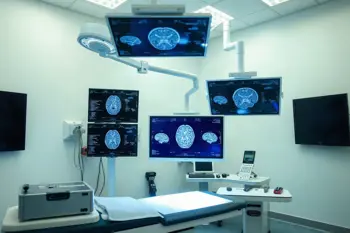
The Role of Advanced Neuromodulation Technology
Modern DBS involves the use of sophisticated hardware, including implantable pulse generators (IPGs) that function similarly to cardiac pacemakers. These devices, located under the collarbone, send continuous or adaptive electrical pulses through extension wires to the electrodes placed in deep brain nuclei, such as the subthalamic nucleus or the globus pallidus internus 2. The evolution of these systems now allows for directional leads and rechargeable battery options, which may extend the time between replacements and offer more refined stimulation control 3.
When researching potential hospitals, it is useful to confirm that the institution keeps pace with these technological developments. Facilities that perform a high volume of DBS surgeries are more likely to have regular access to the latest generation of hardware and the specialized training required to program them effectively 3. However, technology remains only one part of the equation. The clinical skill required to select the correct anatomical target and perform the implantation with minimal invasiveness remains the most critical variable in determining patient outcomes 5.
Logistical Considerations for Patients
Traveling for complex neurosurgery involves significant logistical planning. For patients seeking care in centers far from home, the duration of stay can range from two to three weeks, though medically complex cases may require longer durations to ensure stable recovery and initial programming 1. Many institutions now bundle these logistical needs, offering proximity to hospital-adjacent housing or facilitating local transport to reduce the burden on patients and their attendants 1.
| Metric | General Clinical Expectation |
|---|---|
| Average Hospital Stay | 2 to 5 nights post-procedure |
| Recovery Timeline | 4 to 8 weeks |
| Common Duration of Stay | 14 to 21 days for international cases |
| Device Lifespan | Determined by model; rechargeable options available |
Safety and regulatory standards are paramount during these transitions. Accredited facilities, such as those holding JCI or NABH certification, follow strict infection control and surgical safety protocols that are comparable across top-tier international and domestic hospitals 1. Before selecting a provider, patients should verify that the hospital’s DBS program has a proven track record, demonstrated by a significant number of successful procedures and a transparent process for patient review and follow-up care 1.
Summary of Selection Criteria
Choosing a hospital for deep brain stimulation should be treated as a strategic decision based on verifiable institutional metrics rather than casual recommendations. Key indicators of quality include:
- Evidence of a dedicated multidisciplinary movement disorders team.
- Transparency regarding patient selection protocols, including exclusion criteria.
- Access to the latest neuroimaging and surgical navigation technologies.
- A structured plan for lifelong device programming and monitoring.
- Documentation of surgical volume and specific experience in the patient’s condition.
By focusing on these operational and clinical benchmarks, patients can better assess whether a specific institution aligns with their long-term health objectives. Regardless of the choice, the success of DBS is fundamentally tied to the quality of the post-operative management, making the ongoing relationship with the clinical team the most important factor in sustaining improvements in quality of life 5.
Sources
- https://afiyaindia.com/en/best-hospitals-in-india-for-deep-brain-stimulation
- https://www.pennmedicine.org/treatments/deep-brain-stimulation
- https://shifamhealth.com/best-hospitals-dbs-surgery-india/
- https://www.arodya.com/blog/deep-brain-stimulation-parkinsons-india-2026
- https://montefioreeinsteinadvancedcare.org/services/comprehensive-brain-health-center/movement-disorders
- https://www.neurosurgeryone.com/deep-brain-stimulation/
- https://physicians.dukehealth.org/articles/multidisciplinary-team-develops-collaborative-program-deep-brain-stimulation
- https://acibademinternational.com/treatments/deep-brain-stimulation-parkinson/
- https://neurologicalsurgery.in/treatment/deep-brain-stimulation-dbs/deep-brain-stimulation-dbs-surgery-in-mumbai-dr-paresh-doshi/
- https://doi.org/10.1007/s00702-026-03106-2
- https://www.ninds.nih.gov/health-information/disorders/deep-brain-stimulation
Authored by 24Trendz team