Ways to manage sciatica pain at home: Clinical guidance for daily self-care
Ways to manage sciatica pain at home generally focus on gentle movement, stretching, posture changes, and ice or heat therapy. These measures may help mild symptoms, while severe, worsening, or persistent pain requires assessment by a healthcare professional. 2
Understand what sciatica symptoms mean
Sciatica describes pain caused by irritation, inflammation, or compression involving the sciatic nerve or its roots. Symptoms may begin in the lower back and travel through the buttock and leg, sometimes reaching the foot and toes. Pain can feel sharp, shooting, burning, dull, or aching, and may occur with tingling, numbness, or weakness. A herniated disk is a common cause, while spinal narrowing, a slipped spinal bone, muscle spasm, or injury can also produce sciatica-like symptoms. 4
Home care is most appropriate when symptoms are mild and there are no warning signs. Many people improve without surgery, often over a period of weeks, but the recovery pattern varies according to the underlying cause. A healthcare professional may assess muscle strength, reflexes, walking ability, and leg movement. Severe pain or symptoms that fail to improve over several weeks may lead to imaging or nerve testing. 1
Keep moving without provoking symptoms
Prolonged bed rest is generally not favored for uncomplicated sciatica because staying still can increase stiffness and reduce activity. A few days of reduced activity may be reasonable during a painful flare, but gradual movement is usually encouraged as tolerated. Short, easy walks around the home can maintain mobility, provided they do not intensify leg pain, numbness, or weakness. Movement should be adjusted according to symptoms rather than forced through sharp or radiating pain. 3
Daily activity can be divided into manageable periods to avoid long stretches of sitting or lying down. Changing position regularly may reduce the mechanical stress associated with remaining in one posture. Activities that clearly worsen symptoms, including heavy lifting or repeated bending when those movements are aggravating, should be paused while the flare settles. A gradual return to normal routines is preferable to a sudden increase in exercise or household work. 2
Use stretching and therapeutic exercise carefully
Gentle stretching may improve flexibility around the hips and legs, including the piriformis and hamstring areas. Examples described in home-care guidance include gentle hip stretches, figure-four or piriformis positions, and movements intended to improve range of motion. The purpose is controlled mobility, not forcing the nerve or spine into a painful position. Because sciatica has different causes, an exercise that helps one person may aggravate another. 5
Exercise should stop if it produces sharp, shooting, or progressively worsening nerve pain. Once acute pain improves, a physical therapist or other healthcare professional can design a program addressing posture, core strength, and range of motion. Core and glute strengthening can support the spine and reduce strain during ordinary movement, but strengthening is generally introduced progressively rather than during the most painful stage. 1
Try cold or heat for symptom relief
Cold packs and heat therapy are commonly used at home to ease discomfort. Cold may feel helpful when pain is newly irritated, while heat can soothe tight muscles and make gentle movement more comfortable. A person can compare the response to each approach and use the option that provides relief without worsening symptoms. These measures address comfort and muscle tension, but they do not establish the cause of nerve irritation or replace evaluation when symptoms persist. 2
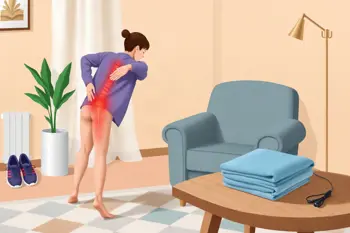
Heat and cold should be applied cautiously and should not be used in a way that causes skin injury. They can be combined with comfortable positioning and brief periods of movement rather than used as a reason to remain inactive. If pain continues despite these measures, becomes more intense, or interferes substantially with walking, sleep, or ordinary activities, clinical advice is appropriate. 2
Improve sitting, sleeping, and posture habits
Posture changes can reduce aggravating loads during daily activities. Sitting with suitable lower-back support, keeping the spine in a comfortable aligned position, and avoiding prolonged static sitting may help limit irritation. An ergonomic chair or lumbar-support pillow is one possible household adjustment. The useful position is the one that reduces symptoms without causing new leg pain, numbness, or weakness. 5
Sleeping positions can also be modified for comfort, although no single position works for everyone. Regularly changing position during the day and supporting the lower back in a comfortable posture may make movement easier. Lifting, twisting, or reaching should be performed cautiously during a flare. These adjustments are practical symptom-management strategies, while persistent or recurrent episodes may require a structured physical-therapy plan. 1
Consider medicines and longer-term prevention
Anti-inflammatory medicines are among the medication categories that may be used for sciatica pain, but suitability depends on a person’s health history, other medicines, and the specific product instructions. Professional guidance is important before using medication, particularly when pain is recurring or self-care is not working. Other prescription categories, including corticosteroids, certain antidepressants, anti-seizure medicines, or opioids, may be considered by clinicians in selected circumstances rather than treated as routine home remedies. 1
Longer-term management emphasizes correcting posture, improving core strength, increasing range of motion, and maintaining consistent activity after symptoms improve. Weight management may reduce mechanical load on the spine for some people, although it is not an immediate treatment for an acute flare. A sustainable routine is more appropriate than aggressive stretching or sudden exercise increases. Physical therapy can help match exercises to the likely cause and functional limitations. 5
Know when home care is not enough
Professional assessment is warranted when pain is severe, worsening, persistent, or not improving after several weeks of self-care. New or increasing weakness deserves particular attention because sciatica can affect muscle function as well as sensation. A clinician may use a physical examination first and consider X-ray, MRI, CT, or electromyography when symptoms are severe or do not improve. The choice of testing depends on the clinical findings and suspected cause. 1
Home strategies should not delay evaluation of symptoms that suggest a more serious problem. Relevant concerns include significant weakness, substantial numbness, or pain that increasingly limits walking and everyday function. Sciatica-like symptoms can have causes other than direct sciatic-nerve irritation, so self-diagnosis is uncertain. When symptoms are persistent or atypical, clinical evaluation helps distinguish uncomplicated nerve irritation from conditions requiring different treatment. 4
Sources
- Mayo Clinic, “Sciatica: Diagnosis and treatment,” https://www.mayoclinic.org/diseases-conditions/sciatica/diagnosis-treatment/drc-20377441
- Ascension, “Sciatica self-care: How to relieve low back and leg pain at home,” https://healthcare.ascension.org/blog/2026/08/at-home-sciatica-treatment
- Harvard Health Publishing, “How to get relief from sciatica,” https://www.health.harvard.edu/pain/how-to-get-relief-from-sciatica
- Cleveland Clinic, “Sciatica: What It Is, Causes, Symptoms, Treatment & Pain Relief,” https://my.clevelandclinic.org/health/diseases/12792-sciatica
- University of Maryland Medical System, “Managing Sciatica: Daily Habits to Find Pain Relief,” https://health.umms.org/pain-management/managing-sciatica-daily-habits-to-find-pain-relief/
Authored by 24Trendz team