Best hospitals for Trauma Care: A Data-Based Guide to Level I Centers and Regional Expertise
The phrase “Best hospitals for Trauma Care” generally points to hospitals equipped to manage severe, time-sensitive injuries rather than facilities judged by a single national ranking. The available evidence emphasizes trauma-center verification, specialist coverage, pediatric capability, regional referral roles, and the speed with which a patient can reach appropriate care.
How trauma-center levels shape comparisons
Level I trauma centers provide the most comprehensive category of trauma services, including round-the-clock specialist coverage, advanced surgery, intensive care, education, research, and injury-prevention activity. The American College of Surgeons Committee on Trauma evaluates centers against established standards through its verification and consultation program, making current designation an important comparison point. 1
A Level I designation does not mean every hospital is equally suitable for every injury. Patients and families may need to distinguish adult from pediatric capability, assess burn and rehabilitation resources, and determine whether a hospital functions as a regional referral center. Trauma systems may also route patients past a closer facility when a higher-level center is needed for the injury. 1 14
Leading regional trauma hospitals in the research
Several major hospitals are identified as Level I or comprehensive trauma resources in the supplied research. Harborview Medical Center is Washington’s only Level I adult and pediatric trauma center and serves as a referral center for the Pacific Northwest. The R Adams Cowley Shock Trauma Center at the University of Maryland Medical Center is a dedicated trauma hospital and regional resource for critically injured patients. 3 4
Other prominent regional programs include Jackson Memorial Hospital’s Ryder Trauma Center in Miami, Grady Memorial Hospital in Atlanta, Parkland Memorial Hospital in Dallas, Denver Health Medical Center, UPMC’s trauma system, and Vanderbilt University Medical Center. The research describes these programs as serving broad referral areas, including South Florida and the Caribbean, Georgia, North Texas, Colorado, Pennsylvania, and Tennessee. 5 6 7 8 9 10
Dedicated and long-established trauma models
The University of Maryland’s Shock Trauma Center represents a dedicated trauma-hospital model, while other Level I programs operate inside large academic medical centers. Dedicated facilities can organize emergency surgery, critical care, rehabilitation, research, and trauma education around injured patients. The research characterizes Shock Trauma as a nationally recognized model for organized trauma care and a referral resource for severe injuries. 4
Cedars-Sinai has maintained Level I adult trauma-center designation since 1984 and is described as one of only four Level I adult trauma centers serving Los Angeles County. Its account of four decades of care identifies advances in imaging, minimally invasive procedures, and more selective decisions about when surgery is necessary. Long-term designation indicates sustained system readiness, but it should not be interpreted as a universal performance ranking. 15
Adult, pediatric, and complex-injury capability
Trauma care requirements differ substantially by patient age and injury pattern. UVA Health University Medical Center has been verified as a Level I trauma center four times since 2015 and reports comprehensive adult and pediatric services, including trauma surgery, surgical critical care, neurosurgery, orthopedics, heart and chest, vascular, skull and face, plastic, and hand specialties. 17
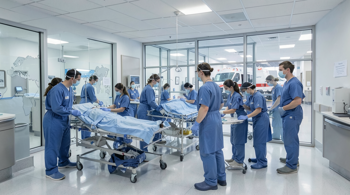
Bellevue Hospital in New York is identified in the supplied reporting as a Level I adult trauma center and Level II pediatric trauma center. The report states that Bellevue’s emergency department saw more than 100,000 adult patients in 2025, with 1,986 adults admitted for trauma care, and describes its pediatric program as a specially trained multidisciplinary service. These figures illustrate why volume and pediatric designation can matter when evaluating capability. 19
Additional verified and specialized programs
Penn Medicine operates designated Level I trauma centers at Penn Presbyterian Medical Center in Philadelphia and Lancaster General Hospital in Lancaster. The system describes trauma surgeons, critical-care specialists, and rehabilitation experts working across specialties for traumatic brain, spinal, bone and joint, and chest-wall injuries. Transfers to specialized Penn facilities must be arranged by the patient’s doctor or care team. 13
Additional examples demonstrate the range of trauma systems. OU Health University of Oklahoma Medical Center is described as Oklahoma’s statewide Level I hub for patients of all ages, while UofL Hospital has received ACS re-verification as a Level I center. McLaren Lapeer Region is the Thumb area’s only ACS-verified Level II center and reported zero deficiencies during its verification review. 14 18 20
What patients and communities should verify
The most useful comparison is injury-specific and location-specific. A hospital’s current ACS status, adult or pediatric scope, specialist availability, burn capacity, helicopter and ground-transport relationships, operating-room access, intensive-care resources, and rehabilitation pathway can affect suitability. NYU Langone and Maimonides, for example, describe specialized emergency, surgical, and critical-care services for severe or complex injuries in New York. 11 12
Proximity remains a central practical constraint because serious trauma can deteriorate during transport. OU Health describes a statewide network involving paramedics, ambulance services, and hospitals that directs critically injured patients to the appropriate trauma center, sometimes bypassing a nearer facility. UNM Sandoval Regional Medical Center illustrates the role of a Level III center, which provides prompt assessment, management, and general surgery before transfer when higher-level care is required. 14 22
Oversight, limitations, and realistic expectations
Trauma-center verification is regulatory and professional oversight, not a guarantee of an identical outcome for every patient. The ACS process evaluates institutional capability and performance against defined criteria, while hospitals must maintain staffing, equipment, protocols, education, and quality-improvement systems over time. Designations can change, and published hospital descriptions may not reflect the most recent review, service configuration, or transfer policy. 1
Care also extends beyond the first operation. Penn Medicine describes follow-up and rehabilitation involving trauma surgeons, critical-care specialists, and rehabilitation experts, while FV Hospital describes 24-hour multidisciplinary management involving emergency medicine, radiology, orthopedics, general surgery, neurology, cardiology, and maxillofacial surgery. These examples show that evaluating trauma care requires attention to recovery, not only emergency-department arrival or surgical capacity. 13 21
Sources
- American College of Surgeons, Trauma Center Verification, Review, and Consultation Program
- UW Medicine, Harborview Medical Center Trauma Center
- University of Maryland Medical Center, R Adams Cowley Shock Trauma Center
- Jackson Health System, Ryder Trauma Center
- Grady Health System, Trauma Center
- Parkland Health, Trauma Services
- Denver Health, Trauma Program
- UPMC, Trauma Services
- Vanderbilt University Medical Center, Trauma Program
- NYU Langone Health, Trauma Center
- Maimonides Health, Trauma Center
- Penn Medicine, Trauma Care and Emergency Surgery
- OU Health, Trauma and Injury Care
- Cedars-Sinai, Advancements Over 40 Years of Trauma Care
- UVA Health Department of Surgery, Level I Trauma Center Recognition
- UofL Health, Level I Trauma Center Re-Verification
- NYC Health + Hospitals/Bellevue trauma-center reporting
- McLaren Lapeer Region, Level II Trauma Center
- FV Hospital, Trauma Centre
- UNM Sandoval Regional Medical Center, Specialized Trauma Care
Authored by 24Trendz team