Train tours along the Grand Canyon Railway: An Analysis of Historical Transit and Regional Logistics
Historical Evolution of the Grand Canyon Railway
The Grand Canyon Railway stands as a prominent example of American heritage infrastructure, having provided passenger service to the South Rim of the Grand Canyon since 1901 4. Originally conceptualized by Buckey O’Neill, a local prospector and sheriff, the line was designed to replace arduous stagecoach travel with a more efficient rail link for tourists arriving from the Atchison, Topeka and Santa Fe Railway mainline 5. While the route originally served industrial purposes for transporting ore from northern mines, its capacity for tourism proved significantly more lucrative as interest in the national park grew 3. Although regular service was suspended in 1968 due to the rise of personal automobile travel, the line was successfully revitalized in 1989 and has since operated as a major tourist attraction 3.
Operational Logistics and Daily Scheduling
The excursion currently operates on a daily schedule, departing from the historic Williams Depot, which was originally constructed in 1908 2. The transit covers approximately 65 miles of track, traversing diverse ecological zones including ponderosa pine forests, plateau prairies, and high desert landscapes 4. The transit time for a one-way trip is approximately two hours and fifteen minutes, allowing for a structured day trip experience 2. Standard train departures from Williams typically occur at 9:30 a.m., with arrival at the Grand Canyon Village occurring by 11:45 a.m., followed by a return trip departing at 3:30 p.m. 2.
Service Classes and Onboard Experience
The railway maintains a diverse fleet of restored vintage cars, offering passengers a range of experiences from standard to premium service levels 1. The selection of service classes is structured to accommodate varying traveler preferences, with six primary tiers currently available 3. This hierarchy typically includes the following configurations:
- Pullman Class: Features 1923-era open-window cars with bench seating for a historically authentic experience 3.
- Coach Class: Utilizes 1950s streamliner cars equipped with climate control and standard windows 3.
- First Class: Provides passengers with reclining seating, complimentary snacks, and dedicated bar access 3.
- Observation Dome: Offers elevated, panoramic views through glass-topped carriages 3.
- Luxury Parlor/Dome: Represents the highest service tier with premium seating, open bars, and age-restricted access policies 3.
Motive Power and Heritage Maintenance
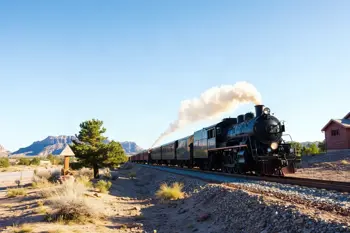
The railway employs different types of motive power depending on the season and specific event scheduling. While daily service is predominantly conducted by EMD F40PH diesel locomotives and vintage FPA-4 units, the organization periodically operates historic steam locomotives to maintain the heritage character of the route 4. Notably, steam locomotive No. 4960 has been utilized for these special excursions and is notable for operating on recycled waste vegetable oil 4. These efforts to maintain operational steam engines underscore the organization’s commitment to preserving the mechanical history of 20th-century rail travel 5.
Regional Impact and Accessibility
Beyond its historical significance, the Grand Canyon Railway provides a logistical alternative to personal vehicle transit within the Grand Canyon National Park. By utilizing rail, travelers effectively avoid the challenges of highway congestion and parking limitations at the South Rim, which often experience high pressure during peak tourism months 2. The depot in Williams acts as a primary hub for this activity, where amenities such as the Grand Canyon Railway Hotel are available to facilitate multi-day stays for visitors 8. The integration of these facilities enables a streamlined arrival process directly at the Grand Canyon Village, located within walking distance of the canyon rim 2.
Market Considerations and Booking Guidelines
As a popular tourist destination, the railway experiences significant demand, particularly during summer months and holiday periods 3. Industry analysts suggest that prospective travelers should secure reservations in advance to guarantee seat availability 9. The pricing of these trips typically includes the necessary National Park Service entrance fees, simplifying the transaction process for passengers 8. When researching potential travel dates, it is recommended that travelers evaluate the availability of comprehensive vacation packages, which often bundle hotel lodging, train tickets, and regional guided tours to provide a cohesive experience rather than purchasing individual components separately 8.
Sources
- The Train: Grand Canyon Railway & Hotel, https://www.thetrain.com
- Trailborn Grand Canyon: Grand Canyon Railway Guide, https://www.trailborn.com/grand-canyon/blog/grand-canyon-railway-guide/
- DayTrippen: Grand Canyon Railway Day Trip, https://www.daytrippen.com/grand-canyon-railway-day-trip-arizona/
- Spotatrain: Grand Canyon Railway Epic Journey, https://www.spotatrain.com/journeys/grand-canyon-railway/
- Xanterra Travel Collection: The Revival of America’s Great Rail Journey, https://www.xanterra.com/stories/great-rail-journey/
- Roadtrippers: The Grand Canyon Railway Details, https://maps.roadtrippers.com/us/williams-az/nature/the-grand-canyon-railway
- World Tourism: Grand Canyon Railway Ticket Information, https://www.world-tourism.org/from-williams-grand-canyon-railway-round-trip-train-ticket/
- Tourist Tube: Grand Canyon Railway Train Tickets, https://www.touristtube.com/grand-canyon-railway-train-tickets/
- Lonely Planet: Travel Planning and Regional Transit, https://www.lonelyplanet.com
Authored by 24Trendz team