Early Symptoms of Polycystic Ovary Syndrome: Clinical Signs, Timing, and Diagnostic Context
What Early PCOS Symptoms Can Mean
Early symptoms of polycystic ovary syndrome, commonly called PCOS, often involve the menstrual cycle, skin, hair, weight regulation, or fertility. The condition is defined clinically by a combination of ovulatory dysfunction, excess androgen activity, and polycystic ovarian morphology, with two of these three findings generally used in diagnosis after other causes are excluded. Not every person has every feature, and ovarian cysts are not required. 1
Symptoms may begin during the teenage years or early adulthood, although normal puberty can resemble PCOS. Adolescent diagnostic guidance emphasizes that a firm diagnosis in teenagers should involve persistent menstrual irregularity together with clear evidence of hyperandrogenism, rather than relying on one isolated symptom. A single feature may indicate increased risk and justify follow-up without confirming the syndrome. 2
Menstrual Changes and Ovulation
Irregular, infrequent, or absent periods are among the most important early signs. Cycles may become unpredictable, occur less often, or reflect infrequent ovulation. Some people instead experience prolonged or unusually heavy bleeding after a period of absent ovulation. Because cycle patterns can vary during adolescence, clinicians assess persistence, timing, pregnancy possibility, medication use, thyroid conditions, and other potential explanations. 4
Ovulatory dysfunction can affect fertility because an egg may not be released regularly. Difficulty conceiving is therefore often recognized later, when pregnancy is being planned, rather than at the beginning of the condition. Fertility difficulty does not prove PCOS, and regular periods do not completely exclude it, so menstrual history is interpreted alongside androgen-related signs, laboratory findings, and other clinical information. 8
Skin and Hair Changes
Excess androgen activity may produce hirsutism, meaning coarse, dark hair growth on areas such as the chin, upper lip, chest, abdomen, or back. Persistent acne, oily skin, or acne that does not improve with routine care can also occur, particularly when androgen activity affects oil glands. These signs are suggestive rather than conclusive because genetics, medications, and other hormone conditions can produce similar changes. 5
Scalp hair thinning may appear as a widening part, reduced density, or a receding hairline. This androgen-related pattern can occur alongside facial hair or acne, but symptoms vary substantially between individuals. A person may have one androgen-related feature without having PCOS, and a person with PCOS may have few visible skin or hair changes. Clinical evaluation is needed to distinguish gradual PCOS-related changes from other causes of hair loss. 6
Weight, Insulin Resistance, and Skin Darkening
Weight gain or difficulty losing weight is frequently associated with PCOS, particularly when extra weight is carried around the abdomen. However, body size cannot be used to rule PCOS in or out. The syndrome can occur in people with a range of body types, and weight changes may reflect several influences, including insulin resistance, sleep problems, medications, and other endocrine conditions. 1
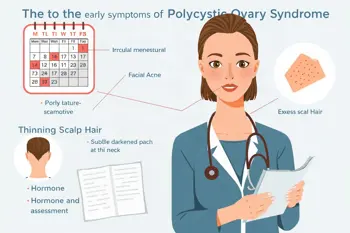
Acanthosis nigricans is a possible visible sign of insulin resistance. It appears as darker, thicker, or velvety skin, often in body folds such as the neck, armpits, or groin. Insulin resistance may also be associated with metabolic risks including type 2 diabetes, abnormal cholesterol, hypertension, fatty liver, and sleep apnea. These risks explain why PCOS assessment extends beyond reproductive symptoms. 7
Fatigue, Mood, and Other Associated Features
Fatigue and low energy are commonly reported during clinical evaluation, although they are not specific diagnostic criteria for PCOS. Possible contributors include metabolic changes, sleep disruption, mood symptoms, anemia, thyroid disease, or the effects of irregular bleeding. Persistent fatigue therefore warrants a broader medical assessment rather than being attributed to PCOS without testing. 10
Anxiety and depression occur at increased rates among people with PCOS and may develop alongside concerns about acne, hair growth, fertility, weight, or unpredictable bleeding. Sleep apnea is another recognized associated problem, particularly when weight and hormonal factors coexist. These features can affect quality of life, but neither mood symptoms nor fatigue alone establishes a PCOS diagnosis. 9
How Clinicians Evaluate Early Symptoms
Evaluation usually begins with a detailed history of cycle length, missed periods, bleeding patterns, acne, hair growth, scalp changes, weight trends, medications, family history, and fertility goals. Examination may assess androgen-related hair growth, acne, scalp hair distribution, blood pressure, body weight, and signs of insulin resistance. Blood tests can evaluate hormones and metabolic health, while pelvic ultrasound may assess ovarian morphology. 1
Diagnosis requires exclusion of conditions that can resemble PCOS, including thyroid disorders, elevated prolactin, and other hormonal causes. An ultrasound showing multiple small follicles does not by itself prove PCOS, and some people with PCOS do not have polycystic-appearing ovaries. The appropriate interpretation depends on age, reproductive stage, symptoms, laboratory results, and the persistence of the pattern over time. 2
When Medical Review Is Appropriate
Medical review is appropriate when periods become persistently irregular, disappear, become unusually heavy, or occur with new acne, excess hair growth, scalp thinning, unexplained weight changes, or difficulty conceiving. Early assessment can identify alternative explanations and provide monitoring for metabolic risks. A symptom checklist and record of cycle dates can help make the clinical history more precise, but self-assessment cannot confirm PCOS. 4
Urgent evaluation is warranted for severe bleeding, fainting, severe pelvic pain, or signs of sudden virilization such as rapidly progressing coarse hair growth or marked voice change, because these findings may indicate another condition requiring prompt investigation. PCOS is manageable, but care is individualized according to symptoms, metabolic profile, pregnancy plans, contraindications, and personal preferences. 1
Sources
- MSD Manual Professional Edition, Polyendocrine Metabolic Ovarian Syndrome
- The Journal of Clinical Endocrinology & Metabolism, Approach to the Diagnosis and Treatment of Polycystic Ovarian Syndrome in Adolescent Patients
- Mayo Clinic, Polycystic Ovary Syndrome Symptoms and Causes
- Office on Women’s Health, Polycystic Ovary Syndrome
- Johns Hopkins Medicine, Polycystic Ovary Syndrome
- Cleveland Clinic, Polycystic Ovary Syndrome
- National Health Service, Polycystic Ovary Syndrome Symptoms
- Medical News Today, Polycystic Ovary Syndrome and Fatigue
- Endocrine Society, Polycystic Ovary Syndrome
- Verywell Health, PCOS Symptoms and Sleep Apnea
Authored by 24Trendz team