Ways to manage psoriasis itching at home: An evidence-informed guide to daily relief
Ways to manage psoriasis itching at home generally focus on calming inflammation, protecting the skin barrier, and reducing behaviors that intensify irritation. Self-care may bring relief and help prevent flares from worsening, but it does not cure psoriasis, which commonly returns even after successful treatment. 1
Start with lukewarm, gentle bathing
Short showers or baths with warm rather than hot water can reduce the drying and irritation associated with bathing. The National Psoriasis Foundation identifies lukewarm bathing, colloidal oatmeal, bath oils, and carefully used Epsom salts as options that may soothe itchy skin and help loosen scales. Skin should be patted dry instead of scrubbed, because friction and injury can aggravate plaques. 3
- Keep showers brief, with some dermatology guidance suggesting roughly five to 10 minutes.
- Choose a gentle, hydrating cleanser instead of harsh soap.
- Avoid rubbing scales off with a towel, brush, or abrasive cloth.
Moisturize immediately after bathing
Thick, fragrance-free moisturizers and emollients are central to at-home itch management because they reduce dryness and support the skin barrier. Applying moisturizer while the skin is still damp helps retain water. The American Academy of Dermatology recommends moisturizing promptly after bathing, while additional applications may be useful when weather or indoor heating makes the skin especially dry. 4
- Use heavier creams or ointments when dryness is pronounced.
- Apply hand cream after washing the hands.
- Replace products that sting, burn, or contain irritating fragrance.
Use cooling methods instead of scratching
A cold compress or an ice pack wrapped in cloth can temporarily numb the skin and reduce the urge to scratch. Scratching can injure plaques and may worsen psoriasis through the Koebner phenomenon, in which skin trauma contributes to new or aggravated lesions. Cooling is therefore a short-term comfort measure, not a treatment for the underlying immune-mediated condition. 5
- Use a cloth barrier between ice and skin.
- Apply cooling briefly and stop if numbness or pain develops.
- Keep fingernails short to limit damage during involuntary scratching.
Reduce dryness in the home environment
Cold weather, low humidity, and indoor heating can dry the skin and intensify itch. A household humidifier may help maintain moisture in the air, particularly during winter or in rooms where heating is used frequently. Humidifiers require regular cleaning according to the manufacturer’s instructions, since an unmaintained device can create additional indoor-air concerns. 6
- Pair humidified air with regular moisturizing rather than treating it as a substitute.
- Notice whether heat, sweating, or outdoor exposure worsens symptoms.
- Keep clothing loose and breathable to reduce friction and heat buildup.
Consider selected over-the-counter ingredients carefully
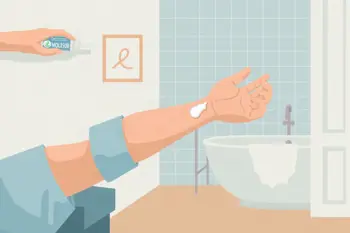
For mild symptoms, over-the-counter products may provide limited assistance, but the appropriate ingredient depends on the location, thickness, and extent of the plaques. Hydrocortisone may reduce inflammation in some situations, while salicylic acid can soften and remove scales and improve penetration of other treatments. Stronger corticosteroids, prolonged use, sensitive areas, and widespread disease require clinician-directed guidance because overuse can cause skin complications. 2 7
- Follow the product label and avoid applying products to areas not listed.
- Ask a clinician before treating the face, skin folds, genitals, or large areas.
- Patch-test unfamiliar products, especially botanical or scalp preparations.
Identify and limit personal triggers
Psoriasis flares can be associated with skin injuries, certain medications, alcohol, sugary foods, stress, infections, cold weather, and dry air. Triggers vary, so a simple record of products used, illnesses, stress, sleep, weather, and flare timing may help identify patterns. Avoiding a suspected trigger should not involve stopping a prescribed medicine without medical advice, because medication changes require professional review. 1 8
- Use fragrance-free soaps, moisturizers, and laundry products when irritation is suspected.
- Avoid smoking and moderate alcohol if either appears linked to flares.
- Protect skin from cuts, burns, sunburn, and aggressive exfoliation.
Address stress and sleep disruption
Stress is commonly reported as a psoriasis trigger and can create a cycle in which itching disrupts sleep, poor sleep increases distress, and distress makes symptoms harder to manage. Meditation, yoga, and slow deep breathing are practical home techniques described for stress reduction. These approaches support coping and may help manage flare-related discomfort, but they should be viewed as complementary measures rather than replacements for psoriasis therapy. 9
- Use a brief breathing or relaxation routine when the urge to scratch rises.
- Keep the bedroom comfortably cool if heat worsens itching.
- Discuss persistent insomnia or substantial emotional distress with a healthcare professional.
Use caution with natural and sunlight-based approaches
Aloe vera gel may provide a cooling sensation and reduce redness or itching for some people, but natural products can irritate or trigger allergy. A small patch test is advised before broader use, and a doctor should be consulted before trying new home remedies. Limited sunlight may improve symptoms for some people because certain ultraviolet rays slow rapid skin-cell growth, but sunburn can worsen psoriasis and medical phototherapy is more controlled. 1 10
- Stop any product that causes burning, swelling, or a new rash.
- Do not treat sun exposure as equivalent to supervised phototherapy.
- Use sunscreen and avoid intentional exposure that leads to redness or burning.
Know when home care is not enough
Home measures are most appropriate as support for an established treatment plan, especially when symptoms are mild. Persistent, severe, painful, widespread, or sleep-disrupting itching may indicate that treatment needs adjustment. Psoriasis can affect the scalp and nails and may be associated with psoriatic arthritis, so new joint pain, swelling, or stiffness warrants medical assessment. Diagnosis may also require examination and sometimes a biopsy to rule out other disorders. 2
- Seek advice if plaques crack, bleed, ooze, or show signs of infection.
- Ask about prescription topical therapy, phototherapy, or systemic treatment when self-care is inadequate.
- Continue prescribed treatment as directed and report irritation or lack of response.
Sources
- GoodRx, 12 Psoriasis Self-Care Tips for Your At-Home Skin Care Routine
- Mayo Clinic, Psoriasis: Diagnosis and treatment
- National Psoriasis Foundation, Bathing
- American Academy of Dermatology, Moisturize
- Mayo Clinic, Psoriasis treatment guidance on symptom relief
- WebMD, Psoriasis itch relief
- Cleveland Clinic, Psoriasis and salicylic acid
- Peach Dermatology, How to Soothe Psoriasis Itching
- Everyday Health, Tips to manage psoriasis itch
- Prevention, Psoriasis natural remedies
Authored by 24Trendz team