Early symptoms of sleep apnea you should know: Clinical signs and screening context
Why early recognition matters
Early symptoms of sleep apnea you should know include disrupted breathing during sleep, daytime fatigue, morning headaches, and difficulty concentrating. Obstructive sleep apnea occurs when throat muscles and tissues relax enough to partially or completely block the airway, interrupting normal breathing repeatedly through the night. The American Medical Association reports that an estimated 30 million people in the United States experience interrupted breathing during sleep, while only about 6 million have received a diagnosis, leaving approximately 80% unaware of the condition. 1
Sleep apnea can develop gradually rather than appearing as a sudden illness. An AMA report notes that some people begin experiencing obstructive sleep apnea after gaining a relatively small amount of weight, with breathing interruptions initially occurring several times per night. A normal apnea-hypopnea index is five or fewer events per hour of sleep, while higher levels indicate more frequent airway collapse or partial collapse. 1 Symptoms may therefore be easy to attribute to stress, aging, or a demanding schedule.
Nighttime breathing warning signs
Loud, habitual snoring is a widely recognized warning sign, particularly when it is interrupted by pauses, choking, gasping, or a sudden resumption of breathing. A bed partner may notice these events before the affected person does. The National Heart, Lung, and Blood Institute and Mayo Clinic both identify loud snoring, witnessed breathing pauses, gasping, and choking as symptoms that warrant medical discussion. 3 4
Other nighttime clues include restless sleep, repeated awakenings, and difficulty staying asleep. Some people wake with a sensation of choking or with an awareness that breathing has stopped. Frequent nighttime urination and insomnia-like symptoms can also occur in the broader pattern of sleep disruption. These signs are not specific to sleep apnea by themselves, but their combination with snoring, gasping, or daytime impairment increases the reason to seek an evaluation. 4 7
Daytime symptoms that are easy to dismiss
Repeated breathing interruptions fragment sleep and can produce excessive daytime sleepiness, fatigue, and unintended dozing during routine activities. The American Academy of Sleep Medicine lists daytime sleepiness among symptoms that can indicate sleep apnea, while Johns Hopkins Medicine also identifies fatigue and headaches as possible effects. 5 6 Daytime sleepiness may develop gradually, so a person may not connect it with poor breathing at night.
Attention and mood can change as sleep becomes less restorative. Difficulty concentrating, memory problems, slower thinking, irritability, anxiety, or depressive symptoms may accompany fragmented sleep. Cleveland Clinic identifies fatigue, headaches, mood changes, and concentration problems among possible signs, while the American Lung Association includes mood and cognitive difficulties in its symptom guidance. 2 9 These effects can interfere with work, school, driving, and ordinary decision-making.
Physical clues after waking
Morning headaches are another symptom associated with sleep-related breathing problems. Changes in oxygen and carbon dioxide during repeated breathing interruptions may contribute to headaches that are present on waking and improve later in the day. The NHLBI, Mayo Clinic, MedlinePlus, and AASM all include morning headaches in their descriptions of possible sleep apnea symptoms. 3 4 7 5
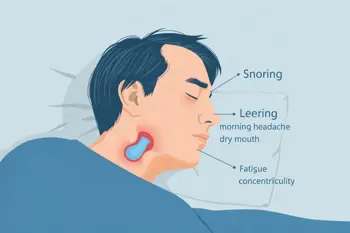
Dry mouth or a sore throat on waking can also provide a clue, particularly when it occurs regularly. Mouth breathing may happen when the upper airway is narrowed during sleep. These symptoms can have many other causes, so they do not establish a diagnosis. Their significance is greater when they occur alongside snoring, witnessed pauses, gasping, restless sleep, or persistent daytime tiredness. 3 4
Sleep apnea without loud snoring
Quiet sleep does not rule out obstructive sleep apnea. Cleveland Clinic reports that fewer than 50% of obstructive sleep apnea cases present without audible snoring, meaning some people have no snoring or only light, intermittent snoring. 2 This is especially relevant for people who sleep alone, because they may not hear breathing pauses or recognize abnormal nighttime sounds.
When snoring is absent or unnoticed, daytime clues become particularly important. Persistent fatigue despite adequate time in bed, morning headaches, dry mouth, insomnia-like awakenings, irritability, and concentration problems can still justify clinical assessment. Wearable devices may record breathing rate, oxygen levels, movement, or sleep disruptions, and some newer Apple Watch models include a feature intended to flag possible sleep apnea. Such notifications are screening signals, not a formal diagnosis. 10
Differences in children and adults
Children may not show the same pattern as adults. Research summaries identify snoring, mouth breathing, bed-wetting, attention problems, hyperactivity, and poor school performance as possible signs of pediatric sleep apnea. Excessive daytime sleepiness may be less obvious in children, while behavioral or academic changes may attract attention first. 8 Persistent symptoms should be assessed in the context of the child’s overall health and sleep pattern.
Adults may also have symptoms that are overlooked or attributed to another condition. A report from the American Medical Association notes that women over 50 are more likely to have symptoms dismissed or misdiagnosed when they do not fit the stereotypical pattern of loud snoring. Insomnia, fatigue, morning headaches, mood changes, and weight gain may be more prominent than obvious snoring or gasping in some women. 1 Symptoms vary, so demographic assumptions should not replace evaluation.
How clinicians confirm the condition
Symptoms alone cannot confirm sleep apnea because snoring, fatigue, headaches, dry mouth, and concentration problems can result from other conditions. A healthcare professional may review medical history, sleep observations, medications, and daytime effects before deciding whether testing is appropriate. The American Academy of Sleep Medicine identifies sleep studies as a standard diagnostic approach for obstructive sleep apnea. 5
A sleep study may take place in a laboratory or at home, depending on symptoms and clinical circumstances. Testing can measure breathing patterns, oxygen levels, heart rhythm, body movements, and, in comprehensive studies, sleep stages. Results help determine whether repeated airway obstruction is present and guide follow-up care. A home device, phone recording, wearable notification, or partner’s observations can provide useful context, but none substitutes for professional interpretation and diagnostic testing. 10 5
Sources
- American Medical Association, What doctors want patients to know about sleep apnea
- Cleveland Clinic, Sleep Apnea Without Snoring: Is It Possible?
- National Heart, Lung, and Blood Institute, Sleep Apnea
- Mayo Clinic, Sleep apnea: Symptoms and causes
- American Academy of Sleep Medicine, Sleep apnea factsheet
- Johns Hopkins Medicine, Sleep apnea
- MedlinePlus, Sleep apnea
- Sleep Foundation, Sleep apnea symptoms
- American Lung Association, Sleep apnea symptoms and diagnosis
- Sleep Foundation, Can Your Apple Watch Detect Sleep Apnea?
Authored by 24Trendz team