Gastric balloon weight loss expectations: Evidence, timelines, and limitations
Gastric balloon weight loss expectations usually involve gradual reduction over several months, not rapid or extreme change. The most useful measures are total body weight loss and excess weight loss, while eating behavior, health markers, and weight maintenance after removal also matter. 1
What the research shows about average weight loss
Pooled data from Orbera studies reported approximately 11.3% total body weight loss at 12 months, with weight loss peaking near 13.2% at six months. The same evidence reported about 25.4% excess weight loss at 12 months. These figures describe study averages rather than a guaranteed personal outcome, and they include follow-up after the temporary device has been removed. 1
A 2026 retrospective study of 51 patients reported a mean reduction from 103.4 kilograms to 89.3 kilograms after six months, equal to 14.1 kilograms and 13.7% total body weight loss. Results were strongest in the BMI 30 to 35 subgroup, where average total body weight loss reached 17.4%, although the study was small and retrospective. 3
How results typically develop over six months
The first days after placement can involve nausea, vomiting, cramping, bloating, or reflux as the stomach adjusts. These symptoms commonly improve with medical support, but their intensity varies. Early scale changes may be noticeable as eating patterns change, followed by a more gradual rate of loss during the remaining treatment period. 2
During the six-month period, the balloon occupies part of the stomach and helps create fullness with smaller portions. The intended result is not simply a lower calorie intake during treatment, but also improved portion awareness and more structured eating. Starting weight, medical conditions, medication use, food choices, physical activity, and follow-up participation can all influence the observed result. 4
Why percentage measures can be confusing
Total body weight loss expresses the percentage of a person’s starting weight that is lost. Excess weight loss instead measures the percentage of weight above an estimated ideal weight that has been reduced. A reported excess weight loss percentage can therefore appear substantially higher than the corresponding total body weight loss percentage, even when both describe the same treatment experience. 1
For example, the pooled Orbera evidence reported roughly 25.4% excess weight loss alongside about 11.3% total body weight loss at 12 months. These numbers should not be treated as interchangeable, and before-and-after photographs cannot establish an average result. A clinically meaningful assessment also considers mobility, energy, blood sugar, blood pressure, lipid levels, and the ability to maintain new routines. 1
Who may be considered and what affects outcomes
Gastric balloons are generally discussed for adults with a BMI of 30 to 40 who have not achieved sufficient weight reduction through diet and exercise. Eligibility is not determined by BMI alone. Medical history, gastrointestinal conditions, previous gastric surgery, treatment goals, and the ability to participate in follow-up care are part of the clinical assessment. 5
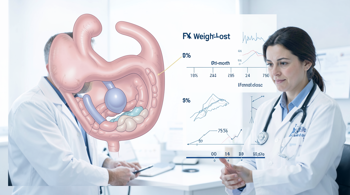
Outcomes depend heavily on adherence to nutritional guidance, physical activity, behavioral support, and scheduled clinical monitoring. A 2026 clinical report described a 7.2% intolerance rate among analyzed participants and no major complications in that group, but its exclusions and small sample size limit how broadly the findings can be applied. 3
What happens when the balloon is removed
The balloon is temporary and is commonly removed endoscopically after about six months. It does not permanently alter the digestive anatomy, so the physical restriction ends when the device is removed. This makes post-removal eating patterns particularly important because the treatment itself does not prevent a return to previous portion sizes or snacking habits. 10
Meaningful weight regain after removal is common when eating behavior and activity patterns do not change. Medical sources describe the device as a tool within a comprehensive weight-management program rather than a standalone solution. Continuing nutrition guidance, movement, behavioral work, and follow-up after removal is central to maintaining any reduction achieved during treatment. 11
Risks, oversight, and comparison with other options
Common short-term effects include nausea, vomiting, abdominal cramping, bloating, and reflux. The FDA safety history also includes health-care-provider communications from 2017 through 2020 and reports involving serious events such as gastric perforation, acute pancreatitis, and spontaneous hyperinflation. These risks mean that device selection and monitoring require assessment by a qualified physician. 1
Compared with more permanent bariatric procedures, gastric balloon therapy generally produces a lower magnitude of weight loss and has less durability because the device is removed. The evidence summary places pooled balloon results below reported outcomes for GLP-1 medicines, endoscopic sleeve gastroplasty, and bariatric surgery, while also noting that those approaches differ in mechanism, eligibility, risks, follow-up, and permanence. 1
How to interpret an individual expectation
A realistic expectation is a range rather than a fixed promise. Published clinical information commonly describes roughly 10% to 15% total body weight loss during the treatment period, while pooled data and individual studies report different time points and populations. A person’s starting weight, BMI category, tolerance, adherence, health conditions, and support program can shift results above or below these averages. 6
The most complete evaluation therefore asks three separate questions: how much weight was lost while the balloon was present, whether health and daily function improved, and whether the eating and activity changes continued afterward. Because the device is temporary, the final outcome depends less on the balloon alone than on the long-term plan surrounding placement, monitoring, removal, and maintenance. 9
Sources
- Weight Loss Rankings, Gastric Balloon for Weight Loss: The Evidence (2026)
- Acibadem Hospitals Group, Gastric Balloon Before and After: What Realistic Results Look Like
- Elçi and Ebik, The Role of Intragastric Balloon Application in Non-Surgical Management of Obesity
- Acibadem Hospitals Group, Intragastric Balloon: Non-Surgical Weight Loss Procedure Explained
- Cleveland Clinic, Intragastric Balloon
- Mayo Clinic, Intragastric Balloon
- U.S. Food and Drug Administration, Gastric Balloons for Weight Loss
- Stanford Medicine, Intragastric Balloon
- Mount Sinai, Intragastric Balloon
- University of Michigan Health, Intragastric Balloon
Authored by 24Trendz team