Ways to manage neck pain at home: Evidence-based guidance for safer self-care
Ways to manage neck pain at home generally focus on easing muscle tension, reducing aggravating positions, and maintaining gentle activity. Most uncomplicated neck pain is associated with strain, posture, overuse, stress, or an awkward sleeping position, although pain involving nerves, the spine, or an injury requires a different level of care. 1
Identify the likely pattern of pain
Routine neck pain may feel like an ache, soreness, stiffness, or a sudden spasm that limits turning the head. Muscle pain can follow overexertion or prolonged physical or emotional stress, while poor workstation posture, extended phone use, and sleeping without adequate support can gradually increase strain. Arthritis, degenerative disc disease, herniated discs, and other age-related changes are also possible causes, so home care is most appropriate when symptoms are mild and no warning signs are present. 2
The pattern of symptoms helps determine whether self-care is reasonable. Pain confined mainly to the neck and nearby muscles is often managed conservatively, while discomfort radiating into an arm or leg, numbness, tingling, weakness, or worsening difficulty moving the neck should be evaluated by a clinician. Symptoms that repeatedly return or fail to improve with home measures also warrant professional assessment rather than repeated self-treatment. 3
Use heat or cold carefully
Cold therapy may be useful during the first 48 hours after a new strain, particularly when soreness follows an identifiable flare or minor overuse. An ice pack should be wrapped in cloth rather than placed directly against the skin, and applications should be limited to short periods. Some guidance describes using cold for roughly 15 to 30 minutes at a time, several times daily, during the early phase. 4
Heat can be useful after the initial period or when tight muscles and stiffness are the dominant symptoms. A warm compress, heating pad, or hot-water bottle may help relax tense muscles, but excessive heat can irritate or burn skin. Neither heat nor cold treats an underlying nerve or spinal-cord problem, and worsening pain, neurological symptoms, or pain after trauma should not be managed with temperature therapy alone. 5
Keep the neck moving gently
Gentle range-of-motion activity is generally preferable to prolonged bed rest or complete immobilization for common mechanical neck pain. Slow, comfortable movements such as turning the head within an easy range, looking up and down without forcing the motion, and changing position regularly can help prevent stiffness. Movement should remain within a tolerable range, and an exercise that clearly increases pain should be stopped rather than repeated. 6
Light stretching, massage, and gradual strengthening may be useful when tolerated, particularly if symptoms are related to sustained posture or muscle tension. Aggressive stretching, forceful manipulation, and repeated neck cracking can aggravate symptoms or delay recovery. Physical therapy may later provide individualized exercise, posture education, and movement training when pain persists, limits daily activities, or involves recurring episodes. 7
Adjust screens, phones, and daily posture
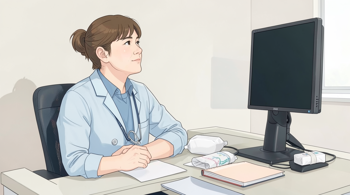
Remaining in one position for long periods can keep the neck in an unhealthy posture. A computer monitor positioned at eye level reduces the need to bend or extend the head, while a headset or hands-free phone function avoids cradling a phone between the shoulder and ear. A tablet supported at about a 45-degree angle is preferable to holding it flat on the lap, where the head may remain angled downward. 1
Regular movement breaks are as important as the initial workstation setup. Standing, walking briefly, changing the sitting position, and keeping the head aligned more neutrally can reduce sustained loading. An outdated eyeglass prescription may also cause a person to lean the head backward to see clearly. Ergonomic changes may reduce recurrence, but they do not replace medical evaluation when pain is persistent, severe, or accompanied by arm symptoms. 8
Consider sleep and over-the-counter medicines
Sleep positioning can influence overnight strain. A supportive pillow that keeps the neck in a neutral position may be more suitable than several pillows that push the head forward. Stomach sleeping can place additional stress on the neck because the head must remain turned for extended periods. Adjusting the sleeping position is a practical home measure when stiffness is most noticeable after waking, although persistent morning pain may have other causes. 2
Acetaminophen and nonsteroidal anti-inflammatory drugs such as ibuprofen or naproxen may provide short-term relief for some adults when used according to label directions. These medicines are not appropriate for everyone and may involve contraindications, interactions, or risks related to existing health conditions. A pharmacist or clinician can help assess suitability, especially when other medicines are being taken or symptoms require treatment beyond a short period. 9
Know when home care is not enough
Medical advice is appropriate when neck pain lasts despite self-care, interferes substantially with daily activities, repeatedly returns, or radiates into an arm. Numbness, tingling, progressive weakness, loss of grip, symptoms in both arms, trouble with balance, walking difficulty, or new hand clumsiness can indicate nerve or spinal-cord involvement. These symptoms should not be attributed automatically to posture or muscle tension. 3
Urgent assessment is appropriate after a significant fall, collision, blow to the head, or other trauma. Fever with neck stiffness, a severe or unusual headache, confusion, sudden neurological symptoms, loss of bladder or bowel control, and problems with coordination are also warning signs. Most ordinary neck pain improves over days to several weeks, but the expected course does not justify delaying care when red flags appear. 10
Sources
- Harvard Health Publishing
- NHS
- Mayo Clinic
- MedlinePlus
- Cleveland Clinic
- Johns Hopkins Medicine
- ChoosePT, American Physical Therapy Association
- Hospital for Special Surgery
- Harvard Health Publishing, neck pain relief guidance
- Healthdirect Australia
Authored by 24Trendz team