Effective ways to manage joint pain naturally: Evidence, limitations, and safety considerations
Effective ways to manage joint pain naturally generally involve consistent movement, dietary patterns that support overall health, weight management when appropriate, heat or cold applications, and self-management strategies rather than a single guaranteed remedy. The approach is most suitable when matched to the likely cause, severity, and duration of symptoms.
Identify the likely cause before self-care
Joint pain can result from osteoarthritis, rheumatoid arthritis, gout, bursitis, tendinitis, injury, or other medical conditions, and each cause may require a different plan. Osteoarthritis commonly affects the knees, hips, hands, and spine, while rheumatoid arthritis is an autoimmune condition that often affects corresponding joints on both sides of the body. Identifying the cause is therefore a central part of safe management. 1
Self-care should not replace assessment when a joint is persistently swollen, red, or warm, when fever occurs, or when pain follows a serious injury. Rapidly worsening symptoms, severe pain, or a major decline in mobility also warrant medical evaluation. These signs can indicate an inflammatory condition, infection, structural injury, or another problem that requires more than home measures. 2
Use regular, low-impact movement
Walking, cycling, swimming, and water exercise can reduce arthritis pain while supporting physical function, mood, and quality of life. Water-based activity is particularly useful because buoyancy reduces the load placed on painful joints while still allowing aerobic and strengthening movements. Gradual, consistent activity is generally more practical than occasional strenuous exercise, especially when stiffness or limited mobility is present. 3
Exercise recommendations for adults commonly include 150 to 300 minutes of moderate-intensity aerobic activity each week, alongside two weekly strength-training sessions. A practical starting pattern described by the Arthritis Foundation is a brisk 30-minute walk on at least five days, combined with two days of resistance work. People who are new to exercise may benefit from instruction by a physical therapist. 4
Build strength and protect painful joints
Strengthening the muscles surrounding an affected joint can improve stability and reduce mechanical stress, with particular relevance to knee osteoarthritis. Activity modification can also help: alternating demanding tasks with active recovery, avoiding prolonged inactivity, and using joint-friendly movement patterns may reduce flare-ups. The objective is not complete rest, since extended inactivity can contribute to stiffness and reduced muscle support. 5
Physical activity should be adjusted according to symptoms rather than abandoned after every increase in discomfort. Gentle stretching, balance exercises, and controlled strengthening can support flexibility and function. Tai chi may provide modest improvements in pain, stiffness, balance, and physical function for some people with osteoarthritis. Any exercise that causes substantial or persistent worsening should be reviewed with a qualified healthcare professional. 6
Consider weight and eating patterns
For adults with overweight or obesity and knee osteoarthritis, gradual weight loss can reduce pain and improve mobility. Weight management is one part of a broader strategy because reduced load on weight-bearing joints may make walking and exercise more manageable. The American College of Rheumatology and Arthritis Foundation include weight loss among conditionally recommended non-drug approaches for suitable patients. 7
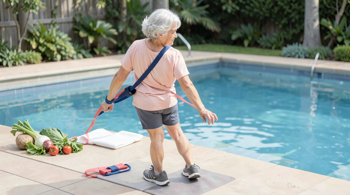
A Mediterranean-style eating pattern emphasizes vegetables, fruits, legumes, whole grains, fish, and unsaturated fats. The Arthritis Foundation reports that mostly plant-based and other anti-inflammatory eating patterns have reduced chronic pain in many studies, although results are not uniform for every diet or individual. Food changes should support adequate nutrition and long-term adherence rather than rely on restrictive claims or a single ingredient. 1
Apply heat, cold, and mind-body methods
Heat can relax muscles and reduce stiffness, making it useful before movement or during periods of tightness. Cold can reduce pain and swelling after activity, particularly when symptoms feel irritated or inflamed. Mayo Clinic and MedlinePlus identify heat and cold as common symptom-management measures, but neither addresses the underlying cause of persistent joint disease. Applications should be comfortable and used cautiously to avoid skin injury. 8
Mind-body approaches may complement physical activity and other self-management measures. Tai chi can support balance and function, while acupuncture may provide short-term pain relief for some people with chronic pain conditions, including knee osteoarthritis. The National Center for Complementary and Integrative Health notes that treatment effects vary, so acupuncture should be viewed as an optional adjunct rather than a guaranteed solution. 9
Assess supplements carefully
Commonly discussed supplements include turmeric or curcumin, omega-3 fish oils, glucosamine, chondroitin, ginger, boswellia, collagen, and devil’s claw. Evidence is uneven, and reported benefits are generally more relevant to mild or moderate symptoms than to severe or progressive disease. Glucosamine and chondroitin have inconsistent evidence for osteoarthritis pain relief and may interact with medicines, so professional review is important before use. 10
Natural does not automatically mean risk-free, regulated, or appropriate for every person. Supplement quality, dose, medication interactions, pregnancy, kidney or liver disease, bleeding risk, and allergies can affect safety. Products should not be used to postpone assessment of swelling, warmth, fever, injury-related pain, or deteriorating mobility. Claims that a supplement repairs cartilage or eliminates arthritis pain should be treated cautiously unless supported by reliable clinical evidence. 11
Create a sustainable management plan
Managing joint pain naturally usually requires combining several modest interventions rather than searching for one universal remedy. A sustainable plan may pair low-impact aerobic activity with strength training, joint-protection habits, appropriate heat or cold, nutritious eating, and weight management when indicated. The Arthritis Foundation emphasizes that no single treatment consistently produces complete pain relief, and the practical goal is often to reduce pain’s effect on daily life. 1
Progress should be evaluated by function as well as pain intensity, including walking tolerance, stiffness, balance, sleep, and ability to complete daily tasks. A symptom diary can help identify which activities aggravate discomfort and which measures improve movement, although persistent or worsening symptoms still require clinical assessment. The World Health Organization identifies physical activity, weight management, education, and self-management as important components of osteoarthritis care. 12
Sources
- Arthritis Foundation, Natural Relief for Arthritis Pain
- Centers for Disease Control and Prevention, Physical Activity Overview
- Arthritis Foundation, Aquatic Exercise
- Arthritis Foundation, Natural Relief for Arthritis Pain
- National Institute of Arthritis and Musculoskeletal and Skin Diseases, Osteoarthritis
- American College of Rheumatology and Arthritis Foundation Osteoarthritis Guideline
- American Academy of Orthopaedic Surgeons, Arthritis of the Knee
- Mayo Clinic, Arthritis Symptom Management
- National Center for Complementary and Integrative Health, Acupuncture in Depth
- MedlinePlus, Osteoarthritis
- Specialist Pain International Clinic, Natural Remedies for Joint Pain
- World Health Organization, Osteoarthritis
Authored by 24Trendz team