How to workout with carpal tunnel safely: A Clinical Overview of Mechanical Modifications and Risk Mitigation
Experiencing numbness, tingling, and pain in the hands can make maintaining a regular fitness routine feel daunting, particularly when diagnosed with carpal tunnel syndrome (CTS) 1. As the most common peripheral entrapment neuropathy globally, affecting approximately 7.4% of adult populations according to 2024 meta-analysis data, the condition frequently impacts those engaged in repetitive or heavy physical training 2. However, a diagnosis does not mandate complete cessation of exercise; rather, it requires a recalibration of how one approaches biomechanical stress and wrist positioning 1. By understanding the internal anatomy of the wrist and implementing specific modifications, individuals can continue to prioritize their strength and cardiovascular health while minimizing nerve aggravation 1.
Understanding Median Nerve Compression and Risk
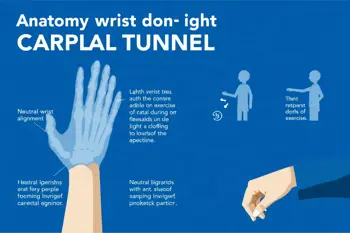
The carpal tunnel is a narrow, rigid passageway at the base of the palm, formed by wrist bones and the transverse carpal ligament 1. Within this space reside nine flexor tendons and the median nerve, which governs sensation in the thumb, index, middle, and half of the ring finger 1. When tendons become inflamed, they occupy additional volume, compressing the median nerve against the rigid tunnel walls 1. Prolonged, forceful grip is a primary driver of this mechanical irritation; research indicates that individuals who spend between 11% and 32% of their time in forceful hand exertion exhibit a 46% higher rate of CTS, with that rate doubling when exertion exceeds 32% 2.
Differentiating between standard muscle fatigue and nerve-related distress is essential for safety 1. Symptoms such as sharp electrical pain, persistent numbness, or weakness in the thumb base necessitate a cautious approach 1. Clinical guidelines, including the 2024 AAOS standard, emphasize the importance of identifying these indicators early, often utilizing tools like the CTS-6 score, which carries a diagnostic sensitivity of 89% and specificity of 80% 2. If an individual experiences constant numbness or noticeable wasting of the thumb muscles, professional medical evaluation is required before continuing a high-intensity exercise regimen 5.
Biomechanical Modifications for Resistance Training
Lifting weights frequently involves wrist flexion or extension, both of which can significantly increase pressure within the carpal tunnel 3. To mitigate this, trainers often recommend maintaining a neutral wrist position-keeping the wrist straight rather than bent during pressing or pulling movements 11. For those performing push-ups or bench presses, the use of push-up bars or parallel grip handles can keep the wrists in a safer, more stable orientation, preventing the extreme angles that trigger nerve compression 15.
| Modification | Purpose |
|---|---|
| Neutral Grip Handles | Reduces lateral stress and pressure on the median nerve 11 |
| Lifting Straps | Alleviates the need for a sustained, maximal grip force 13 |
| Fat Grip Adapters | Distributes weight more evenly across the palm surface 19 |
| Wrist Wraps | Provides added stability to discourage excessive wrist movement 10 |
Furthermore, equipment choices play a significant role in managing load distribution. Utilizing lifting straps allows an athlete to move significant weight without requiring a maximal grip, thereby sparing the small muscles and tendons of the wrist from excessive strain 11. While some lifters prefer fat-grip adapters, others may find that simply moving to machine-based alternatives for exercises like rows or pull-downs provides better support and reduces the risk of symptomatic flare-ups during the rehabilitation or maintenance phase of their training 11.
Integrating Nerve Gliding and Mobility Exercises
Therapeutic interventions for CTS often include nerve gliding exercises, which aim to promote the smooth movement of the median nerve through the restricted tunnel space 14. These movements are intended to be gentle, rather than aggressive, and are most effective when paired with lifestyle modifications such as wearing a night splint 9. The goal is not to force a stretch but to facilitate mobility in tissues that have become restricted by chronic inflammation 5.
Safety remains paramount when incorporating these drills into a fitness routine. Clinical guidance suggests that exercise-induced symptoms should remain limited to mild, temporary tingling or aches-ideally measuring 3 out of 10 on a pain scale-that dissipate within one to two hours post-exercise 5. Should numbness or pain intensify or persist into the following day, it serves as a clinical signal to reduce the volume, intensity, or range of motion of the exercise for future sessions 5.
Activity Selection and Alternatives
Not all forms of physical activity carry the same risk for individuals with carpal tunnel syndrome. Exercises that require hanging from a bar or gripping heavy barbells may pose a higher risk of exacerbating nerve compression 11. Cardiovascular health can be maintained through activities that do not involve significant gripping or direct weight-bearing through the hands, such as stationary cycling or running 11. By diversifying a routine, an individual can reduce the cumulative load placed on the wrists throughout the week 7.
For those committed to strength training, the transition to lower-impact modalities can serve as a bridge while symptoms are managed. Using support systems for the forearm and ensuring that the shoulders are properly warmed up can help prevent compensatory tension, which often radiates into the wrist area 11. Physical activity adjustments and structural changes to the training environment are considered primary, long-term management strategies for athletes navigating the constraints of carpal tunnel syndrome 16.
Clinical Oversight and Long-term Management
Management of carpal tunnel syndrome is an ongoing process that benefits from professional guidance, such as working with a kinesiologist or a physical therapist who specializes in upper limb function 7. These professionals can assist in identifying the specific patterns of work or training that contribute to nerve irritation. While surgical intervention is sometimes necessary, long-term studies, such as the 2024 Cochrane review, suggest that for many, there may be no significant functional difference between conservative measures-such as night splinting and modified activities-and surgical options after a one-year follow-up period 2.
Ultimately, the key to training with carpal tunnel is flexibility in one's approach. If a particular exercise continues to trigger symptoms despite modifications, it is often more productive to rotate it out of the program rather than attempting to train through it 3. Combining active rehab with movement breaks and ergonomic awareness helps preserve the longevity of one's training capacity, allowing for a sustainable, safe approach to fitness that respects the limitations of the median nerve 7.
Sources
- Biomedicus, 'Is it safe to exercise with carpal tunnel syndrome?'
- RollRestoreRepeat, 'Carpal Tunnel From Lifting: How To Save Your Grip Without Quitting (2026)'
- Time Journal, 'Lifting Weights With Carpal Tunnel Syndrome'
- AskWise, 'Lifting Weights With Carpal Tunnel'
- Sword Health, 'Exercises & stretches for carpal tunnel syndrome'
- Arthritis Asian Herbs, 'Exercises to Avoid if You Have Carpal Tunnel'
- Up Athletics, 'Carpal Tunnel Syndrome: Work Modifications That Work'
- ExercisePick, 'Does Weightlifting Cause Carpal Tunnel? Expert Insights'
- WellFit Insider, '5 Carpal Tunnel Exercises to Reduce Wrist Pain and Numbness'
- Healthline, 'Carpal Tunnel Workout Tips'
- Cleveland Clinic, 'Carpal Tunnel Syndrome'
- Mayo Clinic, 'Carpal Tunnel Syndrome'
- Harvard Health Publishing, 'Carpal Tunnel Syndrome'
- American Academy of Orthopaedic Surgeons, 'Carpal Tunnel Syndrome'
- Verywell Health, 'Carpal Tunnel Safe Exercises'
- Johns Hopkins Medicine, 'Carpal Tunnel Syndrome'
- WebMD, 'Carpal Tunnel Syndrome'
- National Institute of Neurological Disorders and Stroke, 'Carpal Tunnel Syndrome'
- Men's Health, 'Wrist Pain Lifting'
Authored by 24Trendz team