Best hospitals for complex trauma surgery: Understanding clinical standards and regional capabilities
When individuals face life-threatening or complex orthopedic injuries, the selection of a medical facility is a critical factor in recovery and long-term functionality. The landscape of specialized surgical care is anchored by institutions verified as Level I Trauma Centers, which are required to maintain the highest standard of resources, staffing, and technology 1. These centers function as regional hubs that provide continuous, comprehensive care ranging from emergency stabilization to long-term rehabilitation 1, 11. Understanding the structural and clinical benchmarks of these facilities is essential for assessing where complex trauma surgery is performed.
The Role of Level I Trauma Verification
A Level I Trauma Center designation signifies that a hospital provides total care for every aspect of severe injury 2, 11. Verification is primarily conducted by the American College of Surgeons (ACS) Committee on Trauma, which evaluates institutional performance, resource availability, and clinical outcomes 9, 11. These hospitals must maintain specialized surgical critical care teams and provide immediate access to a full spectrum of surgical subspecialties 24 hours a day 8, 12. This readiness is crucial for managing poly-trauma patients, where injuries affect multiple bodily systems simultaneously 11, 17.
Hospitals such as Cedars-Sinai and Tampa General Hospital serve as examples of institutions that maintain rigorous ACS verification to ensure regional standards are met 8, 9. The verification process involves on-site reviews of surgical capability, such as the ability to perform emergency surgery within the critical timeframe known as the golden hour 5, 9. By adhering to these standards, facilities improve survival rates and long-term patient outcomes for those suffering from high-energy or complex trauma 2, 5.
Integrated Orthoplastic Approaches to Limb Salvage
Complex trauma often necessitates a transition from basic fracture repair to advanced reconstructive surgery. The field of orthoplastic surgery combines orthopedics and plastic surgery to treat complex injuries involving bone, muscle, joint, and soft tissue 3. Centers like Penn Medicine have established dedicated programs for limb salvage, utilizing robotic microsurgical techniques to increase precision during reconstruction 3. These programs focus on minimizing scarring and preventing amputation by restoring form and function through integrated care plans 3.
Specialized programs, such as those at the Paley Institute, further define the boundaries of modern trauma reconstruction by addressing chronic complications like nonunions, malunions, and bone infections 6. These facilities often employ advanced technologies, including 3D-printed custom implants, internal lengthening nails, and hexapod external fixation 6. Because these injuries can result in long-term disability, specialized centers prioritize evidence-based protocols that stabilize structural integrity while preserving perfusion in fragile or damaged tissues 6, 7.
Academic Hubs and Surgical Research
Academic medical centers are frequently cited for their dual role in clinical care and surgical innovation. Institutions like Johns Hopkins, Massachusetts General Hospital, and UCLA Medical Center are recognized for managing multi-system trauma patients and pioneering new surgical training methods 13, 14, 16. Research at these institutions often leads to improved guidelines for trauma care, influencing how hospitals manage everything from burn reconstruction to spinal soft-tissue repair 7, 13.
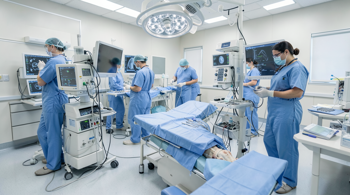
Clinical trials play a significant role in these academic environments, offering patients access to emerging treatments for severe musculoskeletal fractures and traumatic injuries 1. By participating in research, these centers constantly refine their treatment doctrine, which is often informed by physiological investigation and peer-reviewed publications 7. Patients seeking care at these hubs benefit from a collaborative environment where trauma surgeons, vascular specialists, and reconstructive microsurgeons consult on high-stakes cases 3, 17.
Evaluation Metrics for Trauma Excellence
When analyzing hospital performance for specialized surgical care, organizations such as U.S. News & World Report utilize data points like surgical outcomes, patient safety measures, and the opinions of medical professionals 4, 12. High-ranking institutions, including the Hospital for Special Surgery (HSS) and Mayo Clinic, are frequently noted for superior outcomes in complex orthopedic procedures 4, 13. These rankings are intended to provide transparency for families navigating high-stakes medical decisions 4.
It is important to note that performance metrics can vary based on the specific injury type, such as craniofacial trauma versus extremity salvage 7. Patients and referring physicians are encouraged to look for hospitals that demonstrate institutional commitment to continuous verification and specialty-specific quality measures 4, 9. This ensures that the chosen facility is not only equipped for the initial emergency but also for the extensive, multi-staged reconstructive journey that often follows severe physical trauma 7, 10.
Regulatory Oversight and Geographic Access
The distribution of trauma care in the United States is governed by a hierarchy of designations that ensure patients reach the appropriate level of care as efficiently as possible 5, 16. Statewide trauma systems are designed to bypass smaller facilities if a higher level of care is required, a process vital for survival in critical emergencies 5. Consequently, geography plays a significant role in where a patient receives initial trauma intervention, as emergency services are required to stabilize and transport to the nearest verified resource 5.
For non-acute, secondary reconstructive needs, patients have greater latitude to seek care at specialized centers located further from their primary residence 3, 6. However, travel for surgery involves considerations regarding post-operative rehabilitation and follow-up, which are essential for long-term recovery 1, 10. Regardless of the location, patients should verify that the center maintains current accreditation from relevant national bodies such as the ACS or the Joint Commission International 9, 10.
Sources
- Penn Medicine, Trauma and Fracture Care
- Penn Medicine, Trauma Care and Emergency Surgery
- Penn Medicine, Orthoplastic Limb Salvage Center
- Hospital for Special Surgery (HSS), Newsweek Best Hospitals Rankings
- OU Health, Trauma & Injury Care in Oklahoma
- Paley Institute, Trauma Reconstruction & Limb Restoration
- Palm Beach County, Reconstructive Trauma Surgery
- Cedars-Sinai, Advancements Over 40 Years of Trauma Care
- Tampa General Hospital, Level I Trauma Center Verification
- Acibadem International, Trauma Reconstruction
- American College of Surgeons, Level I Trauma Center Verification
- U.S. News & World Report, Best Hospitals Rankings
- Mayo Clinic, Department of Trauma and Surgical Critical Care
- Johns Hopkins Medicine, Specialty Areas in Trauma
- Mass General, Level I Trauma Center
- UCLA Health, Trauma Surgical Services
- UPMC, Trauma and Critical Care Services
Authored by 24Trendz team