Ways to manage dry eyes at home: Evidence-informed home care and safety considerations
Ways to manage dry eyes at home begin with practical measures that address irritation, tear evaporation, and poor tear quality. Mild symptoms may improve with lubricating drops, warm eyelid compresses, visual breaks, and changes to the surrounding air, but persistent discomfort is a medical issue rather than simply a normal consequence of aging. 1
Understanding why dry eyes develop
Dry eye occurs when the eyes produce too few tears or when tears evaporate too quickly. Tears contain water, oil, and mucus, and the balance among these components helps maintain a protective surface over the cornea. Burning, grittiness, tiredness, redness, irritation, fluctuating vision, and excessive watering can all occur when the tear film becomes unstable. 2
Several factors can contribute, including age, hormonal changes, contact lens use, prolonged screen viewing, low humidity, airflow, and certain medicines. Antihistamines, decongestants, antidepressants, beta-blockers, diuretics, and anticholinergic medicines are among those associated with dry eye symptoms. Underlying inflammatory conditions, including Sjögren syndrome, rheumatoid arthritis, and lupus, can also be relevant. 3
Using lubricating eye drops carefully
Over-the-counter artificial tears can lubricate the eye surface and are commonly used for mild discomfort. Product selection should focus on lubrication rather than redness removal, because drops marketed primarily to make eyes look whiter do not address the underlying tear-film problem. When drops are needed frequently, formulations without preservatives may be more suitable because repeated exposure to preservatives can irritate the ocular surface. 4
Application technique and product hygiene matter. Hands should be clean, the bottle tip should not touch the eye or eyelashes, and instructions on storage and discard dates should be followed. Contact lens wearers may need a formulation compatible with lenses or may need to remove lenses before applying drops. If a particular product increases burning, redness, or blurred vision, continued use should be discussed with an eye-care professional. 5
Warm compresses and eyelid hygiene
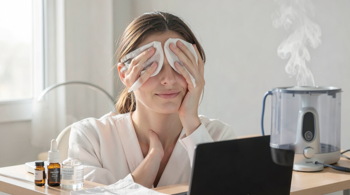
A warm compress applied to closed eyelids for about five to ten minutes can soften oils in the meibomian glands, which are located along the eyelid margins. These oils help slow tear evaporation. Gentle warmth may therefore be particularly relevant when evaporative dry eye or meibomian gland dysfunction contributes to symptoms. The compress should feel comfortably warm, not hot, and should never be placed directly on an open eye. 6
After warming, gentle eyelid cleaning can help remove accumulated debris from the lid margins. The process should be light rather than forceful, since vigorous rubbing can worsen irritation or damage the delicate skin around the eyes. Warm compresses and eyelid hygiene support symptom management, but they do not diagnose blocked glands, infection, eyelid inflammation, or other causes of ocular surface disease. Persistent symptoms require assessment rather than increasingly aggressive home treatment. 7
Changing air, airflow, and screen habits
Indoor heating and air-conditioning can reduce humidity and increase tear evaporation. A humidifier may add moisture to dry indoor air, while directing fans, car heaters, hair dryers, or vents away from the face can reduce direct airflow across the eyes. Smoke and second-hand smoke are additional environmental irritants. Humidifier equipment requires regular cleaning because poorly maintained devices can introduce contaminants into the air. 8
Screen viewing often reduces blinking or leads to incomplete blinks, allowing the tear film to break up more quickly. Conscious, complete blinking during computer and phone use can help redistribute tears. Regular visual breaks, including the commonly described 20-20-20 approach of looking away every 20 minutes, may reduce screen-related strain and dryness. Positioning a screen slightly below eye level can also reduce the exposed eye surface. 9
Protecting eyes outdoors and supporting general health
Wind, dry air, and airborne particles can accelerate tear evaporation outdoors. Wrap-around sunglasses can reduce exposure to moving air and environmental irritants. Avoiding smoke and choosing sheltered locations may also lessen symptoms. Contact lens wear can worsen dryness for some people, particularly in windy or low-humidity conditions, so lens wear should be reduced or paused when symptoms become uncomfortable unless an eye-care professional has provided different guidance. 10
Dietary omega-3 fatty acids from foods such as fish or flaxseed have been associated with tear production, meibomian gland function, and ocular inflammation, although dietary changes should not be treated as a guaranteed cure. Supplements may interact with medicines or be unsuitable for some health conditions, so supplementation belongs in a discussion with a clinician. Adequate fluid intake supports general hydration, but drinking more water alone cannot correct every form of dry eye. 11
Limits of home care and signs needing evaluation
Home measures are most appropriate as supportive care for mild or intermittent symptoms. They may reduce discomfort, but they cannot correct every cause, including autoimmune disease, significant eyelid-gland dysfunction, medication effects, corneal injury, or inadequate tear production. Artificial tears and, in some cases, punctal plugs are among the treatments used clinically, while persistent disease may require a structured examination and treatment plan. 12
Professional evaluation is important when discomfort continues, symptoms interfere with reading, driving, contact lens use, or screen work, or vision becomes blurred or fluctuates. Pain, marked redness, light sensitivity, discharge, or a sustained change in vision should not be managed solely at home. An eye examination can help distinguish dry eye from infection, allergy, corneal disease, or other conditions that require different treatment. 3
Practical home-care routine
A consistent routine can combine several low-risk measures: use lubricating drops as directed, take screen breaks, blink fully, reduce direct airflow, and maintain comfortable indoor humidity. Warm compresses and gentle lid cleaning may be added when oil-gland dysfunction is suspected. The response should be monitored over time, including whether redness, discomfort, or visual fluctuation is improving rather than relying only on short-term relief. 1
Home care should also include avoiding eye rubbing, smoke exposure, and unclean drop containers. Contact lens wearers should follow lens-care instructions and seek advice when dryness repeatedly limits wear. If symptoms persist despite these measures, become more severe, or occur alongside pain or vision changes, self-care has reached its practical limit. Clinical assessment is the appropriate next step because treatment depends on the underlying mechanism. 5
Sources
- American Academy of Ophthalmology, “Remedies to Reduce Dry Eye Symptoms”
- Harvard Health, “Coping with dry eyes”
- American Medical Association, “What doctors want patients to know about dry eyes”
- Acibadem Hospitals Group, “Dry Eye Syndrome Self-Care: Complete Patient Guide”
- HealthCentral, “How to Soothe Dry Eye Disease Symptoms at Home”
- Merck Manual Consumer Version, “Keratoconjunctivitis Sicca”
- Mayo Clinic, “Dry eyes: Diagnosis and treatment”
- Cleveland Clinic, “Dry Eyes”
- National Eye Institute, “Dry Eye”
- American Academy of Ophthalmology, “What Is Dry Eye?”
- Medical News Today, “Dry Eye Home Remedies”
- WebMD, “Dry Eyes Treatment”
Authored by 24Trendz team