Best laser therapy for plantar fasciitis: A clinical review of therapeutic efficacy and evidence
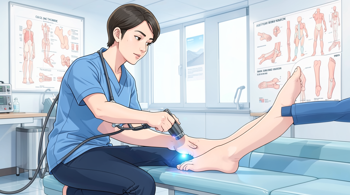
When exploring the landscape of non-invasive treatments for plantar fasciitis, patients and clinicians frequently encounter laser therapy as a potential adjunctive modality. Current research focuses on distinguishing between low-intensity laser therapy (LLLT), high-intensity laser therapy (HILT), and general photobiomodulation (PBMT) to determine their impact on pain, physical function, and localized tissue responses 2. This article examines the current data regarding these therapeutic approaches, emphasizing that while technological advancements continue to evolve, laser therapy is generally regarded as a secondary intervention rather than a foundational primary treatment for heel pain 8.
Understanding the Role of Laser Therapy in Plantar Fasciitis Management
Plantar fasciitis remains a primary driver of adult heel pain and functional impairment, necessitating a structured approach to recovery 2. While conventional care typically prioritizes plantar fascia and calf stretching, supportive footwear, and activity modification, laser therapies have been introduced as non-invasive alternatives intended to stimulate healing 1. Clinical investigation into these modalities seeks to quantify reductions in pain intensity, as measured by tools like the Visual Analogue Scale (VAS), and improvements in functional metrics such as the Foot Function Index (FFI) 2. However, the clinical consensus remains nuanced, as no single device or wavelength has been established as the definitive standard for care 4.
Comparative Analysis of High-Intensity vs. Low-Intensity Modalities
A recent meta-analysis encompassing thirteen trials and 784 participants investigated the efficacy of various laser modalities 8. The findings indicated that while laser therapy demonstrated a significant improvement in localized heel tenderness (standardized mean difference of -0.40), there were no consistent or statistically significant improvements observed in overall pain levels, functional status, or changes in fascial thickness 8. Furthermore, when comparing HILT to other treatments, such as extracorporeal shockwave therapy (ESWT), researchers found no significant differences in VAS or FFI scores between the two approaches, suggesting that both function as similar adjunctive tools 3.
Clinical Trial Outcomes and Therapeutic Parameters
In randomized clinical trials, such as those comparing class IV laser therapy combined with kinesio-taping versus plantar fascia stretching, researchers observed large effect sizes regarding pain reduction and pressure threshold improvement 4. Despite these outcomes, the research community notes that therapeutic parameters-including specific wavelengths, such as 1064 nm, as well as dosing and frequency of sessions-remain highly variable across different studies 1. This heterogeneity makes it challenging for healthcare providers to standardize a single “best” protocol, as the clinical response often depends heavily on the specific patient population and the integrated nature of the treatment plan 4.
Risk Factors and Considerations for Treatment
The implementation of laser therapy requires careful clinical oversight to ensure safety and effectiveness. Regulatory standards dictate that laser products must be used within their intended scope, with strict adherence to safety controls to prevent ocular injuries during procedures 8. Furthermore, patients should be aware that laser therapy should not be viewed as a standalone cure for plantar fasciitis 8. Because heel pain can be symptomatic of deeper issues such as nerve entrapment, stress fractures, or inflammatory arthritis, an accurate medical diagnosis is a prerequisite for any physical therapy intervention 10.
Standard Care Guidelines and Conservative Integration
Clinical practice guidelines continue to prioritize conservative care as the first line of defense against plantar fasciitis. These established methods include consistent stretching, strengthening of the foot and ankle musculature, the use of orthoses, and appropriate footwear selection 1. Laser therapy is best understood as a supplementary strategy that may assist in the reduction of symptoms during the recovery period, provided it is delivered by a qualified practitioner who can manage dosing and assess for potential contraindications 4. A balanced approach that integrates these physical modalities with evidence-based strengthening remains the most reliable strategy for long-term improvement 9.
Summary of Evidence for Clinical Decision Making
| Metric | Observation from Clinical Research |
|---|---|
| Heel Tenderness | Significant improvement noted in meta-analytic data 8. |
| Overall Pain Reduction | Inconsistent evidence; high heterogeneity across studies 8. |
| Functional Improvement | Limited evidence of superiority over sham treatments 2. |
| Fascial Thickness | No significant clinical modification demonstrated 8. |
| Comparison with ESWT | No statistically significant difference in efficacy observed 3. |
In summary, while laser therapy offers an additional option for those seeking relief from the symptoms of plantar fasciitis, the data does not support the designation of any single device or wavelength as the universally superior intervention 4. The decision to incorporate laser therapy should be made in consultation with a medical professional who can ensure that the intervention is part of a broader, evidence-based rehabilitation program 8.
Sources
- JMIR Rehabilitation and Assistive Technologies: Efficacy of High-Intensity Laser Therapy Combined With Plantar Fascia Stretching Exercises, 2026.
- Journal of Clinical Medicine: Effect of Local Laser Therapy on Plantar Fasciitis - A Meta-Analysis, 2026.
- Lasers in Medical Science: Comparison of Laser Therapy and Extracorporeal Shockwave Therapy, 2026.
- Lasers in Medical Science: Effect of Class IV Laser Therapy along with Low-dye Kinesio-taping or Plantar Fascia Stretching, 2026.
- PubMed: Meta-Analysis on Local Laser Therapy, 2026.
- OrthoArchives: Systematic Review and Meta-Analysis on Local Laser Therapy, 2026.
- Bioengineering: High-Intensity Laser Therapy vs. Extracorporeal Shockwave Therapy, 2026.
- OrthoScience: Clinical Review on Laser Therapy Efficacy, 2026.
- National Center for Complementary and Integrative Health: Light-based Therapies Overview, 2026.
- NCBI Bookshelf: StatPearls Diagnosis of Plantar Fasciitis, 2026.
Authored by 24Trendz team