Early symptoms of Gout you should know: An Analysis of Clinical Indicators and Joint Health
Gout is a common form of inflammatory arthritis that manifests through sudden, intense episodes of joint pain and swelling 1. Understanding the early manifestations of this condition is essential for recognizing when to seek medical evaluation, as untreated flares can lead to more severe, long-term joint damage 1. By examining the biological and physical signs associated with initial gout attacks, individuals can better identify symptoms that warrant professional diagnostic assessment 5.
The Onset of Acute Joint Pain
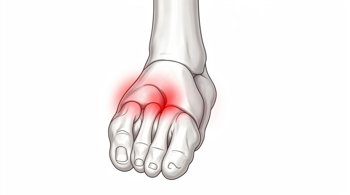
The hallmark symptom of gout is the sudden emergence of severe joint pain, which frequently develops during the night 1, 2. This discomfort typically reaches its peak intensity within 8 to 12 hours after the initial onset 1. Patients often describe the sensation as excruciating, frequently rating the pain levels between eight and ten on a standard scale 7. The big toe is the most commonly affected area, involved in approximately 50 percent of initial flares, though the condition can manifest in other joints, including the ankles, knees, wrists, and elbows 1, 7.
During a gout flare, the affected area becomes highly sensitive to touch 1. In many clinical reports, the joint becomes so tender that even the light weight of a bedsheet is described as causing intolerable pressure 1. The physical manifestation of this pain is driven by the buildup of monosodium urate crystals within the joint space, which triggers an inflammatory response characterized by heat, swelling, and redness 5, 6. While these symptoms are classic, it is important to note that redness may be less visually apparent on individuals with darker skin tones 1.
Physiological Mechanisms of Gout Flares
Gout is fundamentally a disorder of uric acid metabolism 3. Uric acid is a natural byproduct formed when the body breaks down purines-chemicals found in various food sources, such as organ meats, certain seafood, and red meat, as well as being produced endogenously by the body 3, 4. Under normal physiological conditions, the kidneys filter uric acid from the blood, and it is excreted through urine 8. When production exceeds excretion capacity, serum uric acid levels rise, leading to the formation of needle-like crystals that deposit in soft tissues and joints 3, 4.
The deposition of these crystals initiates an inflammatory cascade that results in the clinical symptoms identified by patients 8. Factors such as a high-purine diet, excessive alcohol intake, and the use of certain medications, including diuretics, can contribute to these elevated uric acid levels 3, 9. Furthermore, medical conditions like kidney disease or metabolic disorders can impair the body's ability to process uric acid efficiently, thereby increasing the risk of crystallization and subsequent arthritic flares 3, 8.
Progression of Symptoms and Range of Motion
Beyond the acute pain phase, gout is frequently accompanied by a noticeable reduction in the range of motion of the affected joint 1. As swelling and inflammation persist, the ability to flex or extend the joint becomes restricted 1, 5. While the acute pain typically subsides within 3 to 10 days, even without medical intervention, residual discomfort can persist for days or weeks following the flare 5, 6. This intermittent nature of early-stage gout can sometimes lead individuals to delay seeking long-term management 7.
Over time, the intervals between these episodes may shorten if the underlying uric acid levels are not adequately managed 7. Recurrent, untreated gout can progress into a chronic state where the arthritis becomes persistent rather than episodic 7. In such cases, patients may develop tophi, which are large, firm deposits of uric acid crystals that form under the skin or around joint structures 1, 7. Although tophi are often painless, they can cause significant disfigurement and damage to the cartilage and bone surrounding the joint 7.
Clinical Challenges and Differential Diagnosis
Diagnosing gout can be complex because its symptoms often overlap with those of other conditions. For instance, in women, gout may be mistaken for osteoarthritis, particularly in the hands, because the condition often manifests in the upper extremities later in life 9. Additionally, gout can be confused with calcium pyrophosphate deposition (CPPD), formerly referred to as pseudogout, which involves calcium phosphate crystals rather than uric acid 4. Rheumatoid arthritis can also present with inflammatory nodules that mimic the appearance of tophi, necessitating careful clinical differentiation 9.
When an individual experiences sudden, intense joint inflammation accompanied by a high temperature, medical professionals must evaluate for the possibility of septic arthritis, which is an infection within the joint space 5. Because this is a medical emergency requiring rapid intervention, any fever accompanying joint symptoms should be treated with urgency 5. Physicians generally utilize a combination of clinical history, physical assessment of the affected joint, and sometimes joint fluid analysis to confirm a diagnosis and rule out mimics 5.
Impact of Modern Management Strategies
The primary objective in managing gout is the regulation of serum uric acid levels to prevent crystal formation and subsequent joint damage 2, 6. Urate-lowering therapies, such as allopurinol, are frequently prescribed to maintain these levels below target thresholds 6, 8. Research indicates that maintaining uric acid levels below 300 micromol/L may reduce the risk of recurring flares and potential cardiovascular complications 8. These pharmacological approaches are typically coupled with lifestyle modifications, including dietary changes aimed at reducing purine intake 2, 3.
Consistent long-term care is crucial because gout is a systemic inflammatory disease comparable in seriousness to other chronic conditions such as diabetes or hypertension 8. Prophylactic measures and early identification of symptoms allow clinicians to mitigate the risk of bony erosions and joint deformities 6, 7. Patients who adhere to prescribed medication and lifestyle regimens generally experience fewer flares and improved long-term outcomes in joint function 2, 5.
Summary of Diagnostic Indicators
| Symptom | Common Clinical Observation |
|---|---|
| Pain Intensity | Severe, often peaking 12 to 24 hours after onset |
| Common Sites | Big toe, ankle, knee, wrist, elbow, fingers |
| Physical Signs | Redness, warmth, swelling, extreme tenderness |
| Secondary Effects | Limited range of motion in the affected joint |
| Late-Stage Indicators | Formation of tophi (firm nodules under the skin) |
Understanding these variables helps provide a comprehensive view of how gout presents and evolves. By recognizing the subtle progression from initial intermittent flares to potential chronic joint degradation, individuals can engage in more informed discussions with healthcare providers regarding their health status 7. The goal of current management is to transition from reactive treatment of acute flares to the proactive prevention of uric acid buildup and tissue damage 6.
Sources
- Mayo Clinic - Gout: Symptoms and causes
- Cleveland Clinic - Gout: What It Is, Symptoms & Treatment
- Harvard Health - Gout: A to Z
- Arthritis Foundation - Gout: Symptoms, Diagnosis, and Treatment
- NHS Inform - Gout
- NCBI Bookshelf - Gout (StatPearls)
- Gout Education Society - Gout Symptoms
- Medical Xpress - What is gout and early warning signs
- Ochsner Health - Gout Symptoms and Causes You Need to Know
- American College of Rheumatology - Gout Beyond the Big Toe
Authored by 24Trendz team