Effective ways to manage hot flashes naturally: Evidence, practical measures, and safety considerations
Effective ways to manage hot flashes naturally include keeping the body and bedroom cool, wearing removable layers, identifying personal triggers, reducing stress, and maintaining healthy routines. These measures may lessen discomfort, although they do not guarantee that episodes will stop. 1
Cooling measures during an episode
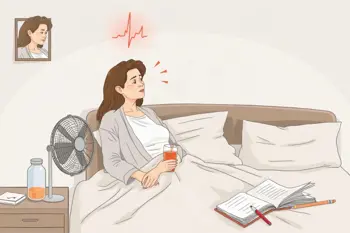
A hot flash is a sudden burst of warmth and sweating that commonly lasts from 30 seconds to about five minutes. Facial or neck flushing, a faster heartbeat, and subsequent chills can occur, while nighttime episodes may interrupt sleep and contribute to fatigue or irritability. 2 Cooling measures therefore focus on reducing discomfort while the episode passes rather than treating the underlying hormonal transition.
Lightweight clothing and removable layers allow heat to escape quickly. A cool bedroom, fan, cool shower, or cold drink may also help during an episode, particularly at night. Cotton sheets and other breathable bedding are practical environmental measures. Johns Hopkins Medicine also advises recognizing triggers and discussing symptoms that continue to interfere with normal activities. 10
Finding and reducing personal triggers
Triggers differ among individuals, so a short record can be more useful than eliminating every possible food or activity. Note the time of each episode, recent meals and drinks, room temperature, physical exertion, smoking, alcohol use, and emotional stress. Breastcancer.org recommends tracking what was being eaten or done, as well as how a person was feeling, when a hot flash occurred. 4
Common potential triggers include spicy food, caffeine, hot drinks, alcohol, smoking, warm rooms, and stress. The NHS recommends avoiding or reducing these factors when they appear connected with symptoms. 1 Trigger reduction should be individualized, because broad restrictions can add unnecessary difficulty when a particular item does not appear to affect episode frequency or severity.
Sleep, relaxation, and daily activity
Regular sleep routines, sufficient rest, relaxation, and mental-wellbeing support are recommended lifestyle measures during perimenopause and menopause. Yoga, tai chi, meditation, and other calming activities may help manage stress, which can intensify the perceived burden of a hot flash. 1 Slow paced breathing is generally low risk, but evidence that breathing techniques consistently reduce the number of episodes is mixed. 6
Regular physical activity supports general health and may improve sleep, mood, and quality of life, although exercise alone is not consistently established as a direct treatment for hot-flash frequency. Weight-bearing exercise is also recommended for bone strength during menopause. 1 Maintaining a healthy weight may help some people, and Mayo Clinic lists weight management, cooling, trigger avoidance, and stress reduction among self-care approaches. 5
Behavioral approaches with research support
Cognitive behavioral therapy, or CBT, is one of the better-supported non-drug approaches. It may reduce the distress, sleep disruption, and perceived impact associated with hot flashes even when the number of episodes changes little. A Cochrane review found evidence that CBT can reduce the impact and distress of menopausal hot flashes, while results for some other behavioral interventions remain uncertain. 7
Clinical hypnosis has also been studied and may provide modest improvement in hot-flash frequency and severity when delivered by a qualified practitioner. Relaxation methods and hypnosis should be viewed as symptom-management options rather than guaranteed cures. The National Cancer Institute reports that behavioral approaches, including relaxation, paced respiration, and hypnosis, have produced varying results across studies. 6
Food, soy, and herbal supplements
Soy foods contain isoflavones, plant compounds that may have weak estrogen-like effects, but evidence remains inconsistent across studies and products. Potential benefits appear modest and may vary by individual. Whole foods such as tofu, tempeh, edamame, and soy milk are distinct from concentrated supplements, whose composition and dose can differ. NCCIH reports that evidence for soy, black cohosh, and other complementary approaches is limited or inconsistent. 4
Herbal products should not be assumed to be harmless because they are labeled natural. Supplements can interact with medicines, have side effects, and pose risks for people with particular medical conditions. The NHS advises speaking with a doctor before taking herbal or complementary medicines, and Breastcancer.org similarly recommends medical review before using natural remedies. 1 4 Claims that a specific herb reliably reduces hot flashes should therefore be treated cautiously.
When natural measures are not enough
Hot flashes commonly begin during perimenopause, sometimes before periods become irregular, and may continue for years. Johns Hopkins Medicine reports an average duration of five to ten years, while severity varies substantially between individuals. 2 Symptoms that disrupt work, sleep, concentration, or daily schedules deserve professional attention rather than prolonged self-management alone.
A healthcare professional can assess whether symptoms fit menopause and discuss hormone therapy or nonhormonal prescription treatments when appropriate. Hormone therapy remains the most effective treatment for hot flashes for eligible patients, but suitability depends on medical history and individual risks. 3 Persistent or severe symptoms should also be assessed because conditions other than menopause can affect temperature regulation. 4 A practical plan is to begin with cooling and trigger tracking, add sustainable sleep and stress measures, and review progress clinically if relief remains inadequate.
Sources
- NHS, Things you can do to help menopause and perimenopause symptoms
- Johns Hopkins Medicine, Managing Hot Flashes: Tips from a Menopause Expert
- American College of Obstetricians and Gynecologists, Menopause
- National Center for Complementary and Integrative Health, Menopausal Symptoms
- Mayo Clinic, Hot flashes: Symptoms and causes
- National Cancer Institute, Hot Flashes
- Cochrane Library, Cognitive behavioral therapy for menopausal symptoms
- Cleveland Clinic, Hot Flashes
- Harvard Health Publishing, Menopause: Managing hot flashes
- National Institute on Aging, Menopause symptoms and relief
Authored by 24Trendz team