Natural remedies for menopause symptoms: Evidence, limitations, and safety considerations
Natural remedies for menopause symptoms are often considered for hot flushes, night sweats, mood changes, sleep disruption, vaginal discomfort, and related concerns. Recent research indicates that some complementary approaches may reduce symptom burden, but results vary considerably by therapy, dose, duration, and study design. Hormone therapy remains the most effective treatment for moderate-to-severe vasomotor symptoms, while non-hormonal approaches may be considered according to personal preference, health history, and symptom severity. 6
What the current evidence shows
A 2026 systematic review and meta-analysis combined 24 randomized controlled trials published after 2020. The authors reported possible improvements from complementary and traditional interventions, but effect estimates differed substantially between studies. The random-effects analysis showed substantial heterogeneity, with τ² reported as 0.362 and a 95% prediction interval from −0.228 to 2.340. These findings indicate that an intervention producing benefits in one setting may show a smaller or uncertain effect elsewhere. 1
The same analysis found that longer intervention duration influenced outcomes, while intervention type, dose, and formulation were not significant moderators. Larger studies tended to show smaller observed effects, a pattern associated with possible small-study effects. A separate 2026 systematic review identified 30 randomized trials of non-soy oral herbal supplements. Although 28 trials reported some symptom improvement, the interventions included 19 different herbal products, making broad conclusions about herbal supplements inappropriate. 12
Dietary approaches and phytoestrogens
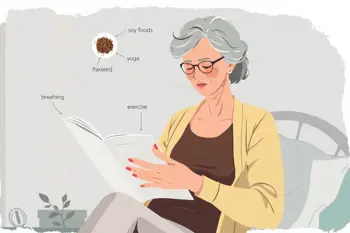
Soy foods such as tofu and edamame contain isoflavones, plant compounds that may provide mild relief for vasomotor symptoms. Research summaries describe soy as a possible option for women seeking dietary rather than concentrated supplement approaches. Effects are not uniform, and dietary phytoestrogen studies use varying preparations, amounts, and symptom measures. Consequently, soy should be understood as a potentially modest dietary measure rather than a guaranteed substitute for clinical treatment. 34
Flaxseed provides lignans, another category of plant compound examined during the menopausal transition. A 2025 mini-review reported that flaxseed lignans reduced perimenopausal symptoms, while broader evidence remains limited. The review also described dietary isoflavones at 50 to 80 milligrams per day as associated with reductions in severe hot flashes in selected research, but the reported results should be interpreted in the context of mixed interventions and differing study quality. 43
Herbal supplements and product limitations
Black cohosh is among the most frequently studied supplements for hot flashes, yet clinical trial findings remain inconsistent. The 2026 herbal-supplement review found no measurable effects in the two included black cohosh trials, and the two trials of dong quai also found no measurable effects. Red clover, which contains isoflavones, has been studied for menopausal discomfort, but results vary across populations and formulations. 23
Other botanicals have been examined for narrower symptom targets. St. John’s wort is sometimes used for mood swings and mild depression associated with the menopause transition, while ashwagandha has been evaluated for symptoms including stress and fatigue. A randomized, double-blind, placebo-controlled trial included 60 women aged 45 to 55 who received ashwagandha root extract or placebo for 56 days. That study provides preliminary evidence, not definitive proof of long-term effectiveness or safety. 78
Recent trials of curcuminoids and supplements
A 2026 pilot randomized, double-blind, placebo-controlled trial studied curcuminoids at 1,000 milligrams per day in 40 healthy postmenopausal women aged 41 to 65. After 12 weeks, the between-group difference in weekly hot-flash frequency was −7.35 episodes per week, with a 95% confidence interval from −10.29 to −4.41 and p<0.001. A significant difference was also observed at week six, and no serious adverse events were reported during the trial. 5
Despite those findings, the curcuminoid study was a small proof-of-concept trial, so its results do not establish how the supplement compares with hormone therapy or other non-hormonal treatments. Vitamin E has also been evaluated for hot flashes, but evidence for meaningful relief is limited, and high doses may create health risks. Evening primrose oil is widely used by some consumers, yet medical reviews report that it is not more effective than placebo for hot flashes. 53
Mind-body practices and physical activity
Yoga, meditation, and paced breathing are recommended in menopause guidance as approaches that may help manage stress and sleep disturbances related to menopause. These practices address symptoms indirectly rather than replacing treatment for severe vasomotor symptoms or genitourinary problems. Acupuncture is also used by some women for hot flashes, but large-scale clinical evidence remains inconclusive regarding its long-term benefits. 34
Regular physical exercise is associated with improved overall well-being, better sleep quality, and reduced severity of vasomotor symptoms in postmenopausal women. Exercise may also support general health during a period associated with changes in metabolic measures and bone mineral density. The available research does not establish one universally superior exercise format, so the relevant consideration is whether a chosen activity can be maintained safely and consistently. 34
Safety, eligibility, and clinical oversight
Natural does not mean risk-free. The reviewed material specifically advises women with hormone-sensitive conditions, hepatic disease, or prescription medications to consult a healthcare provider before using botanical supplements. This is particularly important because supplements differ in formulation and dose, while evidence often comes from short trials that may not detect uncommon or delayed adverse effects. A supplement studied in healthy participants may not be appropriate for someone with a complex medical history. 6
Menopausal symptoms can include hot flushes, night sweats, sleep disturbance, mood changes, decreased libido, joint discomfort, and vaginal or urogenital concerns. Hormone therapy is described as the most clinically effective intervention for vasomotor symptoms and genitourinary syndrome of menopause, although some women cannot use it because of conditions such as hormone-sensitive cancer or previous thromboembolic events. Complementary therapies may therefore be considered alongside conventional care or when hormones are unsuitable, but treatment decisions require an individualized assessment. 36
How to interpret claims about natural relief
The most reliable interpretation is symptom-specific rather than product-specific. Evidence is more informative when a study identifies the exact preparation, dose, duration, participant characteristics, comparison group, and measured outcome. The recent reviews show why a positive result for one formulation cannot automatically be applied to every product with the same botanical name. Reported benefits across studies may also reflect differences in intervention duration, assessment methods, sample size, and placebo response. 12
Claims of complete relief, universal safety, or hormone-like effects should therefore be treated cautiously. Current evidence supports considering food-based phytoestrogens, exercise, yoga, meditation, paced breathing, and selected supplements as possible components of symptom management, while acknowledging uncertainty. Persistent, severe, or unusual symptoms warrant professional evaluation rather than continued self-treatment, especially when a person has significant medical conditions or uses prescription medicines. 36
Sources
- Archives of Gynecology and Obstetrics, “Complementary and alternative therapies in the management of menopausal symptoms”
- Nutrients, “The Effectiveness of Non-Soy Oral Herbal Supplements for Menopausal Symptoms”
- The Conversation, “Thinking about acupuncture or herbs for menopause? Read this first”
- Frontiers in Aging, “Natural strategies to optimize estrogen levels in aging women”
- BMC Complementary Medicine and Therapies, “Curcuminoid supplementation for vasomotor symptoms in postmenopausal women”
- Women’s Health Digest, “Natural Remedies for Perimenopause Symptoms: 2026 Clinical Update”
- Frontiers in Reproductive Health, “A prospective, randomized, double-blind, placebo-controlled study on efficacy and safety of Ashwagandha root extract”
- North American Menopause Society, Mayo Clinic, NCCIH, Cleveland Clinic, Healthline, WebMD, Johns Hopkins Medicine, Medical News Today, The Endocrine Society, and Harvard Health Publishing research summaries
Authored by 24Trendz team