Care routines for sore feet and heels: Evidence-based guidance for daily comfort
Care routines for sore feet and heels should address both comfort and the cause of the problem. Daily washing, careful drying, moisturising dry heel skin, supportive footwear, and gentle management of thickened skin are commonly recommended, while persistent pain, deep fissures, wounds, or signs of infection require clinical attention. 3
Start with daily cleaning and inspection
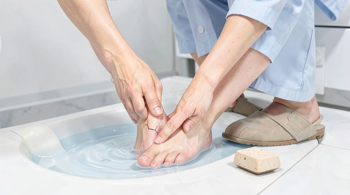
Wash sore feet once daily with lukewarm water and mild soap, then dry them carefully, particularly between the toes. Excess moisture between the toes can contribute to skin problems, so moisturiser should be applied to dry areas of the feet but not between the toes. Daily inspection is especially important for people with diabetes, who may have reduced sensation and overlook a blister, crack, or pressure point. 3 4
- Look for redness, swelling, blisters, cracks, drainage, bruising, or changes in skin colour.
- Check the soles and heels with a mirror if they are difficult to see.
- Keep toenails and surrounding skin free from aggressive cutting or picking.
Managing dry and cracked heels
Heel fissures begin when thick, pressure-bearing skin becomes dry and loses flexibility. A heavy moisturiser or petroleum jelly can support the skin barrier, while products containing urea, alpha hydroxy acids, or salicylic acid may soften thickened areas. One podiatry protocol identifies urea cream at 20 to 40 percent as a strong option for moderate to severe fissures, generally applied at night beneath a cotton sock for two to four weeks. 1 5
- Apply moisturiser after washing and drying the feet.
- Use a thick layer of petroleum jelly at bedtime for mild dryness or maintenance.
- Do not apply strong keratolytic products to healthy, irritated, or broken skin unless advised by a clinician.
Reducing calluses without causing injury
Warm water can soften thickened skin before gentle filing, but prolonged soaking may remove protective oils and worsen dryness. A pumice stone or foot file can reduce mild to moderate callus when used lightly after bathing. Sharp instruments should not be used to cut corns or calluses, and chemical callus treatments require particular caution in people with diabetes or poor circulation. 6 8
| Approach | Typical role | Important limitation |
|---|---|---|
| Pumice stone or file | Gentle reduction of softened dead skin | Do not abrade painful, bleeding, or inflamed areas |
| Salicylic acid | Localised thick callus in selected non-diabetic adults | Keep away from healthy skin; avoid without medical advice when circulation or sensation is impaired |
| Professional debridement | Severe fissures or difficult calluses | Assessment is needed, especially with diabetes |
Choosing footwear and reducing heel pressure
Footwear affects both sore skin and mechanical heel pain. Shoes should fit comfortably, provide adequate room, cushioning, and arch support, and avoid rubbing or concentrated pressure. The NHS advises avoiding shoes that are too tight or too loose, while podiatry guidance identifies open-backed footwear and repeated heel pressure as contributors to cracking. Recurrent fissures may also reflect a biomechanical problem that requires assessment for pressure redistribution or orthotic support. 7 1
- Choose socks and shoes that do not create seams, friction, or pressure points.
- Limit footwear that leaves the heel exposed when cracks are recurring.
- Replace or stop using shoes associated with a specific painful area.
Routine measures for overuse-related heel pain
Sore heels are not always caused by dry skin. Plantar fasciitis and other overuse conditions may produce pain that worsens with activity and needs a different routine. Nonsurgical measures listed by the American Academy of Orthopaedic Surgeons include resting from aggravating activities, applying ice, performing gentle calf and plantar-fascia stretches, and using supportive footwear. Persistent heel pain deserves evaluation because several conditions can produce similar symptoms. 9 12
- Reduce activities that clearly increase pain rather than repeatedly pushing through it.
- Use ice as a short-term comfort measure with a cloth barrier between ice and skin.
- Keep stretching gentle and stop if symptoms sharply worsen.
Diabetes, wounds, and when to seek care
Diabetes, poor circulation, neuropathy, thyroid disease, psoriasis, and pressure injuries can complicate ordinary foot soreness. The CDC and NIDDK emphasise daily inspection and careful skin care for people with diabetes, while chemical products and self-debridement may be unsafe when sensation or circulation is reduced. A deep or bleeding fissure can weaken the skin barrier and increase infection risk. 3 4 1
- Seek prompt medical care for spreading redness, warmth, drainage, fever, significant swelling, numbness, or inability to bear weight.
- Arrange assessment for persistent, recurrent, deep, or painful cracks.
- People with diabetes should obtain professional advice before treating calluses, corns, blisters, or cracks themselves.
- Heel redness or an open area in someone confined to bed, using a wheelchair, or exposed to prolonged pressure may represent a pressure injury and needs assessment.
Sources
- Michigan Foot Doctors, Cracked Heel Treatment Protocol
- Cleveland Clinic, How To Heal Your Cracked Heels
- Centers for Disease Control and Prevention, Foot Health
- National Institute of Diabetes and Digestive and Kidney Diseases, Preventing Diabetes Problems: Foot Problems
- American Academy of Dermatology, Relieve Dry Skin
- Mayo Clinic, Corns and Calluses: Diagnosis and Treatment
- NHS, Corns and Calluses
- MedlinePlus, Corns and Calluses
- American Academy of Orthopaedic Surgeons, Plantar Fasciitis and Bone Spurs
- Merck Manual Consumer Version, Pressure Sores
- Dove Medical Press, Patient-Centered Daily Foot Self-Care Protocol for High-Risk Diabetic Foot Patients
- American Podiatric Medical Association, Foot Health
Authored by 24Trendz team