Natural remedies for sinus infection: Evidence, Safety, and Symptom Relief
Natural remedies for sinus infection generally focus on easing congestion, supporting mucus drainage, and reducing discomfort while the body recovers. Most acute sinus infections are viral and improve without antibiotics, often within 7 to 10 days, although symptoms that persist, worsen, or become severe need professional assessment. 1
Understanding what sinusitis means
Sinusitis, also called rhinosinusitis, occurs when the tissue lining the sinus cavities becomes inflamed and swollen. Swelling can block the small openings through which mucus normally drains into the nose, producing congestion, facial pressure, headache, thick discharge, reduced smell, and postnasal drip. A cold, allergy symptoms, environmental irritation, or dry air may contribute to this inflammation. 2
- Viral illness is the most common context for short-term sinus symptoms. 1
- Symptoms alone cannot reliably prove that bacteria are responsible.
- Supportive care may reduce discomfort but does not replace evaluation when warning signs appear.
Saline nasal irrigation
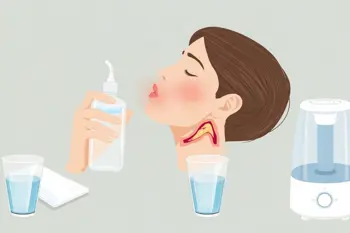
Saline irrigation is one of the most established nonprescription approaches for sinus congestion. A squeeze bottle or neti pot moves salt water through one nostril and out the other, helping loosen mucus and wash away allergens and irritants. Harvard Health reports that nasal rinses may relieve congestion associated with sinus infections and allergies, while Cochrane describes the overall evidence for acute respiratory infections as limited and uncertain. 3
- Use distilled, sterile, or previously boiled and cooled water only. 4
- Follow the device directions for the salt mixture and volume.
- Clean and dry the device after use to reduce contamination.
- Blow the nose gently afterward rather than forcefully.
Hydration, warmth, and humidified air
Fluids, rest, warm compresses, and appropriately humidified air are commonly used to make sinus symptoms more tolerable. The Mayo Clinic lists saline spray, warm compresses, fluids, rest, and humidified air among measures that may relieve acute sinusitis symptoms. These approaches are supportive: they can ease dryness, pressure, or thick secretions, but they do not directly eliminate a viral or bacterial cause. 5
- Drink fluids according to normal thirst and medical guidance.
- Place a warm, comfortable compress over the cheeks or forehead for temporary pressure relief.
- Keep a humidifier clean, because contaminated equipment can disperse microorganisms.
- Elevating the head during rest may make drainage and nighttime breathing more comfortable.
Steam and herbal supplements
Steam inhalation is often described as a natural way to loosen mucus, but strong evidence for treating sinusitis is lacking. The NHS warns that steam inhalation can cause burns or scalds, particularly in children, so bowls of hot water should not be treated as a risk-free remedy. A warm shower may feel soothing, but symptom comfort should not be confused with curing an infection. 6
- Bromelain has insufficient evidence to establish effectiveness for sinusitis.
- Bromelain and other supplements may cause adverse effects or interact with medicines. 7
- Essential oils should not be swallowed or placed undiluted inside the nose.
- Herbal blends should be reviewed by a clinician or pharmacist, especially when prescription medicines are used.
When home care is reasonable
For uncomplicated symptoms that are mild or gradually improving, supportive care is consistent with clinical guidance. The American Academy of Family Physicians describes supportive management for uncomplicated acute rhinosinusitis and identifies patterns that make bacterial disease more likely. These include symptoms lasting more than 10 days without improvement, severe symptoms, or worsening after an initial period of improvement. 8
- Monitor whether congestion, pressure, fever, and discharge are improving or deteriorating.
- Arrange medical evaluation when symptoms last beyond 10 days without improvement.
- Seek assessment when symptoms improve and then worsen again.
- Recurrent episodes may require evaluation for allergies, structural problems, or another cause.
Warning signs and safety limits
Sinus symptoms can occasionally involve complications or reflect another condition. MedlinePlus advises seeking medical care for concerning symptoms and provides guidance for acute sinusitis. Urgent attention is appropriate for swelling or redness around the eyes, vision changes, confusion, a stiff neck, or a severe headache. High fever, severe facial pain, significant immune-system problems, and major underlying medical conditions also lower the threshold for professional advice. 9
- Do not use tap water for nasal irrigation because unsafe organisms may enter nasal passages. 4
- Children require special caution around hot steam because scald injuries can be serious. 6
- People with recurrent infections or immune problems should consult a healthcare professional before relying on home remedies.
- Saline rinses and humidification provide symptom support, not guaranteed infection clearance. 10
How to interpret natural treatment claims
Evidence varies substantially between remedies. Saline irrigation has clinical support for some congestion and upper-respiratory symptoms, although its effect on the duration or severity of acute infection remains uncertain. Hydration, rest, compresses, and humidification are generally supportive measures. Steam has safety concerns, while bromelain and other herbal products lack sufficient evidence to establish reliable sinusitis treatment. Claims of rapid cures should therefore be evaluated cautiously. 3
A practical approach is to begin with low-risk measures, use safe water for any nasal rinse, avoid burn hazards, and track the illness over time. Medical care becomes more important when symptoms are persistent, severe, recurrent, or associated with eye, neurological, or systemic warning signs. Antibiotics are not routinely useful for viral infections, and a clinician can determine whether the pattern suggests bacterial disease or another diagnosis. 1
Sources
- Centers for Disease Control and Prevention, “About Sinus Infection.” https://www.cdc.gov/sinus-infection/about/index.html
- Mayo Clinic, “Acute sinusitis: Diagnosis and treatment.” https://www.mayoclinic.org/diseases-conditions/acute-sinusitis/diagnosis-treatment/drc-20351603
- Harvard Health and Cochrane, information on nasal irrigation and acute respiratory infections. https://www.health.harvard.edu/diseases-and-conditions/can-nasal-irrigation-help-with-winter-colds-and-congestion-PKGPUE3R and https://www.cochrane.org/CD006821/ARI_saline-irrigation-for-acute-upper-respiratory-tract-infections
- U.S. Food and Drug Administration, “Is Rinsing Your Sinuses Safe?” https://www.fda.gov/consumers/consumer-updates/is-rinsing-your-sinuses-safe
- Mayo Clinic, “Acute sinusitis: Diagnosis and treatment.” https://www.mayoclinic.org/diseases-conditions/acute-sinusitis/diagnosis-treatment/drc-20351603
- National Health Service, “Sinusitis.” https://www.nhs.uk/conditions/sinusitis-sinus-infection/
- National Center for Complementary and Integrative Health, “Bromelain.” https://www.nccih.nih.gov/health/bromelain
- American Academy of Family Physicians, “Current Concepts in Adult Acute Rhinosinusitis.” https://www.aafp.org/pubs/afp/issues/2016/1201/p840.html
- MedlinePlus, “Acute sinusitis.” https://medlineplus.gov/ency/article/000647.htm
- American Academy of Otolaryngology Head and Neck Surgery, ENT Health, “Sinusitis.” https://www.enthealth.org/conditions/sinusitis/
Authored by 24Trendz team