Simple home treatments for tired aching legs: A clinical guide to everyday relief
Simple home treatments for tired aching legs include elevating the legs, gentle stretching, hydration, movement breaks, massage, and carefully selected heat or cold. Leg fatigue is common after long periods on the feet, particularly among people with standing jobs, although persistent aching, swelling, weakness, numbness, or cramping can have causes that need clinical assessment. 1
Why legs can feel tired and achy
Lower-limb discomfort may involve the feet, calves, shins, knees, thighs, or hamstrings. Overuse and daily wear can stress muscles, tendons, bones, joints, and other tissues, while cramps may follow tiredness or dehydration. Other reported possibilities include tendinitis, arthritis, nerve problems, varicose veins, infection, injury, and circulation disorders. Symptoms such as throbbing, weakness, numbness, tingling, joint pain, fever, or reduced movement provide important context. 2
- A dull ache after unusual activity is more consistent with muscular fatigue than a sudden injury.
- Burning or tingling may point toward nerve involvement rather than ordinary tiredness.
- One-sided swelling or rapidly worsening pain should not be treated as routine fatigue.
Elevation and movement for heavy legs
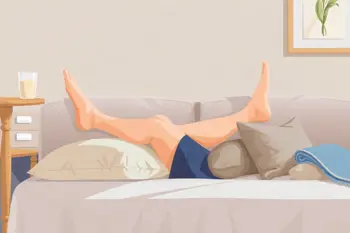
Leg elevation can reduce fluid buildup and support venous return, especially after prolonged standing or sitting. A practical rest period is 15 to 20 minutes with the legs raised above heart level, provided that this position is comfortable. Remaining still for the rest of the day is not generally helpful, because gentle movement supports circulation. Short walking breaks and changes of position are particularly relevant when work or travel requires extended sitting or standing. 1 9
- Use a supported position rather than forcing the hips or knees into discomfort.
- Take brief walking or mobility breaks during long stationary periods.
- Light activity can be preferable to complete inactivity when soreness is mild and movement does not increase pain.
Stretching and gentle muscle release
Gentle calf, hamstring, and quadriceps stretches can ease tightness and help restore comfortable movement. Examples include a controlled wall calf stretch and seated toe raises, performed without bouncing or forcing the range. A five to ten minute routine before bed may be useful when tension or nighttime cramping is the main complaint. Stretching should feel mild, not sharp, and should stop if it produces increasing pain, weakness, numbness, or instability. 3 8
- Move slowly into the stretch and breathe normally.
- For an active cramp, gently lengthen the affected muscle rather than contracting it repeatedly.
- Allow recovery after demanding exercise instead of repeating intense activity through soreness.
Choosing cold, heat, or a warm bath
Cold and heat serve different purposes. Cold packs wrapped in a towel can numb discomfort and reduce swelling associated with acute muscular soreness or a sprain; sessions of about 15 to 20 minutes are described in the supplied research. Heat from a warm towel, heating pad, or bath can relax stiff muscles and reduce spasm when the problem is a deep, tight ache rather than fresh swelling. Heat should not be used to ignore unexplained swelling or severe pain. 6 10
- Use a cloth barrier between skin and an ice pack.
- Do not apply extreme heat directly to skin or fall asleep with a heating device in place.
- Epsom salt baths are a traditional remedy, but the supplied evidence describes them as customary rather than a guaranteed treatment.
Hydration, massage, and compression
Hydration is relevant because dehydration can contribute to muscle cramps and may worsen fatigue during or after activity. Food provides minerals such as potassium, magnesium, and calcium, although supplements should not be started solely on the assumption that a deficiency exists. Massage using comfortable upward strokes may reduce muscle tension and encourage circulation. Graduated compression stockings can help some people with venous insufficiency or heavy legs, but they are not suitable for every circulation problem and should be discussed with a clinician when arterial disease is possible. 4 7 9
- Drink regularly, particularly around exercise or exposure to heat.
- Massage should remain gentle and should stop if swelling, warmth, or pain increases.
- Compression should feel supportive, not painfully tight, numb, or discolored.
When home treatment is not enough
Leg pain that repeatedly occurs during walking and improves with rest may require evaluation because peripheral artery disease is one possible explanation. Night cramps can also be associated with nerve issues, pregnancy, age, prolonged sitting or standing, and medicines such as some diuretics, blood-pressure drugs, or statins. Persistent symptoms should not automatically be attributed to dehydration or mineral imbalance. Medical assessment is especially important when pain is severe, recurrent, unexplained, or accompanied by weakness, numbness, fever, joint swelling, or reduced range of motion. 5 9
- Seek urgent medical help for sudden severe pain, marked one-sided swelling, or significant weakness or numbness.
- Arrange professional advice for symptoms that do not improve with rest and gentle care.
- Review possible medication effects with a qualified clinician rather than stopping prescribed treatment independently.
A practical, cautious routine
For ordinary fatigue after a long day, a cautious sequence is to change position, walk gently, drink water, stretch the calves and thighs, and elevate the legs for 15 to 20 minutes. Cold is more appropriate for fresh swelling or acute soreness, while warmth may suit stiffness or muscle spasm later in recovery. Rest remains important because intense activity can create microscopic tissue stress, temporary inflammation, depleted energy stores, and nervous-system fatigue. Recovery is part of repair, not simply inactivity. 1 7 10
- Track when the aching begins, what activity preceded it, and whether swelling or neurological symptoms occur.
- Increase activity gradually after soreness settles.
- Use home care as symptom management, not as a substitute for diagnosis when warning signs persist.
Sources
- Bodytonic Clinic, “7 Ways to Manage Leg Fatigue”
- Medcare, “Leg Pain: Causes, Treatment & Home Remedies”
- Healthline, “Natural Home Remedies for Body Pain and Tiredness”
- Doc Miller, “Aching Legs at Night: 7 Proven Ways to Find Relief”
- Tylenol, “Causes and Treatments for Nighttime Leg Pain”
- The Girl That Runs, “How to Use Heat and Compression on Different Types of Leg Fatigue”
- Athtec, “Simple Ways to Support Muscle Recovery at Home”
- StretchMed, “How to Relax Leg Muscles at Night”
- Harvard Health, “When Walking Makes Your Legs Hurt”
- ScienceInsights, “What to Do With Sore Legs for Faster Recovery”
Authored by 24Trendz team