Warning signs of heart attack: A clinical guide to symptoms and emergency response
Warning signs of heart attack are not always dramatic or unmistakable. Chest discomfort may be mild, symptoms may come and go, and some people experience nausea, fatigue, breathlessness, or pain outside the chest instead. Any suspected heart attack should be treated as a medical emergency because prompt assessment and treatment can limit damage to heart muscle.
Chest discomfort is the classic warning sign
Chest pain or discomfort is the most frequently recognized symptom of a heart attack, but it does not have one consistent description. People may report pressure, squeezing, fullness, heaviness, tightness, aching, or pain ranging from mild to severe. Penn Medicine notes that discomfort can occur occasionally over several days or appear suddenly, while Cleveland Clinic describes episodes that wax and wane before becoming more serious. 1
- Pressure, tightness, or aching in the center or left side of the chest.
- Discomfort lasting more than a few minutes or returning after it fades.
- Symptoms resembling indigestion or heartburn, particularly when unusual.
- Chest symptoms occurring with breathlessness, sweating, nausea, or weakness.
Pain can spread beyond the chest
Heart attack discomfort may radiate to one or both arms, the shoulders, neck, jaw, back, or upper abdomen. Stomach pain may feel like heartburn, which can lead to an incorrect assumption that the problem is digestive. UC Davis Health lists pain in an arm or shoulder, back, neck, or jaw among emergency symptoms, and Penn Medicine similarly identifies the shoulders, arms, chest, neck, and jaw as possible locations. 2
- Arm or shoulder discomfort, including symptoms without severe chest pain.
- Pain in the jaw, neck, or back that has no clear muscular explanation.
- Upper-abdominal discomfort accompanied by sweating or shortness of breath.
- Discomfort that begins during activity or occurs with other cardiac symptoms.
Breathing and circulation symptoms
Shortness of breath can occur with chest discomfort or before it, including during rest. Lightheadedness, dizziness, or faintness can also accompany a heart attack when the heart is not supplying the body effectively. UC Davis Health identifies shortness of breath, dizziness, and lightheadedness as emergency symptoms, while Penn Medicine includes anxiety, sweating, and cold, clammy skin among possible signs. 3
- Breathlessness during usual activities or while resting.
- Sudden lightheadedness, dizziness, weakness, or a feeling of impending faintness.
- Cold, clammy sweating that is not explained by heat or exercise.
- Anxiety or a strong sense that something is seriously wrong.
Nausea, fatigue, and subtle changes
Nausea and vomiting can occur during a heart attack, sometimes alongside stomach discomfort rather than obvious chest pain. Unusual fatigue, reduced ability to perform ordinary activities, and a general sense of not feeling right are also recognized warning patterns. Cleveland Clinic reports that early symptoms may begin hours, days, or weeks beforehand and may be subtle or intermittent. Familydoctor.org notes that women may be more likely to experience fatigue, sweating, dizziness, or shortness of breath without prominent chest pain. 4
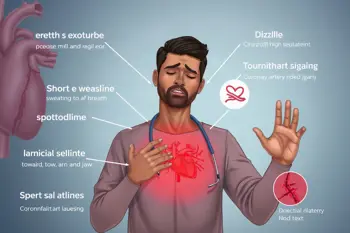
- Unexplained exhaustion that is disproportionate to recent activity.
- Repeated episodes of nausea or vomiting without an obvious cause.
- Shortness of breath during routine tasks that were previously tolerated.
- A vague but persistent feeling that physical health has changed.
Symptoms differ among people
Heart attack symptoms vary by individual, and intensity does not reliably indicate the amount of heart damage. Some people have mild symptoms, while others have severe pain, collapse, or cardiac arrest. UC Davis Health reports that about 20% of heart attacks are silent, meaning they produce no obvious symptoms. Differences can also occur by sex, age, and underlying conditions, so the absence of dramatic chest pain does not exclude a heart attack. 5
- Women may have chest discomfort, but may also report fatigue, nausea, breathlessness, dizziness, back pain, or jaw pain.
- Older adults and people with diabetes may have less typical or less intense symptoms.
- Symptoms can occur alone or in combinations.
- A silent event may be discovered only through medical testing.
What emergency guidance recommends
A person who thinks a heart attack may be occurring should contact emergency medical services rather than driving themselves to a hospital. Merck Manual guidance states that people who suspect an acute coronary syndrome should call for emergency help and then chew an aspirin tablet, although aspirin may be unsuitable for people with allergy, bleeding risk, or other contraindications. Emergency clinicians use an electrocardiogram and blood testing, including cardiac enzymes or troponin, to evaluate possible heart muscle injury. 6
- Call the local emergency number when symptoms suggest a heart attack.
- Describe the symptoms, their onset, and whether they have returned or worsened.
- Do not drive yourself, because symptoms can deteriorate during transportation.
- Follow dispatcher or clinician instructions about aspirin and other measures.
- Do not dismiss symptoms merely because they are mild, intermittent, or resemble indigestion.
Sources
- Penn Medicine, Heart Attack: Symptoms and Causes
- Cleveland Clinic, Warning Signs of a Heart Attack
- UC Davis Health, Heart Attack
- Familydoctor.org, Heart Attack
- Cleveland Clinic, What a Heart Attack Can Feel Like
- Merck Manual Consumer Version, Acute Coronary Syndromes
Authored by 24Trendz team