Blood sugar support strategies for adults with prediabetes: Clinical insights into effective management
Prediabetes is a critical clinical window where blood glucose levels are higher than normal but have not yet reached the threshold for a type 2 diabetes diagnosis 3. With an estimated 86 million U.S. adults affected, recognizing the power of early intervention is essential for long-term health 5. Research consistently demonstrates that structured lifestyle changes can significantly mitigate the progression of the condition, offering a proactive approach to maintaining glycemic stability 2. This article explores evidence-based strategies, including dietary adjustments and physical activity, that serve as the foundation for effective blood sugar management.
The Clinical Rationale for Lifestyle Intervention
The National Institutes of Health (NIH) Diabetes Prevention Program (DPP) remains a landmark study confirming that type 2 diabetes can be delayed or prevented through intentional lifestyle modifications 5. Participants in such programs have demonstrated a reduction in diabetes incidence by up to 58% over three years compared to placebo groups 5. Clinical guidance emphasizes that lifestyle intervention should be viewed as active therapy rather than general advice, as structured programs provide the necessary framework for sustaining behavioral change 6.
For many adults, the primary barrier to progress is a lack of awareness, as more than 84% of individuals with prediabetes remain undiagnosed 4. Clinical teams are encouraged to screen patients, particularly those with a family history of diabetes or elevated body mass index (BMI), to initiate early preventative measures 4. Once individuals are aware of their status, they are statistically more likely to engage in the necessary habits to reverse prediabetes, illustrating the importance of early diagnosis in the prevention cycle 4.
Weight Loss Goals and Metabolic Impact
Weight management is a dominant predictor of reduced diabetes risk, with research indicating that for every kilogram of weight lost, there is an approximate 16% reduction in the risk of progression 5. Clinical recommendations suggest setting reachable goals, such as losing 5% to 10% of total body weight within six months 1. This target is not merely about aesthetic results but about improving overall insulin sensitivity and reducing the burden on the body's metabolic pathways 1.
| Current Weight (lbs) | 5% Loss Goal | 7% Loss Goal | 10% Loss Goal |
|---|---|---|---|
| 150 | 8 lbs | 11 lbs | 15 lbs |
| 200 | 10 lbs | 14 lbs | 20 lbs |
| 250 | 13 lbs | 18 lbs | 25 lbs |
| 300 | 15 lbs | 21 lbs | 30 lbs |
While weight loss is a core pillar, recent findings suggest that prediabetes remission is also achievable through mechanisms like improved insulin sensitivity and beta-cell function, even in cases where weight loss is not the primary outcome 9. Achieving normal glucose regulation is a more efficient clinical marker for preventing type 2 diabetes than weight loss alone, highlighting the need to focus on glycemic targets during routine follow-ups 9.
Dietary Strategies for Glycemic Control
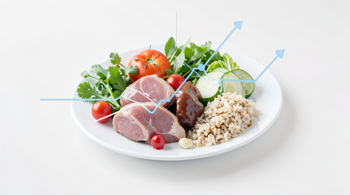
There is no singular diet for prediabetes, but experts advocate for an overall eating pattern that emphasizes nutrient-dense, whole foods 3. A balanced approach typically involves increasing the consumption of fruits, vegetables, legumes, and whole grains while limiting the intake of refined carbohydrates, fried foods, and sugar-sweetened beverages 3. These choices assist in managing blood glucose spikes and support long-term metabolic stability 8.
Systematic reviews indicate that dietary interventions, particularly those that are culturally tailored, have achieved significant improvements in HbA1c levels, with reductions ranging from -0.3% to -0.7% 8. The goal is to create a sustainable eating environment that allows for flexibility while keeping the average daily intake aligned with caloric needs 3. Because managing blood sugar requires regular insulin usage by the body, eating at consistent intervals throughout the day can also assist in avoiding extreme fluctuations 8.
Physical Activity and Muscle Glucose Uptake
Physical activity is essential for reversing the progression of prediabetes, with a benchmark of 150 minutes of moderate-intensity exercise per week often cited in clinical guidelines 7. Studies have shown that individuals who consistently meet this weekly quota are significantly more likely to reverse their prediabetic status within a year compared to those who remain sedentary 7. Increasing muscle activity enhances glucose uptake, providing a direct mechanism for lowering circulating blood sugar levels 7.
- Incorporate at least 150 minutes of moderate aerobic activity weekly to support insulin sensitivity 7.
- Engage in resistance or strength training at least twice a week to build muscle mass, which facilitates better glucose metabolism 7.
- Aim for consistent, long-term adherence rather than high-intensity, short-duration spikes in activity 7.
Behavioral Change and Sustained Success
Lifestyle modification is inherently challenging, and the health care team plays a vital role in providing the necessary resources for behavioral change 2. Tools such as action plans that identify specific health goals, barriers to success, and reward structures can assist patients in persisting when faced with inevitable challenges 2. When patients are not ready for a formal lifestyle program, they often benefit from professional assistance to develop these foundational habits 2.
Clinical evidence demonstrates that success in achieving activity and weight goals often increases with age and initial engagement levels 5. Therefore, the transition to a healthier lifestyle should be viewed as a progressive journey rather than a single event. By focusing on measurable outcomes and utilizing the support of trained health professionals, adults with prediabetes can navigate the behavioral complexities required to protect their long-term health 2.
Sources
- National Institute of Diabetes and Digestive and Kidney Diseases (NIDDK), 'Your Game Plan to Prevent Type 2 Diabetes'
- National Institute of Diabetes and Digestive and Kidney Diseases (NIDDK), 'Support your Patients with Behavior Change Strategies'
- Harvard Health Publishing, 'Prediabetes diet: How to help prevent progression to diabetes'
- National Institute of Diabetes and Digestive and Kidney Diseases (NIDDK), 'When Should Patients with Prediabetes Be Referred to an Evidence-based Lifestyle Change Program?'
- National Institute of Diabetes and Digestive and Kidney Diseases (NIDDK), 'Evidence Supporting Prevention'
- GlobalRPH, 'Prediabetes In 2026: Evidence Thresholds For Lifestyle Intervention, Metformin, And Anti-Obesity Pharmacotherapy'
- Harvard Health Publishing, 'Exercising 150 minutes per week could help reverse prediabetes'
- BMC Public Health, 'Effectiveness of behavioral intervention programs for preventing and managing diabetes in adults: a systematic review of evidence'
- Nature Medicine, 'Prevention of type 2 diabetes through prediabetes remission without weight loss'
Authored by 24Trendz team