Pottery Classes for Families: A Neutral Guide to Formats, Requirements, and Planning
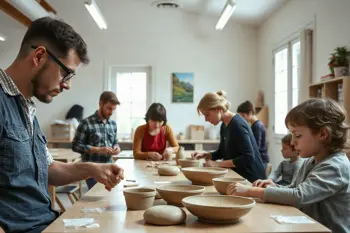
Pottery classes for families provide a shared, hands-on activity in which children and adults make ceramic objects together. Published programs show that family sessions commonly use hand-building methods such as pinching, slab construction, and coil building, while some also introduce wheel throwing, glazing, painting, or surface decoration. 1
How family pottery classes are structured
Family pottery programs appear in several formats. Some are single two-hour workshops, while others meet weekly across four, six, or more sessions. Greenwich House lists a two-hour Saturday workshop for children ages 6 and older with accompanying adults, and Slo Slo Studio describes a two-hour family hand-building session with a 20-minute demonstration followed by guided making time. 1 9
Multi-week instruction can provide more time for skill development and project completion. The Gardiner Museum schedules Family Hand Building across six Sundays, with families learning hand-building and glazing techniques inspired by the museum collection. The Centre for Creative Arts lists a four-week family and inclusive class for ages 6 and up, with sessions running two hours each week. 2 10
Activities and techniques families may encounter
Hand-building is the most consistently documented activity in the supplied programs. Participants may pinch clay into forms, join coils, build with slabs, shape sculptural objects, and decorate surfaces. Greenwich House identifies pinching, slab building, and coil construction as foundational methods, while Slo Slo Studio highlights pinch pots, basic forming, and colorful surface decoration. These techniques generally allow participants with different experience levels to work at their own pace. 1 9
Wheel throwing is available in some family programs but is not universal. Forgan Arts Centre states that families may use hand-building techniques or try throwing on a wheel. A Chandler, Arizona, program describes wheel instruction for children ages 8 and older and families, including centering clay and developing technique for beginners and returning participants. Pottery-painting studios represent another format, using prepared ceramic pieces rather than raw clay, although the supplied class listings focus primarily on making from clay. 4 7 11
Age limits, adult participation, and accessibility
Age rules vary substantially. Not Another Pottery Studio lists a family session for ages 2 and older, Forgan Arts Centre accepts children from age 5, and Greenwich House and the Gardiner Museum specify children beginning at age 6. Slip Studio and Shoshana Parry describe family clay activities for children ages 8 and older. These differences mean that age suitability should be checked against the specific session rather than assumed from the general label “family.” 5 4 1 2 3 8
Adult participation is commonly a requirement, not an optional arrangement. The Gardiner Museum requires one paying adult for each child ticket, while Greenwich House states that children must be accompanied by an adult. The Centre for Creative Arts similarly requires a participating parent, guardian, or support worker, and Forgan Arts Centre permits children ages 10 and older to attend without an adult. Families should also confirm whether every attendee needs separate registration and whether a supervising adult is expected to make their own piece. 2 1 10 4
Costs, inclusions, and finished work
Published prices differ according to duration and format. Slip Studio lists Family Clay Date at $65 per person, Slo Slo Studio lists a two-hour family workshop at $45, and Not Another Pottery Studio lists Family Fun Pottery at $65 per person. The Gardiner Museum lists a six-session general rate of $500 for one adult and one child, with an additional-participant rate, while the Centre for Creative Arts lists a four-week class at $160. 3 9 5 2 10
Inclusions also differ. Greenwich House, Slip Studio, Slo Slo Studio, and the Centre for Creative Arts describe materials, tools, clay, firing, or related fees as included in the stated program structure. Finished work is generally not taken home immediately because it must be dried, glazed, and kiln-fired. Greenwich House estimates pickup in approximately three weeks, Slip Studio states four to six weeks, and Slo Slo Studio states three to four weeks. 1 3 9 10
Scheduling, locations, and booking conditions
Family classes are offered in museums, nonprofit arts centers, dedicated pottery studios, and community facilities. Listed examples include Greenwich House Pottery Chelsea at 80 Eighth Avenue in New York, Slip Studio in White Plains, the Gardiner Museum in Toronto, The Pottery Hut in Milton, and Not Another Pottery Studio in Los Angeles. Dates range from individual workshops to recurring weekly terms, and some listings identify particular dates while others publish seasonal or multi-week schedules. 1 3 2 6 5
Booking conditions can affect the practical suitability of a class. Forgan Arts Centre requires tickets for adults and children, while Slip Studio states that tickets are sold separately for each participant and caps workshops at 12 students. Slo Slo Studio also lists a maximum of 12 students and requires separate registration for adult and child participants. The Pottery Hut identifies a final-sale policy for its listed class, making cancellation and rescheduling terms important factors to review before registration. 4 3 9 6
Practical risks and questions to resolve
Clay activities involve mess, drying time, tools, glazes, and kiln processing. Families should confirm clothing expectations, cleanup responsibilities, firing arrangements, pickup procedures, and whether additional pieces incur separate charges. Shoshana Parry advises wearing clothing that can become dirty and states that adults may accompany up to two children, while The Pottery Hut includes a final cleanup period within its 2.5-hour class. 8 6
Other issues include supervision, physical access, sensory preferences, and the ability to complete a project within the scheduled period. A class may be suitable for beginners but still require sustained attention from children. Families can evaluate a program by checking these points:
- Minimum and maximum ages, including whether age rules apply to every child.
- Adult-to-child participation and registration requirements.
- Hand-building, wheel throwing, painting, glazing, or mixed activities.
- Materials, firing, cleanup, and pickup timelines.
- Class length, location, capacity, cancellation, and refund conditions.
Comparing formats for different family needs
A one-off workshop generally suits families seeking a short shared activity, while a multi-week class provides repeated instruction and more opportunity to develop technique. Hand-building is documented across nearly all supplied family offerings and may be the most broadly accessible starting point. Wheel classes are more equipment-dependent and may have higher minimum ages. Pottery painting can reduce the forming stage, but its fee structure may be based on both studio participation and the selected ceramic item. 1 2 4 7 11
The central distinction is whether the goal is shared experimentation, structured skill development, or a finished keepsake. Family programs consistently emphasize making side by side, beginner instruction, and later pickup of fired work. Because schedules, age policies, prices, inclusions, and cancellation conditions vary by provider, those details should be treated as program-specific rather than standard features of every family pottery class. 1 3 5 9
Sources
- Greenwich House, “Clay for Families Workshop”
- Gardiner Museum, “Family Hand Building”
- Slip Studio, “Family Clay Date”
- Forgan Arts Centre, “Family Pottery: Thursday”
- Not Another Pottery Studio, “Family Fun Pottery”
- The Pottery Hut, “Family Friendly Classes”
- Burst of Butterflies, “Kids & Family Pottery Wheel Class”
- Shoshana Parry, “Family Clay Class”
- Slo Slo Studio, “Family Studio Time: Handbuilding”
- The Centre for Creative Arts, “Family/Inclusive: Intro to Hand-built Pottery”
- General research sources covering pottery-painting and ceramic studio formats
Authored by 24Trendz team