Warning signs of a urinary tract infection: A clinical guide to symptoms and severity
The warning signs of a urinary tract infection usually involve changes in urination, discomfort, or urine appearance. Recognizing whether symptoms remain consistent with a bladder infection or suggest kidney involvement is important because untreated infection can spread upward through the urinary tract. 1
Common urinary symptoms
A strong or persistent urge to urinate is a frequent early warning sign. The urge may continue even when only a small amount of urine is produced, and some people may need to urinate more often than usual. Burning or pain during urination, known medically as dysuria, is another characteristic symptom of infection affecting the bladder or urethra. 2
Urinary frequency and urgency can occur together, but they describe different experiences. Frequency means urinating more often, while urgency describes a difficult-to-ignore need to urinate. These symptoms may develop when inflammation irritates the urinary tract. A urine test is commonly used to help evaluate suspected infection, even when symptoms appear typical. 3
Changes in urine appearance and odor
Cloudy urine can occur during a bladder infection, and urine may also look dark or have a strong or foul odor. Blood may make urine appear pink, red, or brownish, although visible blood is not specific to a UTI and requires clinical assessment. NIDDK identifies cloudy, bloody, or strong-smelling urine among possible bladder infection symptoms. 1
Urine odor alone does not establish that an infection is present. Concentration, diet, medicines, and other conditions can affect odor or color, so changes are more informative when they occur alongside burning, urgency, frequency, or pelvic discomfort. A health professional may examine a urine specimen to distinguish infection from other causes of urinary changes. 4
Pain and discomfort linked to a UTI
Lower abdominal pain, pressure, or discomfort around the pelvis can accompany a bladder infection. The discomfort may be felt near the center of the lower abdomen or around the pubic bone. These symptoms reflect irritation in the lower urinary tract and can occur with urinary urgency or painful urination. 2
Pain location helps indicate severity, but it is not a diagnosis by itself. Lower abdominal or pelvic discomfort is more consistent with lower-tract involvement, while pain in the back, side, or groin raises concern that infection may have reached the kidneys. Kidney-related pain can be substantial and should be evaluated with other symptoms rather than dismissed as ordinary abdominal discomfort. 1
Warning signs of possible kidney infection
Fever and chills are important warning signs because they may indicate a more serious infection involving one or both kidneys. Nausea or vomiting, along with pain in the back, side, or groin, can also occur when bacteria move from the bladder toward the upper urinary tract. Kidney infections can cause serious health problems if they are not treated early. 1
Symptoms suggesting kidney involvement warrant prompt medical attention, particularly when urinary symptoms are worsening or accompanied by systemic illness. Professional guidance describes fever, chills, low back pain, nausea, and vomiting as signs that a UTI may be more severe. The combination of urinary symptoms and these whole-body or upper-body symptoms is more concerning than an isolated change in urine odor. 2
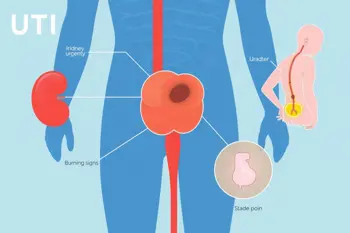
- Fever or chills with urinary symptoms. 1
- Nausea or vomiting. 1
- Pain in the back, side, or groin. 1
Symptoms in older adults and other groups
Some older adults may show sudden changes in behavior or mental state during a UTI. Family members or caregivers may notice confusion, agitation, unusual sleepiness, increased forgetfulness, or a sudden decline in everyday functioning. These changes have many possible causes, so a medical evaluation is needed rather than assuming that a UTI is responsible. 2
UTIs can affect people of any sex and can occur in different parts of the urinary system, including the urethra, bladder, ureters, or kidneys. Pregnancy, diabetes, advanced age, urinary catheters, kidney stones, incomplete bladder emptying, and blockages such as an enlarged prostate can increase the likelihood of infection. 3
When symptoms need medical evaluation
Contacting a health professional is appropriate when symptoms of a bladder infection appear, including burning urination, frequent or intense urges, lower abdominal discomfort, or cloudy, bloody, or strong-smelling urine. Symptoms that persist, fail to improve over a couple of days, or become worse also warrant evaluation. Diagnosis is generally supported by urine analysis and, when indicated, urine culture. 1
Immediate medical care is particularly important when urinary symptoms occur with fever, chills, back or side pain, nausea, or vomiting because these findings may reflect kidney infection. Treatment commonly involves antibiotics selected according to the clinical assessment and urine findings, while structural problems, urinary obstruction, or catheters may also need attention. Self-diagnosis is unreliable because several noninfectious conditions can resemble a UTI. 5
What the warning signs do and do not prove
Symptoms can strongly suggest a UTI, but they do not confirm the cause. Bacterial infections most often affect the bladder or urethra, and bacteria commonly enter through the urethra before traveling upward. However, urinary symptoms may occur without detectable infection, and bacteria can sometimes be present without symptoms, a condition called asymptomatic bacteriuria. 6
Clinical context changes the meaning of a symptom. For example, pregnancy is a group in which asymptomatic bacteriuria may require treatment, whereas most other women without symptoms do not require treatment for that finding. A urine evaluation is therefore important when symptoms are unusual, recurrent, severe, or associated with risk factors that can interfere with bladder emptying or allow infection to spread. 3
Sources
- National Institute of Diabetes and Digestive and Kidney Diseases, “Symptoms & Causes of Bladder Infection in Adults”
- Penn Medicine, “Urinary Tract Infection: Symptoms and Causes”
- Penn Medicine, “Urinary tract infection - adults”
- Merck Manual Consumer Version, “Bladder Infection”
- Merck Manual Professional Edition, “Bacterial Urinary Tract Infections”
- FamilyDoctor.org, “Urinary Tract Infection (UTI)”
Authored by 24Trendz team