Train tours across Switzerland: An Analytical Review of Scenic Rail Infrastructure and Travel Logistics
Switzerland maintains one of the most sophisticated rail networks globally, serving as a primary conduit for tourism through the Alps and across its distinct linguistic regions 1. The landscape, characterized by high mountain passes, deep gorges, and pristine glacial lakes, has necessitated the development of specialized panoramic rail services designed to optimize passenger visibility through oversized windows and stable, slow-speed transits 2. These tours typically integrate multiple lines, such as the Glacier Express, Bernina Express, and GoldenPass Express, to provide comprehensive access to remote alpine resorts and historic urban centers 3.
Operational Structure of the Grand Train Tour
The Grand Train Tour of Switzerland is not a single, fixed-schedule service but a cohesive network of six primary panoramic routes spanning approximately 1,280 kilometers 4. This infrastructure connects eleven major lakes and traverses five UNESCO World Heritage sites, allowing for significant itinerary flexibility 5. Travelers often choose between seven and fifteen-day durations, incorporating cities such as Zurich, Lucerne, St. Moritz, Zermatt, and Montreux into their travel plans 6. Because this network utilizes the national rail grid, it offers a seamless transition between different train categories without the need for private transport 7.
Key Panoramic Rail Lines and Geographic Reach
Specific rail corridors are engineered for distinct terrain, with the Glacier Express representing one of the most recognized routes, connecting Zermatt and St. Moritz over an eight-hour journey 8. Frequently cited as the slowest express train in the world, it traverses 91 tunnels and crosses the Oberalp Pass to maintain a trajectory through challenging topography 9. Conversely, the Bernina Express utilizes the UNESCO-listed Rhaetian Railway to reach elevations as high as 2,253 meters at the Ospizio Bernina, facilitating a dramatic transition from glacial landscapes to the Mediterranean climate of northern Italy 10.
Complementing these high-altitude routes, the GoldenPass Express provides a critical link between the luxury resort area of Gstaad, Montreux, and Interlaken, offering a view of the Bernese Alps and the surrounding lake regions 11. Shorter, high-frequency services such as the Lucerne-Interlaken Express operate within the broader GoldenPass line, connecting major tourism hubs in under two hours 12. These routes are often supplemented by multimodal connections, such as the Gotthard Panorama Express, which combines rail travel with historic steamboat navigation on Lake Lucerne 13.
Logistics and Travel Requirements
The efficiency of Swiss rail travel relies on a high degree of integration within the Swiss Travel System, which allows for unified ticketing options such as the Swiss Travel Pass 14. This pass provides access to trains, buses, and boats, though it does not replace the requirement for mandatory seat reservations on specific panoramic trains during peak travel seasons 15. Given the popularity of routes like the Glacier Express and the Bernina Express, seat reservation cycles typically begin months in advance to ensure availability on desired departure dates 16.
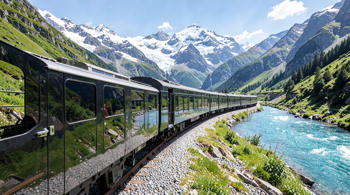
For travelers seeking high-end amenities, many panoramic lines offer 'Excellence Class' or 'First Class' configurations, which include dedicated concierge services, personalized travel support, and onboard catering services like multi-course lunches 17. These service levels are distinct from standard carriages and require separate booking procedures. Logistics often involve luggage transfer services, which facilitate travel between hotels in different cities by transporting large suitcases separately from the passenger, a common necessity for those on multi-stop itineraries across Switzerland 18.
Integrating Regional Excursions
Beyond the primary panoramic routes, rail tours often incorporate localized excursions to mountain peaks or specific cultural landmarks. Notable examples include the cogwheel train ascent to the Gornergrat in Zermatt for views of the Matterhorn, and the Jungfrau Railway, which provides access to the Jungfraujoch, recognized as the highest railway station in Europe 19. These secondary rail lines are often integrated into larger tour packages to provide access to glacial viewing areas and alpine research stations 20.
Cultural themed excursions, such as the Chocolate Train traveling from Montreux to the Cailler-Nestlé factory in Broc, highlight the diversification of rail tourism beyond pure scenic viewing 21. These specific routes typically emphasize Swiss culinary heritage and are often scheduled alongside major panoramic transits. Proper planning for these excursions requires consideration of seasonal mountain conditions, as access to high-altitude stations can be subject to weather-related closures or operational changes throughout the year 22.
Risk Management and Regulatory Oversight
Traveling by rail in Switzerland requires awareness of several operational friction points. Weather conditions in the Alps can lead to sudden service disruptions or the closure of mountain passes, necessitating a flexible approach to transit times 23. Furthermore, while the Swiss rail system is known for precision, travelers must account for connection times when moving between regional and panoramic lines, particularly when carrying heavy luggage 24. Regulatory compliance for international arrivals necessitates valid travel documentation and, in many cases, specific insurance to cover medical or transit-related emergencies 25.
Budgeting for these tours is heavily influenced by the choice of accommodation and the timing of the visit. Prices vary based on the season, with higher costs generally associated with peak winter skiing months and the height of the summer holiday period 26. Travelers should consult official rail authority websites or standardized travel documentation to verify current schedules and eligibility for regional guest cards, which may provide local transit benefits in towns such as Lucerne or Montreux 27.
Sources
- SBB CFF FFS - Swiss Rail System Overview
- Lonely Planet - Luxury Train Travel Standards
- The Man in Seat 61 - Swiss Rail Planning Guide
- Switzerland Tourism - Grand Train Tour Logistics
- Travelertips.eu - Panoramic Rail Lines Analysis
- Go Rail Travel - Majestic Switzerland Tour Specifications
- Exotik Journeys - Grand Train Tour Itinerary Data
- Glacier Express - Operational Route Details
- Tenon Tours - Guided Rail Discovery Metrics
- Rhätische Bahn - Bernina Express UNESCO Route Data
- GoldenPass - Express Operational Highlights
- Zentralbahn - Luzern-Interlaken Express Logistics
- Switzerland Tourism - Gotthard Panorama Express
- SBB CFF FFS - Swiss Travel Pass Benefits
- Rail Europe - Seat Reservation Policies
- Go Rail Travel - Scenic Switzerland Booking Data
- Lonely Planet - Excellence Class Amenities
- Exotik Journeys - Luggage Transfer Procedures
- Tenon Tours - Gornergrat and Matterhorn Access
- Jungfrau Tours - Top of Europe Rail Integration
- Montreux Riviera - Chocolate Train Information
- Switzerland Tourism - Alpine Rail Seasonal Operations
- SBB CFF FFS - Service Disruption Protocols
- The Man in Seat 61 - Rail Connection Guidelines
- Rail Europe - International Travel Compliance
- Go Rail Travel - Pricing and Seasonal Variance
- Jungfrau Tours - Guest Card Transit Benefits
Authored by 24Trendz team