Best home remedies for better night sleep: An Analysis of Evidence-Based Strategies
Achieving consistent, restorative rest is a challenge for a significant portion of the population, with more than 60 million Americans experiencing poor sleep quality 1. Data indicates that roughly one in three U.S. adults reports not obtaining sufficient sleep on a regular basis, while an estimated 50 to 70 million individuals live with chronic sleep disorders 4, 5, 9. Addressing these challenges requires an understanding of sleep hygiene-the foundational habits that facilitate the transition into restful slumber 2.
The Role of Clinical Evidence in Sleep Improvement
While various home remedies are popular, the effectiveness of these measures varies significantly. Cognitive Behavioral Therapy for Insomnia (CBT-I) currently holds the strongest clinical evidence for resolving chronic sleep issues 4, 9. A meta-analysis of 20 randomized trials demonstrated that participants engaging in CBT-I fell asleep approximately 19 minutes faster and spent 26 minutes less time awake during the night 9. This structured approach emphasizes identifying and reframing the thoughts, feelings, and behaviors that contribute to sleep interference 4.
For those seeking foundational changes, establishing a fixed wake-up time seven days a week is considered a core component of effective sleep hygiene 9. Research suggests that a regular wake-up schedule helps stabilize the circadian rhythm more effectively than focusing solely on a fixed bedtime 7. When these foundational practices are in place, secondary behavioral modifications and environmental adjustments can serve as supportive measures for maintaining sleep quality 9.
Environmental and Behavioral Foundations
Environmental control is a critical aspect of sleep hygiene, often referred to as protecting one's sleep environment. Maintaining a room temperature between 60 and 67 degrees Fahrenheit is considered optimal for the body's thermoregulation during rest 19. Furthermore, light exposure plays a regulatory role; morning sun exposure within one hour of waking can help suppress sleep-inducing hormones, signaling the body to enter a wakeful state and preparing it for natural fatigue by evening 6, 8.
Conversely, limiting exposure to artificial blue light from electronic devices at least one hour before bed is recommended to preserve natural melatonin production 17. Establishing a wind-down routine-such as reading, knitting, or simple relaxation exercises-can help quiet mental chatter 3. For those experiencing nocturnal rumination, performing a mental or written 'brain dump' of tasks and stressors before getting into bed may reduce the cognitive arousal that prevents sleep onset 4, 22.
Dietary Influences and Sleep Latency
Dietary habits significantly impact the ability to fall and stay asleep. Caffeine intake should be carefully managed, as it can block adenosine receptors, which are responsible for building the drive to sleep 24. Studies have shown that consuming 400 mg of caffeine six hours before bedtime can result in the loss of over an hour of sleep 9. Experts advise limiting caffeine intake to the first half of the day to prevent the central nervous system from being overstimulated during evening hours 9.
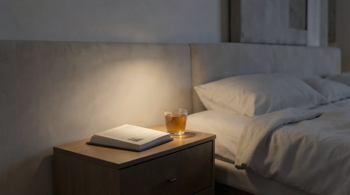
Alcohol consumption also interferes with sleep quality, as it can disrupt the sleep-wake transition despite potential sedative effects that might initially make one feel drowsy 1, 9. For those seeking herbal alternatives, chamomile tea and tart cherry juice are often suggested. Chamomile is believed to contain flavonoids that may interact with receptors in the brain involved in the sleep-wake cycle 1, 18. While scientific proof for these specific drinks is limited, they are generally considered to have few side effects or drug interactions 1.
Physical Activity and Muscle Relaxation
Regular physical exercise is associated with deeper, more restorative sleep, provided the timing is appropriate 21. While daily movement is beneficial, intense workouts performed immediately before bed can elevate body temperature and heart rate, potentially hindering sleep onset 21. To counter physical tension, techniques such as progressive muscle relaxation can be employed to reduce the physiological stress that often manifests after a long day 23.
| Approach | Evidence Strength | Expected Benefit |
|---|---|---|
| CBT-I | Strong (Meta-analysis) | Faster sleep onset; less wake time |
| Fixed Wake-up Time | Fairly Strong | Steadier sleep rhythm |
| Caffeine Restriction | Strong Mechanism | Reduced sleep drive interference |
| Limiting Alcohol | Fairly Strong | Improved sleep architecture |
Managing Psychological and Cognitive Barriers
Anxiety and insomnia are frequently linked and can reinforce one another, creating a cycle of sleep disruption 4. To mitigate this, individuals are encouraged to identify and challenge negative thoughts related to sleep during the day rather than while in bed 4. Mindfulness meditation and similar relaxation techniques are effective for reducing cortisol levels and managing the feelings of stress that often prevent individuals from drifting off 20.
By reframing thoughts and utilizing structured rituals, it is possible to nudge the brain out of an 'alert mode' and into a 'safe to sleep' state 6. Consistent practice is key, as the brain requires repeated cues-such as consistent timing for lights, activity, and nutrition-to effectively shift hormone release and body temperature patterns 6.
Regulatory Oversight and Professional Consultation
While home remedies are widely discussed, it is important to acknowledge that persistent sleep disorders may indicate underlying medical conditions requiring professional intervention. Sleep deficiency is associated with significant health risks, including an increased probability of heart disease, type 2 diabetes, high blood pressure, and stroke 1, 10. Consequently, when symptoms of insomnia persist beyond three months, seeking guidance from a qualified sleep specialist or healthcare provider is the recommended course of action to explore evidence-based therapies like CBT-I 9.
Sources
- Johns Hopkins Medicine: Natural Sleep Aids and Home Remedies
- Cleveland Clinic: Sleep Hygiene and Improving Sleep Quality
- NPR: Bedtime Rituals to Calm Body and Mind
- Cedars-Sinai: Strategies for Better Sleep
- USA Today: Science-Backed Tips for Rest
- Oprah Daily: Science-Backed Ways to Sleep Better
- Gizmodo: Expert Perspectives on Sleep Habits
- New York Times: Daytime Habits for Sleep Improvement
- Vitalcheck: Sleep Research and Evidence-Based Measures
- UnitedHealthcare: Improving Sleep for Healthier Living
- Sleep Foundation: Circadian Rhythm and Sleep Schedules
- Healthline: Magnesium and Sleep Quality
- Harvard Health Publishing: Blue Light Effects
- Medical News Today: Herbal Teas for Sleep
- Cleveland Clinic: Optimal Sleep Temperature
- Mayo Clinic: Exercise and Sleep Quality
- Johns Hopkins Medicine: Mindfulness and Sleep
- NCCIH: Valerian Root Research
- WebMD: Progressive Muscle Relaxation
- Psychology Today: Impact of Caffeine on Sleep Drive
Authored by 24Trendz team