Natural remedies for managing tension headaches: Evidence, limits, and safety considerations
Natural remedies for managing tension headaches often focus on hydration, rest, muscle relaxation, stress reduction, and consistent daily habits. Tension headaches commonly produce dull pressure or a tight-band sensation involving the head, scalp, or neck, and may be associated with stress, anxiety, fatigue, awkward posture, or muscle contraction 1. Self-care can be appropriate for mild, familiar symptoms, but frequent, changing, or severe headaches require clinical assessment.
What tension headache self-care involves
Tension headaches are commonly linked with tight or contracted muscles in the neck and scalp. They may occur at any age, although they are especially common in teenagers and adults. Symptoms can last from about 30 minutes to several days, and the pain is often mild to moderate rather than throbbing or concentrated on one side 2.
Natural management is therefore aimed at reducing physical tension and addressing potential triggers rather than promising a cure. A quiet rest period, a cool cloth on the forehead, a hot or cold shower, and gentle massage of the head and neck may provide relief for some people 2. Response varies, so a method that helps one person may not help another.
Hydration, meals, and sleep consistency
Dehydration, irregular eating, poor sleep, and fatigue can worsen headaches or contribute to their development. Clinical guidance on headache self-care emphasizes identifying these patterns and maintaining regular daily routines. A headache diary can record when pain began, what was eaten and consumed, how much sleep occurred, and possible environmental or emotional triggers 2.
Sleep hygiene is another practical focus. Cedars-Sinai headache guidance recommends aiming for seven to eight hours of sleep and keeping consistent bedtimes and wake times. It also describes avoiding screens for an hour before bed as part of a structured sleep routine 4. Regular meals are similarly relevant because changes in routine and skipped meals may aggravate headache patterns 4.
Heat, cold, massage, and movement
Heat or cold can be tested as short-term comfort measures. MedlinePlus reports that hot or cold showers or baths may relieve headaches for some people, while resting in a quiet room with a cool cloth may also help 2. Gentle massage of the head and neck may reduce the sensation of muscular tightness, particularly when discomfort is connected with prolonged sitting or stress.
Movement and posture address longer-term contributors. Cleveland Clinic identifies muscle tightness, emotional stress, environmental factors, and insufficient sleep among common categories associated with tension headaches, and recommends posture awareness and stretching as part of self-care 3. Cedars-Sinai also describes aerobic activity such as walking, biking, or swimming as a potentially useful routine, with a stated target of 150 minutes weekly in its headache guidance 4.
Stress reduction and behavioral approaches
Stress and anxiety can trigger muscle contraction and amplify headache discomfort. Relaxation practices may include slow breathing, quiet rest, progressive muscle relaxation, meditation, or other structured methods that reduce physical arousal. MedlinePlus specifically recommends learning ways to relax when headaches are related to stress or anxiety 2.
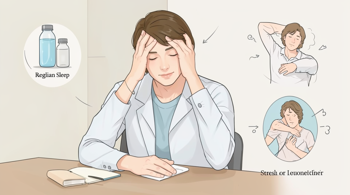
Behavioral care may be particularly relevant when headaches recur. Mayo Clinic notes that healthcare professionals can help identify headache type and cause, while Cleveland Clinic describes stress management as a preventive strategy rather than only an intervention during an episode 13. A diary can help connect pain with work posture, sleep changes, caffeine, alcohol, meals, and emotionally demanding periods.
Supplements, oils, and complementary therapies
Evidence for supplements, herbs, and alternative therapies is less consistent than for basic measures such as regular sleep, hydration, and stress management. Magnesium supplementation may be relevant when deficiency is present, but supplementation should be discussed with a healthcare professional because individual medical conditions, medicines, and appropriate dosage affect safety. “Natural” does not automatically mean risk-free 9.
Peppermint or lavender oils are sometimes used topically or through inhalation for a cooling or calming sensation, but the supplied clinical sources do not establish them as reliable treatments for every tension headache. Acupuncture is also described as a non-drug option for some chronic headache patterns, yet the suitability of any complementary therapy depends on an accurate diagnosis and qualified care 10. Skin irritation, allergies, interactions, and incorrect application remain possible concerns.
Safety limits and when to seek care
Over-the-counter pain relievers can help some headaches, but repeated use can cause medication-overuse or rebound headaches. MedlinePlus warns that regularly taking pain medicine more than three days per week can contribute to this problem. It also notes that aspirin, ibuprofen, and naproxen can irritate the stomach, while excessive acetaminophen can harm the liver 2.
Medical evaluation is appropriate when headaches are frequent, severe, unfamiliar, progressively changing, or interfering with daily life. Healthcare professionals may use a physical and neurological examination and, when needed, imaging such as MRI or CT to rule out serious causes 1. Sudden severe pain, neurological changes, head injury, fever, persistent vomiting, or a markedly different headache pattern should be treated as reasons for prompt medical attention rather than managed solely with home remedies.
Practical comparison of natural approaches
| Approach | Primary purpose | Important limitation |
|---|---|---|
| Hydration and regular meals | Address routine-related triggers | Do not explain every recurrent headache |
| Sleep consistency | Reduce fatigue-related vulnerability | Persistent sleep problems may need evaluation |
| Massage, stretching, and posture | Ease muscular tightness | Forceful manipulation may worsen neck pain |
| Heat, cold, and quiet rest | Provide short-term comfort | Effect differs between individuals |
| Stress management | Reduce emotional and physical tension | Chronic anxiety may require professional care |
The most defensible approach is a combination of low-risk habits tailored to the person’s triggers, with professional input when headaches recur or do not respond. Natural measures can support symptom management, but they should not delay diagnosis, replace treatment for an underlying condition, or encourage repeated use of any remedy that causes irritation or other adverse effects 9.
Sources
- Mayo Clinic, “Tension headache: Diagnosis and treatment”
- MedlinePlus, “Managing tension headaches at home”
- Cleveland Clinic, “10 Tips for Tension Headache Self-Care”
- Cedars-Sinai, “Can Natural Remedies Ease Headache Pain?”
- Cleveland Clinic, “9 Natural Remedies for Headache Relief”
- UPMC, “Living with Tension Headaches: Daily Management Tips”
- MSU Health Care, “Doctors Share the Best Tension Headache Remedies”
- Franciscan Health, “Stress Headaches: Tips for Prevention and Relief”
- Acibadem Hospitals Group, “Natural Headache Remedies: What May Help and What Has Limited Evidence”
- Acibadem Hospitals Group, “Natural Headache Remedies: What May Help and What Lacks Evidence”
Authored by 24Trendz team