Low-carb meal planning guides 2026: An Evidence-Based Consumer Review
Low-carb meal planning guides 2026 increasingly frame lower-carbohydrate eating as a practical weekly system rather than a rigid menu. The central pattern is consistent across current resources: select protein first, add non-starchy vegetables, then adjust carbohydrate and fat portions to match appetite, activity, health guidance, and personal goals. 1
How low-carb plans are defined
There is no single universal carbohydrate target. One current nutrition guide defines low-carb eating as fewer than 130 grams per day, with moderate low-carb at 50 to 130 grams, low-carb at 20 to 50 grams, and ketogenic eating below 20 grams. 3 Another planning framework describes moderate low carb as approximately 75 to 130 grams of net carbohydrate, low carb as 50 to 75 grams, and very low carb or keto as roughly 20 to 50 grams. 4
These ranges show why the phrase low carb requires clarification before a menu is assessed. A 1,600 to 2,100 calorie weekly plan may reduce refined starches while retaining some fruit, legumes, whole grains, or starchy vegetables, whereas a ketogenic plan generally leaves much less carbohydrate room. 2 Net-carbohydrate calculations commonly subtract fiber and, in some guides, sugar alcohols from total carbohydrate, although label interpretation can vary by jurisdiction and product. 3
| Pattern | Reported daily range | Planning implication |
|---|---|---|
| Moderate low carb | 50 to 130 grams | More room for fruit and selected starches |
| Low carb | 20 to 50 or 50 to 75 grams | Requires closer portion planning |
| Keto | Below 20 or approximately 20 to 25 grams net | Requires stricter tracking |
The plate structure used in 2026 guides
Current planning guides generally build meals around a protein source, high-fiber plants, and a controlled energy component. Suggested proteins include meat, poultry, fish, eggs, Greek yogurt, cottage cheese, tofu, and tempeh, while common vegetable bases include leafy greens, broccoli, cauliflower, Brussels sprouts, zucchini, and other non-starchy produce. 4 This structure prioritizes fullness and nutrient density instead of treating carbohydrate reduction as permission to rely on highly processed foods.
Fat selection is another dividing line between a whole-food low-carb pattern and a processed version sometimes described as dirty keto. Avocado and olive oil are repeatedly identified as useful sources of unsaturated fat, while Cleveland Clinic guidance emphasizes plant-based fats in place of excessive saturated fat. 8 Fermented foods may also appear in newer planning frameworks as an effort to support dietary variety and gut-health considerations, although their inclusion does not make a plan medically appropriate for every person.
- Begin with a recognizable protein portion.
- Use leafy greens or cruciferous vegetables as the main volume component.
- Add olive oil, avocado, nuts, seeds, or another selected fat according to the plan's energy needs.
- Reserve higher-carbohydrate foods for portions that fit the chosen range.
What a seven-day plan typically contains
A practical seven-day menu commonly repeats ingredients without repeating every meal. One current plan averages 1,600 to 2,100 calories, includes protein at each meal, and distributes produce across the day. 2 Another weekly framework uses a broader target of 1,400 to 2,200 calories and recommends adjusting intake according to hunger, energy, progress, and the individual's circumstances. 1 These figures are planning examples, not universal calorie prescriptions.
Typical menus rotate eggs, poultry, beef, pork, seafood, salads, cooked vegetables, yogurt, nuts, and simple sauces. A keto-specific example keeps daily net carbohydrates between 20 and 25 grams, with a higher-fat breakfast, protein-centered lunch, substantial dinner, and optional snack. 5 The stricter format requires accurate recipe quantities and macro information, while a moderate plan may rely more on plate proportions and broad serving adjustments.
Common menu design choices
- Breakfasts often use eggs, yogurt, or another protein anchor.
- Lunches frequently combine leftover protein with salad or cooked vegetables.
- Dinners rotate seafood, poultry, meat, tofu, or egg-based dishes.
- Snacks are optional and may include nuts, cheese, vegetables, or yogurt.
Meal preparation and grocery organization
The strongest operational recommendation across the research is to prepare components rather than fully cooking every meal in advance. A commonly cited workflow prepares two proteins, two vegetable or carbohydrate bases, and one sauce, allowing weekday meals to be assembled quickly. 2 Another preparation guide describes batch-cooking proteins, portioning vegetables, and batching sauces as ways to reduce decision fatigue and reliance on high-carbohydrate convenience foods. 6
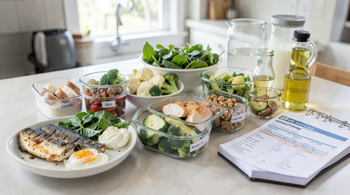
A grocery list should reflect the menu's overlapping ingredients. The basic categories are protein foods, leafy greens, cruciferous vegetables, other low-starch produce, dairy or alternatives, nuts and seeds, oils, herbs, spices, and ingredients for sauces. Specialty products are not necessary to define the pattern, and planning resources increasingly distinguish whole-food nutrient density from packaged items marketed for keto use. 1 Storage capacity, household size, cooking time, and tolerance for leftovers remain practical constraints.
| Preparation task | Purpose |
|---|---|
| Cook two proteins | Creates flexible lunch and dinner anchors |
| Wash and portion vegetables | Reduces weekday assembly time |
| Prepare one sauce | Adds variety without separate recipes |
| Record portions | Improves consistency when carbohydrate limits are strict |
Affordability, flexibility, and adherence
Low-carb planning can create cost pressure when it depends on specialty snacks, premium cuts of meat, or frequent prepared foods. A 2026 budget-focused guide cites research summarized by the National Collaborative on Childhood Obesity Research indicating that healthier diets can cost about 1.50 dollars more per person per day than typical diets. 7 The same resource recommends simple proteins, seasonal vegetables, pantry staples, bulk preparation, and reduced food waste rather than branded diet products.
Flexibility is presented as a central adherence mechanism. Plans can substitute chicken for turkey, fish for another seafood choice, tofu for meat, or one non-starchy vegetable for another while preserving the meal structure. 1 Portions can also be adjusted for hunger, training load, schedule, and household needs. A plan that cannot accommodate restaurant meals, changed work hours, disliked foods, or leftovers may be nutritionally coherent but operationally difficult to maintain.
Health considerations and safety limits
Lower-carbohydrate eating may be used for weight management, blood-sugar goals, appetite control, or reduced intake of refined starches, but benefits and risks differ by individual. Healthline notes that several low-carb patterns exist and that long-term safety research remains limited, recommending discussion with a healthcare professional before adoption. 4 The American Diabetes Association emphasizes understanding carbohydrate sources and their effects rather than treating all carbohydrate-containing foods as identical. 7
A strict plan warrants professional review for people with medical conditions, prescribed diets, pregnancy-related nutrition needs, medication-related restrictions, or an eating-disorder history. The PlanEat framework explicitly describes its material as educational rather than personalized medical care. 1 Practical monitoring should include energy, hunger, digestion, food variety, and the ability to maintain the pattern without distress. A clinician or registered dietitian can determine whether a particular carbohydrate range, electrolyte approach, or medication adjustment is appropriate.
How to evaluate a 2026 planning guide
A credible guide should state its carbohydrate definition, identify whether it uses total or net carbohydrates, explain portion adjustments, and distinguish a general menu from medical treatment. It should also show how protein, vegetables, fats, fiber, and food variety fit together. Guides that promise identical results for everyone, treat keto and moderate low carb as interchangeable, or rely heavily on packaged substitutes provide less useful decision context.
The most durable resources combine a clear weekly menu with a grocery framework, preparation sequence, substitution rules, and safety boundaries. Current examples range from broad 1,400 to 2,200 calorie frameworks to highly restrictive plans near 20 to 25 grams of net carbohydrate. 1 The appropriate comparison is therefore not which plan appears most restrictive, but whether the structure is nutritionally coherent, practical for the household, and compatible with professional health guidance.
Sources
- PlanEat AI, Low Carb Meal Planning: Complete Weekly Food Guide, https://www.planeatai.com/blog/low-carb-meal-planning-2026
- PlanEat AI, 7-Day Low Carb Meal Plan: Menu and Grocery List Guide, https://www.planeatai.com/blog/7-day-low-carb-meal-plan-2026
- Daily Nutrition Tracker, Low-Carb Diet Plan: Complete Guide and 7-Day Meal Plan, https://www.dailynutritiontracker.com/blog/low-carb-diet-plan
- Healthline, The Most Popular Ways to Do a Low-Carb Diet, https://www.healthline.com/nutrition/8-popular-ways-to-do-low-carb
- CarbMeNot, 7-Day Keto Meal Plan with Recipes and Macros, https://www.carbmenot.com/blog/keto-meal-plan
- Clean Eating, Smart Living, Low-Carb Meal Prep Recipes for the Whole Week, https://cleaneatingsmartliving.com/low-carb-meal-prep-recipes-for-the-whole-week-7-day-plan-shopping-list-and-make-ahead-recipes-that-save-time/
- American Diabetes Association, Understanding Carbohydrates, https://diabetes.org/food-nutrition/understanding-carbs
- Cleveland Clinic, Low-Carb Diet Guidance, https://health.clevelandclinic.org/low-carb-diet
Authored by 24Trendz team