Early symptoms of Parkinson's disease: Clinical signs, prodromal clues, and evaluation
Early symptoms of Parkinson's disease may appear gradually, sometimes years before a formal diagnosis. The most discussed signs include a subtle resting tremor, slowed movement, stiffness, reduced arm swing, smaller handwriting, loss of smell, constipation, mood changes, and acting out vivid dreams during sleep. These findings have many possible causes, so a combination that is new, progressive, asymmetric, and unexplained is more meaningful than any isolated symptom. 1
How Parkinson's disease may begin
Parkinson's disease is a progressive neurological disorder associated with damage to dopamine-producing nerve cells in a brain region called the substantia nigra. Dopamine helps regulate movement, and its reduction contributes to tremor, rigidity, and slowed activity. Clinical symptoms often develop over years rather than appearing suddenly. Research descriptions of the prodromal phase indicate that disease-related changes can begin a decade or more before recognizable motor symptoms or diagnosis. 6
The early phase is clinically important because the first clues may involve sleep, digestion, mood, or smell rather than obvious movement impairment. One clinical source reports that approximately 50 to 80 percent of dopamine-producing neurons may already be lost when motor symptoms become clinically apparent, although this does not mean that every person with an early non-motor symptom will develop Parkinson's disease. 1 The condition affects about 1.1 million people in the United States, and more than 90,000 diagnoses occur there each year according to cited Parkinson's Foundation figures. 2
Early movement-related signs
A resting tremor is one of the most recognizable early motor signs. It may begin in one finger, hand, foot, or the jaw and is typically most noticeable when the affected body part is relaxed. Parkinson's-related symptoms often start on one side before becoming more widespread. However, some people with Parkinson's disease do not develop a prominent tremor, making other movement changes important to recognize. 4
Bradykinesia, or slowed movement, may appear as taking longer to dress, reduced dexterity, difficulty rising from a chair, or a gradually slower walking pace. Rigidity can feel like persistent stiffness or reduced flexibility. Other clues include a smaller or more crowded handwriting style, reduced arm swing on one side, a softer voice, fewer facial expressions, shuffling steps, stooped posture, or increasing difficulty with balance. 5 7
Non-motor symptoms that may precede tremor
Reduced or absent sense of smell, chronic constipation, depression, anxiety, and sleep disturbance can occur before classic movement symptoms. These signs are not specific to Parkinson's disease, because they are also associated with common gastrointestinal, respiratory, psychiatric, medication-related, and sleep conditions. Their relevance increases when several occur together or when they accompany subtle changes in movement. 3
Rapid eye movement sleep behavior disorder, commonly abbreviated RBD, involves physically acting out vivid dreams, such as talking, shouting, punching, or kicking during sleep. APDA reports that available research shows more than half of people diagnosed with RBD may develop Parkinson's disease or a related disorder within a decade, with risk increasing over longer follow-up. This association is substantial, but RBD still does not provide an individual diagnosis. 3
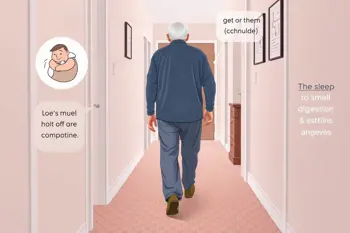
Patterns that deserve attention
Gradual progression and asymmetry are useful observations. A person may notice that one arm no longer swings normally, one hand writes smaller, one side feels stiffer, or one foot drags slightly. Harvard Health describes a pattern involving increasing stiffness, unequal arm swing, progressively slower walking, and a later hand tremor. Such changes can be easy to attribute to aging, an old injury, arthritis, or reduced fitness. 2
No single symptom confirms Parkinson's disease. Tremor can result from medication effects, anxiety, essential tremor, metabolic problems, or other neurological conditions. Constipation, reduced smell, low mood, fatigue, and poor sleep are similarly broad symptoms. The most informative record includes when each change began, whether it is worsening, whether it affects one side, and whether medication, injury, illness, or another diagnosis could explain it. 1
How clinicians evaluate possible Parkinson's disease
Diagnosis is based primarily on a medical history and neurological examination rather than one definitive laboratory or imaging test. A clinician may assess walking speed, arm swing, muscle tone, finger movements, handwriting, facial expression, speech, tremor at rest, and balance. The history should also cover sleep behaviors, bowel function, smell changes, mood, medication exposure, and the timing of symptoms. 10
A primary-care clinician may refer a person to a neurologist or a movement-disorders specialist when the symptom pattern is concerning. Evaluation helps distinguish Parkinson's disease from other forms of parkinsonism and from non-neurological explanations. It also prevents premature conclusions based on a symptom checklist. NHS guidance advises seeking medical advice when Parkinson's symptoms are a concern, with specialist assessment arranged when appropriate. 4
When to seek medical advice
Medical evaluation is reasonable when a new tremor occurs at rest, movement becomes progressively slower, stiffness persists without a clear explanation, handwriting changes substantially, walking becomes shuffling, or one-sided arm swing is reduced. A combination of motor and non-motor symptoms is particularly worth documenting. Early assessment can clarify the cause, identify treatable alternatives, establish a baseline, and support planning even when Parkinson's disease is not diagnosed. 1
Urgent assessment may be needed for sudden weakness, abrupt loss of balance, new confusion, severe headache, or other rapidly developing neurological symptoms, because these patterns are not typical of the slow progression described for Parkinson's disease. For suspected Parkinson's disease, the central risk is misinterpretation: ignoring progressive changes may delay evaluation, while assuming that constipation or a tremor proves Parkinson's can cause unnecessary alarm. A qualified healthcare professional should interpret the overall pattern. 9
Sources
- Parkinsons.org, Early Signs and Symptoms of Parkinson's Disease, https://parkinsons.org/disease/early-signs
- Harvard Health, How to spot Parkinson's disease symptoms, https://www.health.harvard.edu/brain-health/how-to-spot-parkinsons-disease-symptoms
- American Parkinson Disease Association, Early Warning Signs of Parkinson's Disease, https://www.apdaparkinson.org/article/parkinsons-early-warning-signs-and-prevention/
- NHS inform, Parkinson's disease, https://www.nhsinform.scot/illnesses-and-conditions/brain-nerves-and-spinal-cord/parkinsons-disease/
- UPMC HealthBeat, What to Know About Parkinson's Disease Symptoms, https://share.upmc.com/2026/03/early-parkinsons-disease-symptoms/
- NCBI Bookshelf, Parkinson Disease, https://www.ncbi.nlm.nih.gov/books/NBK470193/
- Stony Brook Medicine, Early Signs of Parkinson's Disease: Symptoms Beyond the Tremor, https://health.stonybrookmedicine.edu/early-signs-of-parkinsons-disease/
- University of Miami Health, Early Parkinson's Symptoms: Three Subtle Signs, https://news.umiamihealth.org/en/early-parkinsons-symptoms-non-motor-warning-signs/
- Merck Manual Professional Edition, Parkinson Disease, https://www.merckmanuals.com/professional/neurologic-disorders/movement-and-cerebellar-disorders/parkinson-disease
- National Institute on Aging, Parkinson's Disease, https://www.nia.nih.gov/health/parkinsons-disease
Authored by 24Trendz team