Natural remedies for painful swelling in feet: An evidence-based overview of management strategies
Understanding the Mechanisms of Peripheral Edema
Swollen ankles and feet, medically referred to as edema, involve the accumulation of excess fluid within the body tissues 1. This condition is frequently linked to factors such as prolonged periods of standing or sitting, sedentary lifestyle habits, dietary sodium intake, and hormonal fluctuations associated with the menstrual cycle or pregnancy 1, 7. In more complex cases, edema may reflect underlying systemic issues involving the cardiovascular system, liver, or the lymphatic drainage network 1. Because this condition can signal significant medical concerns, objective assessment by a qualified healthcare provider is necessary to determine the root cause before attempting self-care strategies 1, 6.
Fluid retention in the lower extremities often results from increased hydrostatic pressure in the veins, which forces fluid into the surrounding interstitial spaces 3. Anatomical factors, such as the pressure exerted by an enlarging uterus on the inferior vena cava during the third trimester of pregnancy, illustrate how physical obstructions can influence fluid balance 3. Management strategies generally aim to optimize venous return and lymphatic flow, often employing non-pharmacological interventions as a primary or supplementary approach to reducing tissue puffiness and associated discomfort 3, 4.
Hydrotherapy and Topical Applications for Symptom Relief
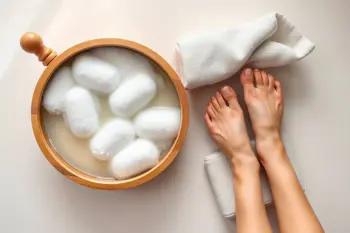
Foot soaks remain a common, accessible method for addressing localized swelling and fatigue. The application of warm water, typically between 100 and 110 degrees Fahrenheit, is noted for promoting vasodilation and muscle relaxation, which may assist in managing stiffness 2. When combined with specific solutes, these baths are thought to offer additional benefits: Epsom salts (magnesium sulfate), for instance, are frequently utilized to address general muscle soreness and inflammation 2. While evidence levels for these applications vary, many individuals report qualitative improvements in foot comfort after consistent use 2.
Beyond basic saline solutions, other botanical and household ingredients are occasionally incorporated into foot care rituals. For example, essential oils such as tea tree and peppermint are sometimes used for their antimicrobial and cooling sensations, respectively 2. Additionally, the use of coffee grounds as a scrub is a technique explored in some wellness circles, based on the premise that caffeine may influence local circulation through topical application 8. Regardless of the ingredients used, it is essential to monitor for skin irritation and ensure that the foot soak is not used as a substitute for professional medical care when symptoms are persistent or severe 2.
Physical Interventions and Mechanical Support
Mechanical and physical therapies represent a cornerstone of evidence-based management for foot edema. Elevating the legs above the level of the heart is a highly regarded practice that uses gravitational force to facilitate the drainage of interstitial fluid from the lower extremities back into the circulatory system 5, 9. This method is widely recommended as a simple, low-risk, and effective strategy for temporary reduction of swelling in both clinical and home settings 5.
The following table outlines common mechanical and physical interventions used to manage foot swelling:
| Method | Mechanism of Action | Expected Benefit |
|---|---|---|
| Leg Elevation | Gravity-assisted venous return | Reduction in fluid accumulation |
| Compression Stockings | External pressure on tissues | Prevention of fluid pooling |
| Foot Massage | Manual movement of fluid | Improved lymphatic drainage |
| Ankle Exercises | Muscle-pump activation | Promotion of venous blood flow |
Furthermore, manual massage techniques, when performed in a direction toward the heart, can assist in mobilizing trapped fluids 7. Studies examining the combination of foot massage and elevation in specific populations, such as pregnant women, have observed statistically significant reductions in edema severity 3. Compression garments provide additional support by exerting controlled pressure on the legs, effectively preventing the accumulation of fluid in the tissues throughout the day 9.
Dietary Modifications and Hydration Balance
Dietary habits play a foundational role in the body's fluid management capabilities. A high intake of sodium is directly associated with water retention, as the kidneys retain more water to balance the elevated salt concentrations in the bloodstream 1, 7. Reducing sodium intake is widely recognized as a critical lifestyle modification for individuals prone to swelling 9. Conversely, maintaining adequate hydration helps the body flush out excess sodium through natural renal processes, suggesting that proper water intake is essential for maintaining a healthy electrolyte balance 9.
In addition to sodium management, increasing the intake of potassium-rich foods may help mitigate the effects of excessive salt consumption 9. Dietary patterns that prioritize whole foods over processed alternatives often inherently reduce sodium levels and provide the nutrients necessary for optimal cardiovascular and renal health 9. Consistent, long-term modifications in diet are typically more effective than sporadic attempts at fluid reduction, as they address the underlying systemic drivers of fluid retention rather than just the acute symptoms 9.
Emerging Concepts and Traditional Perspectives
Traditional systems of medicine, such as Traditional Chinese Medicine (TCM), provide an alternative framework for interpreting foot swelling, viewing it as a disruption in the body's fluid management systems rather than a singular condition 6. Practitioners in this field often focus on identifying specific patterns of imbalance to guide the use of herbal formulas, acupuncture, and lifestyle adjustments 6. Acupuncture, in particular, is frequently sought for its perceived ability to improve circulation and reduce inflammation by targeting specific acupoints associated with lymphatic and venous health 9.
Modern research is also investigating the concept of grounding, or earthing, which involves physical contact with the Earth's surface to facilitate electron transfer into the body 4. Advocates suggest that this process may help neutralize positively charged free radicals, potentially reducing oxidative stress and systemic inflammatory markers 4. While these emerging strategies are garnering interest, they are best viewed as complementary approaches within a broader health management strategy. Prospective users should always maintain open communication with medical professionals regarding any new practices or treatments, especially when underlying health conditions are present 6.
Clinical Limitations and Safety Considerations
It is vital to distinguish between minor, transient swelling caused by lifestyle factors and edema that may indicate systemic health dysfunction. Symptoms such as persistent swelling in only one leg, redness, warmth, pain, or difficulty breathing warrant prompt medical evaluation, as these may indicate conditions such as deep vein thrombosis or congestive heart failure 9. The objective of using home remedies is to support comfort and manage mild, non-pathological swelling, not to treat serious medical emergencies 6.
Patients managing edema should maintain a log of their symptoms, including the frequency and duration of swelling, to provide healthcare providers with actionable data. Furthermore, reliance on natural or home-based remedies should not replace standard medical therapies when prescribed for specific underlying conditions 6. By combining evidence-based lifestyle changes-such as salt reduction, compression, and regular elevation-with appropriate medical supervision, individuals can better manage the discomfort associated with peripheral edema and improve their overall quality of life 6, 9.
Sources
- One Health Giant: 6 Natural Remedies For Swollen Ankles And Feet
- Michigan Foot Doctors: Foot Soak Recipe for Pain Relief
- Health and Technology Journal (HTechJ): The Effect of Combined Foot Massage and Leg Elevation
- The DailyMoss: How to Reduce Edema at Home
- Cleveland Clinic: Edema Management
- Me&Qi: Foot Edema in Traditional Chinese Medicine
- Harvard Health Publishing: Understanding Swollen Ankles and Feet
- Beauty N Facts: Coffee Scrub Pedicure Techniques
- Verywell Health: Understanding Foot Swelling and Inflammation
Authored by 24Trendz team