Early symptoms of lupus you should know: A clinical overview
Why early lupus symptoms can be difficult to recognize
Early symptoms of lupus you should know include persistent tiredness, fever, joint pain, swelling, skin changes, and symptoms that appear to improve before returning. Lupus is an autoimmune condition in which the immune system attacks the body’s own tissues, causing inflammation that may involve the joints, skin, kidneys, blood cells, brain, heart, or lungs. The pattern differs substantially from one person to another, and symptoms may begin suddenly or develop gradually. 1
Lupus is often difficult to identify because its early manifestations overlap with infections, arthritis, medication reactions, and other inflammatory conditions. Symptoms can also occur in flares, meaning they become more intense for a period and then lessen or disappear temporarily. Consequently, a single symptom rarely establishes lupus. A recurring combination of unexplained symptoms, particularly when several body systems are involved, is more informative for a clinician than an isolated complaint. 2
Fatigue, fever, and joint symptoms
Persistent fatigue is among the symptoms frequently reported by people with lupus and may feel disproportionate to recent activity or sleep loss. Unexplained fever or a general sense of being unwell can accompany the fatigue. Joint pain, stiffness, and swelling are also common, often affecting multiple joints. These symptoms may resemble ordinary overuse or another form of arthritis, especially when they fluctuate. Their persistence, recurrence, or association with rashes and fever can provide important context during a medical assessment. 3
Lupus-related joint symptoms may include aching, stiffness, and visible swelling rather than pain alone. Morning stiffness can be especially noticeable, although the timing and severity vary. The presence of joint symptoms does not prove lupus, because many disorders cause similar effects. A clinician generally considers the duration of symptoms, affected joints, examination findings, family and medication history, and accompanying signs such as fever, hair loss, mouth sores, or sensitivity to sunlight. 4
Skin, hair, and mouth changes
A butterfly-shaped rash across the cheeks and bridge of the nose is a characteristic lupus sign, but it does not occur in everyone with the condition. The rash may become more noticeable after exposure to sunlight, and other sun-sensitive rashes can appear on exposed areas of the body. Appearance can vary with skin tone, so redness may be less visible on Black or brown skin. Sun-triggered skin changes should be documented and discussed with a healthcare professional, particularly when they recur with systemic symptoms. 1
Other possible early clues include sores inside the mouth or nose, increased hair shedding, and hair thinning. Lupus-related sores may not be painful, which can make them easy to overlook. Hair changes can also have many causes, including illness, nutritional problems, hormonal changes, or medication effects. These findings become more clinically relevant when they occur alongside joint inflammation, fatigue, fever, or a photosensitive rash. No individual skin or hair symptom is specific enough to confirm lupus independently. 5
Color changes in fingers and toes
Some people with lupus experience fingers or toes that turn white or blue in response to cold or emotional stress. This pattern is associated with Raynaud’s phenomenon, in which blood vessels in the extremities narrow temporarily. The color change may be followed by a return toward the usual color as circulation improves. The finding can occur in lupus and in other conditions, so its significance depends on the broader clinical picture, including whether there are rashes, joint symptoms, or other autoimmune features. 6
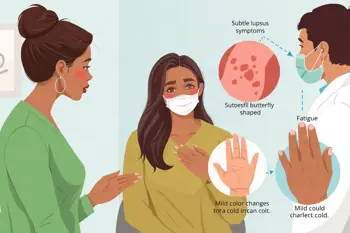
Color changes may be harder to recognize on darker skin, making temperature, sensation, and timing useful details to record. Episodes that are frequent, severe, painful, or associated with sores require medical evaluation because circulation-related symptoms can have causes beyond lupus. Johns Hopkins identifies Raynaud’s phenomenon, oral ulcers, photosensitive rashes, hair loss, joint symptoms, and chest pain with breathing among possible lupus manifestations. These features are clues for assessment, not a self-diagnostic checklist. 7
Chest, breathing, kidney, and nervous-system symptoms
Chest pain that worsens with deep breathing may occur when inflammation affects the lining around the lungs or heart. Shortness of breath can also be associated with lupus-related inflammation affecting the chest or lungs. These symptoms have numerous possible causes, including conditions unrelated to lupus, and should not be attributed to an autoimmune disease without evaluation. New, severe, or rapidly worsening chest pain or breathing difficulty warrants urgent medical attention rather than routine symptom tracking. 8
Kidney involvement may produce foamy urine, blood in the urine, swelling around the eyes or in the legs, or high blood pressure, although early kidney disease may cause few noticeable symptoms. Neurological manifestations can include headaches, confusion, memory problems, difficulty concentrating, numbness, or weakness. Because kidney and nervous-system involvement can be clinically important even when symptoms are subtle, urine testing, blood pressure measurement, and a complete medical history may be part of the evaluation. 9
How clinicians evaluate possible lupus
There is no single symptom or laboratory test that confirms lupus. Diagnosis generally combines a person’s symptom history, physical examination, blood tests, urine tests, and, when appropriate, imaging or biopsy. Testing may help identify inflammation, immune-system activity, blood abnormalities, or kidney effects, but results must be interpreted in context. An abnormal antibody result alone does not establish lupus, and a person with symptoms may need further assessment when initial findings are inconclusive. 10
Medical review is especially appropriate when fatigue, fever, joint swelling, recurring rashes, mouth or nose sores, hair loss, color-changing fingers, chest pain, urine changes, or neurological symptoms persist or return. A symptom record can help show timing, duration, possible sunlight or cold triggers, fever measurements, rashes, swelling, and changes in urine. Lupus affects people of all ages and sexes, although it is more common in women and often develops between ages 15 and 44. 11
Sources
- Mayo Clinic, “Lupus: Symptoms & causes”
- American Medical Association, “What doctors want patients to know about lupus”
- Centers for Disease Control and Prevention, “Lupus Signs and Symptoms”
- National Institute of Arthritis and Musculoskeletal and Skin Diseases, “Lupus: Symptoms, Diagnosis, and Treatment”
- MedlinePlus, “Lupus”
- National Health Service, “Lupus”
- Johns Hopkins Lupus Center, “Lupus Signs and Symptoms”
- Lupus Foundation of America, “What Is Lupus?”
- American College of Rheumatology, “Lupus”
- National Institute of Allergy and Infectious Diseases, “Lupus”
- Office on Women’s Health, “Lupus”
Authored by 24Trendz team