Government surplus military vehicles for sale in the United States: Market Dynamics, Procurement Processes, and Regulatory Compliance
Acquiring government surplus military vehicles for sale in the United States has become an established avenue for security organizations and specialized collectors looking to procure heavy-duty assets 1. The market for these decommissioned tactical vehicles relies on federal liquidation channels, municipal auctions, and contracted private marketplaces 2. Navigating this landscape requires an understanding of the procurement process, since purchasing military equipment involves distinct regulatory hurdles and strict compliance standards unlike standard commercial vehicle acquisitions 3.
The Federal Surplus Machinery Pipeline and Liquidation Platforms
The disposition of retired federal rolling stock is coordinated primarily by the Defense Logistics Agency Disposition Services, which manages excess military property 2. To facilitate public access, the federal government partners with commercial auction platforms. In 2017, Ritchie Bros acquired IronPlanet, which operates GovPlanet as its military surplus arm 2. This platform manages weekly online auctions featuring assets like High Mobility Multipurpose Wheeled Vehicles, cargo trailers, and logistical support machinery situated at military bases nationwide 2.
In addition, general federal asset disposals are conducted via platforms like GSA Auctions, operated by the General Services Administration 4. While GSA Auctions primarily handle civil federal fleets, they occasionally feature support vehicles with military provenance 4. Because these platforms utilize independent systems, buyers cross-reference listings to evaluate baseline historical pricing 2.
Understanding Vehicle Categories and Acquisition Costs
The inventory of military-style vehicles extends beyond standard utility trucks. Decommissioned options include M35 cargo trucks, Light Medium Tactical Vehicles, and utility transport platforms 2 5. Historical logs demonstrate that unarmored utility models typically trade from $10,000 to $40,000 depending on wear and configuration 2. In contrast, upgraded tactical variants command higher bids 6.
The following table details representative vehicle classifications, typical historical ranges, and primary operational characteristics:
| Vehicle Class | Historical Price Range | Operational Specifications |
|---|---|---|
| M998 HMMWV Utility | $10,000 to $40,000 | 6.2L or 6.5L Diesel V8 engine, automatic transmission 2 7 |
| Kaiser M35A2 Truck | $15,000 to $45,000 | Multi-fuel inline-six engine, 5-speed manual, 2.5-ton capacity 8 |
| Up-Armored HMMWV | $160,000 to $220,000 (Original Cost) | Heavy-duty chassis, integrated protective armor plating 6 9 |
The SF-97 Certificate and the Off-Road Titling Challenge
One critical administrative challenge in acquiring surplus military machinery is the transfer of legal ownership. Unlike civilian vehicle sales, which provide a standard state-issued vehicle title, federal agencies do not provide titles at the point of sale 10. Instead, the successful bidder is issued a Standard Form 97, the Certificate to Obtain Title to a Vehicle 10. This federal document serves as official proof of transfer but does not guarantee road-legal status 3.
A significant portion of surplus tactical utility vehicles are sold with an explicit off-road use only designation noted on the paperwork 2. State motor vehicle departments handle these federal forms with varying scrutiny. While certain states process the SF-97 easily, other jurisdictions prevent registering tactical military platforms for on-road use 2. Buyers often utilize specialized workarounds, such as transferring ownership through an out-of-state holding company like a Montana LLC, to obtain registration 10.
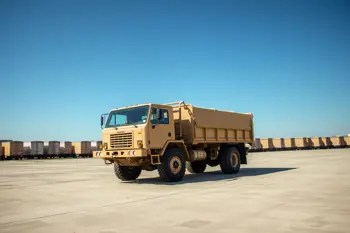
End-User Certificates and Regulatory Security Clearances
Beyond standard payment procedures, buying specific classes of tactical machinery requires passing a federal background review. Certain hardware is governed by international trade regulations and demilitarization policies overseen by the Department of Defense 2 10. For these restricted items, the buyer must submit an End-User Certificate, which is a federal document declaring the identity of the purchaser and certifying that the asset will not be exported 2 10.
The processing of an End-User Certificate introduces a substantial wait period. It is common for first-time buyers to experience delays of 60 business days or more while federal agencies perform background checks 10. During this administrative review period, the vehicle remains secured at the government facility, and the buyer is prohibited from scheduling transport 10.
Regional Municipal Dispositions and Localized Bidding
While federal channels handle the bulk of decommissioned military fleets, local and county government agencies also offer surplus tactical equipment to the public. Municipalities and county sheriff offices frequently receive surplus gear through the Law Enforcement Support Office program and eventually liquidate these assets through sealed-bid public processes 11 12. These localized sales provide an alternative procurement route that can bypass national marketplace logistics 12.
For example, the Dunklin County Sheriff's Office in Missouri conducted a sealed-bid sale for two county-owned tactical utility vehicles, featuring 1990 and 1993 models, with a minimum reserve bid set at $12,000 each 11. Similarly, Thetford Township in Michigan auctioned a rare six-door utility truck alongside municipal equipment 12. These regional offerings are sold strictly on an as-is basis, making direct physical inspection a crucial step before finalizing bids 11.
Post-Auction Logistics, Maintenance Realities, and Transport Requirements
Once an auction is finalized and all regulatory clearances are verified, the physical extraction of the vehicle presents its own set of operational requirements. Buyers must strictly adhere to scheduled depot pickup guidelines, as storage fees can accrue rapidly after the specified retrieval window closes 2 6. Because many surplus tactical vehicles have spent extended periods in outdoor storage depots, they often possess known maintenance issues such as depleted batteries and fluid leaks 13.
Consequently, transport must generally be arranged via third-party freight carriers, since driving a newly acquired off-road asset directly from a military installation is typically prohibited 2. Successful ownership requires budgeting for immediate mechanical triage, including full fluid exchanges and electrical system diagnosis. Preparing for these logistical steps ensures that the transition of military surplus assets to civilian service is completed safely and in compliance with state regulations 3 10.
Sources
- Austin Veterans Connection
- BidProwl
- GovAuctions.app
- GSA Auctions
- Kilgore Auctioneers and Appraisers LLC
- The Soldiers Project
- TD Marine Liquidations
- Sherp USA
- Congressional Medal of Honor Society
- 0taxtags
- Starbridge
- Guessing Headlights
- SweetSpotGov
Authored by 24Trendz team