Top natural tips for bone strength: An evidence-based guide
Top natural tips for bone strength focus on consistent habits rather than a single food or exercise. Evidence-informed guidance emphasizes a calcium-rich balanced diet, adequate vitamin D, weight-bearing and muscle-strengthening activity, smoking cessation, and moderation of alcohol. These measures support bone maintenance and may reduce the likelihood that a fall causes a serious fracture. Adults over 50 are advised by NHS inform to obtain 700 mg of calcium daily, while needs can vary by age, sex, and medical circumstances. 1
1. Include calcium-rich foods regularly
Calcium is a mineral required for healthy bones and teeth, and the body must obtain it from food because it cannot produce calcium itself. General guidance places adult requirements at about 1,000 mg daily, rising to 1,200 mg for women over 50 and men over 70. NHS inform lists dairy foods, calcium-fortified soya drinks, tofu, almonds, fortified-flour products, and fish eaten with their bones as useful sources. 6 1
- Milk, yoghurt, and cheese provide concentrated dietary calcium.
- Broccoli, cabbage, and okra contribute smaller amounts; spinach is not listed as an equivalent source by NHS inform.
- Fortified plant beverages and calcium-set tofu can help diversify intake. 10
2. Support calcium absorption with vitamin D
Vitamin D helps the body absorb calcium from food, making it an important partner to dietary calcium. General intake guidance identifies 600 IU daily for adults through age 70 and 800 IU for adults over 70. NHS inform identifies time outdoors as one way to build vitamin D levels, while fatty fish and fortified foods are dietary sources. Sun exposure should be approached safely, and individual needs can depend on health status and local clinical guidance. 7 1
- Useful food categories include fatty fish, fortified foods, and fortified beverages.
- Vitamin D deficiency cannot be reliably diagnosed from symptoms alone.
- Supplement decisions should be discussed with a qualified clinician rather than assumed to be necessary for everyone. 7
3. Use weight-bearing movement
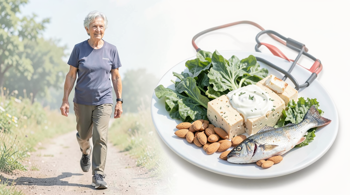
Weight-bearing exercise loads the skeleton through gravity and can help promote new bone formation or slow bone loss. Practical examples include walking, stair climbing, dancing, jogging, tennis, and hiking. The Royal Osteoporosis Society states that bones become stronger when they are used and recommends combining impact exercise with strength exercise. Verywell Health also describes directional changes and land-based activity as ways to load bones in the hips and legs, although intensity must match ability. 2 4 5
- Beginners can begin with walking and gradually increase duration or intensity.
- Swimming and water aerobics support general movement but provide less skeletal loading than land-based impact activity.
- Consistency matters, because bone remodeling and measurable changes can take months. 2
4. Add resistance and balance training
Resistance training makes muscles work against force, creating a mechanical stimulus that supports bone strength while improving muscle function and stability. Options include weights, resistance bands, machines, squats, lunges, heel raises, and sit-to-stand movements. Balance exercise has a separate protective role because better steadiness can lower fall risk, and fewer falls mean fewer opportunities for fractures. The U.S. Physical Activity Guidelines identify muscle-strengthening and weight-bearing activity as beneficial for bone health. 8 5
- Build exercise gradually according to fitness, strength, and confidence.
- People with spinal fractures, multiple previous fractures, or a recovering broken bone should seek medical or physiotherapy advice before beginning a program.
- Those with osteoporosis should choose a bone-safe level of impact and resistance. 4 12
5. Build an overall supportive eating pattern
Bone health depends on more than calcium alone. Research-based nutrition guidance highlights adequate protein, fruits, vegetables, magnesium, phosphorus, vitamin K, and nutrient-dense whole foods as contributors to bone mineralization, maintenance, muscles, and connective tissues. Protein supports bone formation and helps maintain calcium levels in the blood. A varied eating pattern can therefore support both the skeleton and the muscles that help protect it during movement and falls. 2 3 15
- Prunes received attention after a study of 235 postmenopausal women found that five or six daily helped preserve hip bone mineral density over one year.
- The researchers speculated that reduced inflammatory chemicals could have contributed, but this finding does not make prunes a replacement for established care.
- Dairy portions can be balanced by selecting lower-fat options when appropriate. 3 1
6. Address smoking, alcohol, and safety risks
Smoking is associated with weaker bones and a higher risk of osteoporosis and fractures, while excessive alcohol can harm bone health and increase risks related to falls and fractures. NHS inform therefore recommends stopping smoking and limiting alcohol. Excessive caffeine may also interfere with calcium absorption, according to its bone-health guidance. These are practical risk-management issues, not cosmetic preferences, and they become particularly important for older adults or anyone with a history of low-trauma fractures. 14 13 1
- Smoking cessation can address a recognized modifiable fracture risk.
- Alcohol intake should be considered alongside balance, medication effects, and fall history.
- Large amounts of caffeinated tea, coffee, and fizzy drinks may be worth reviewing when calcium intake is inadequate. 1
How to apply these habits safely
Natural habits can support bone health, but they do not diagnose or treat osteoporosis. Bone density decreases with age and can decline more rapidly after menopause, while osteoporosis may remain silent until a fracture occurs. Medical assessment is especially relevant after repeated fractures, a spinal fracture, or a broken bone from a minor fall. Clinicians can evaluate personal risk and identify whether exercise intensity, nutrition, or additional management requires adjustment. 2 4
- Prioritize regular calcium-containing foods and vitamin D sources.
- Combine weight-bearing, resistance, and balance activities at a suitable level.
- Avoid smoking and limit alcohol.
- Seek individualized advice when osteoporosis, fractures, or safety concerns are present. 9 11
Sources
- NHS inform, Bone health and falls
- Healthline, Natural Ways to Build Healthy Bones
- Harvard Health, Surprising foods that boost bone health
- Royal Osteoporosis Society, Exercise for bones
- Verywell Health, Types of Exercise That Help Improve Bone Density
- NIH Office of Dietary Supplements, Calcium
- NIH Office of Dietary Supplements, Vitamin D
- U.S. Department of Health and Human Services, Physical Activity Guidelines
- NHS, Osteoporosis prevention
- U.S. Department of Agriculture MyPlate, Dairy
- Mayo Clinic, Osteoporosis exercise guidance
- Bone Health & Osteoporosis Foundation, Exercise
- National Institute on Alcohol Abuse and Alcoholism, Alcohol and health
- Centers for Disease Control and Prevention, Smoking and osteoporosis
- Harvard T.H. Chan School of Public Health, Calcium
Authored by 24Trendz team