Signs of potential hormonal imbalances: A clinical guide to symptoms and evaluation
What hormonal imbalance means
Hormones are chemical messengers produced by glands including the thyroid, pancreas, adrenal glands, ovaries, testes, and pituitary gland. They influence metabolism, appetite, sleep, mood, reproduction, stress responses, body temperature, and blood sugar. A hormonal imbalance is a broad description of levels that are higher or lower than expected for a person’s age, sex, health status, or life stage, rather than a single diagnosis. 1
- Normal fluctuations can occur during puberty, menstrual cycles, pregnancy, perimenopause, and menopause. 2
- Potential medical causes include thyroid disorders, diabetes, insulin resistance, polycystic ovary syndrome, and adrenal or pituitary conditions. 3
- Symptoms may be temporary or persistent, and their meaning depends on the wider clinical pattern.
Energy, weight, and temperature changes
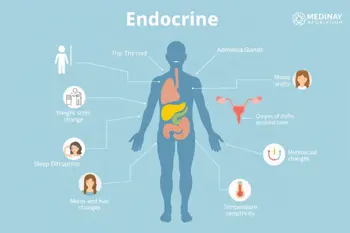
Persistent fatigue that does not improve with adequate sleep may accompany thyroid or other endocrine disorders, although fatigue is not specific to hormone problems. Unexplained weight gain, difficulty losing weight, or unintentional weight loss can reflect changes involving thyroid hormones, insulin, or other metabolic systems. Temperature sensitivity is another reported sign, with some people feeling unusually cold and others experiencing heat intolerance. 4
- Other associated symptoms can include unusual thirst, extreme hunger, or changes in energy. 2
- Weight distribution, speed of change, medication use, diet, sleep, and stress can help clinicians interpret the symptom.
- Rapid or substantial unexplained changes warrant medical assessment rather than self-diagnosis.
Menstrual and reproductive signs
In people who menstruate, changes in cycle timing, flow, or associated symptoms can provide useful information about reproductive and endocrine health. Irregular periods, unusually heavy bleeding, severe premenstrual symptoms, or missed periods may occur with changes in ovarian hormones, thyroid disorders, stress, weight changes, pregnancy, or conditions such as polycystic ovary syndrome. Normal hormonal variation remains common, particularly during puberty, pregnancy, perimenopause, and menopause. 5
- Possible reproductive symptoms include fertility difficulties, vaginal dryness, and altered sexual desire. 2
- Cycle tracking can document timing, duration, flow changes, pain, and accompanying symptoms for a clinical discussion.
- A missed period has multiple possible explanations and should not automatically be attributed to hormonal imbalance.
Skin, hair, mood, and sleep signals
Adult-onset acne, scalp hair thinning, excessive body hair, or persistent skin dryness may occur alongside changes in androgens, thyroid hormones, or reproductive hormones. Mood symptoms can include irritability, anxiety, depressive feelings, or sudden emotional shifts. Sleep disruption, insomnia, night sweats, and brain fog are also reported during hormonal transitions, especially when estrogen levels change during perimenopause or menopause. 6
- Hair loss may also have dermatologic, nutritional, medication-related, or systemic causes. 10
- Difficulty concentrating and memory lapses can accompany hormonal shifts but are not diagnostic on their own. 8
- Severe depression, anxiety, or thoughts of self-harm require prompt mental-health attention regardless of suspected cause.
Sexual function, digestion, and physical discomfort
Changes in libido or sexual function can occur when testosterone, estrogen, thyroid hormones, or other regulatory systems change. Reduced libido, erectile dysfunction, vaginal dryness, and fertility difficulties are among the symptoms described in endocrine health resources. Low thyroid activity can also slow gastrointestinal movement and contribute to constipation, while muscle weakness or joint pain may occur with some systemic endocrine disorders. 7
- Digestive symptoms such as bloating and constipation are common and have many nonhormonal explanations. 9
- Joint pain and muscle changes should be evaluated in relation to medications, activity, inflammation, and other medical conditions.
- Sexual symptoms can also reflect relationship factors, stress, vascular disease, medication effects, or mental-health conditions.
How clinicians evaluate possible imbalance
Evaluation generally begins with a medical history and physical examination rather than a universal hormone panel. Clinicians may review symptom timing, menstrual or reproductive history, sleep, weight change, medications, family history, and relevant life-stage changes. Targeted blood or urine tests may be used, and imaging is sometimes considered when the history and examination suggest a specific gland or condition. Results must be interpreted in context because hormone levels naturally vary by time, cycle phase, age, and health status. 3
- Persistent, severe, or unexplained symptoms justify discussion with a qualified healthcare professional. 3
- Testing should be linked to a clinical question rather than based solely on a symptom checklist.
- Care depends on the cause and may involve lifestyle measures, medication, hormone treatment, or specialist management. 3
Distinguishing normal variation from concern
Hormones are not expected to remain at one fixed level. They change across sleep-wake cycles, menstrual cycles, stress responses, pregnancy, and aging, so the phrase “perfect balance” does not describe normal physiology. Concern increases when symptoms are persistent, progressive, severe, or disruptive, or when several related changes occur together. A symptom pattern can suggest an area for evaluation, but no individual sign proves that a hormonal disorder is present. 1
- Record onset, frequency, severity, cycle timing, sleep quality, and associated physical changes.
- Avoid assuming that supplements or online “hormone balancing” programs identify or treat the underlying cause.
- Medical evaluation is particularly important when symptoms affect fertility, daily functioning, mood, blood sugar control, or sexual health.
Sources
- Kaiser Permanente, “What women should know about hormonal imbalance symptoms,” https://healthy.kaiserpermanente.org/health-wellness/healtharticle.hormonal-imbalance-symptoms
- MercyOne, “Your endocrine system: Signs of a hormone imbalance,” https://www.mercyone.org/blog-articles/prim-your-endocrine-system-signs-hormone-imbalance
- Acibadem Hospitals Group, “Hormone Imbalance: Signs, Causes, Diagnosis,” https://acibademinternational.com/health-library/hormone-imbalance-signs-causes-and-how-it-is-diagnosed/
- Cleveland Clinic, “Hormonal Imbalance,” https://my.clevelandclinic.org/health/diseases/22673-hormonal-imbalance
- Mayo Clinic, “Hypothyroidism: Symptoms and causes,” https://www.mayoclinic.org/diseases-conditions/hypothyroidism/symptoms-causes/syc-20350284
- WebMD, “Menopause Symptoms,” https://www.webmd.com/menopause/guide/menopause-symptoms
- Harvard Health Publishing, “Low testosterone: An overview,” https://www.health.harvard.edu/mens-health/low-testosterone-an-overview
- Endocrine Society, “Hormones and Health,” https://www.endocrine.org/patient-engagement/endocrine-library/hormones-and-health
- Johns Hopkins Medicine, “Hypothyroidism,” https://www.hopkinsmedicine.org/health/conditions-and-diseases/hypothyroidism
- American Academy of Dermatology, “18 causes of hair loss,” https://www.aad.org/public/diseases/hair-loss/causes/18-causes-of-hair-loss
Authored by 24Trendz team