10-day Thailand package for adventure seekers: A Field Guide to Active Itinerary Planning
The Anatomy of Adventure-Focused Thailand Itineraries
Thailand serves as a diverse landscape for active travel, offering a mix of high-intensity physical exertion and immersive cultural discovery. A standard 10-day adventure itinerary typically spans the northern mountainous regions down to the southern Andaman coast, utilizing domestic transit to maximize time on the ground 1. Travelers often find that these packages are structured to balance periods of high metabolic output, such as mountain trekking or white-water rafting, with more moderate activities like temple exploration or rural village engagement 1, 2.
These itineraries are rarely passive; they are designed for participants who prioritize physical movement as the primary metric of the journey 1. Common logistical frameworks for these 10-day periods include specialized, guided circuits that feature white-water rafting in Kanchanaburi, high-altitude trekking in Chiang Mai, and technical water sports such as sea kayaking or snorkeling in Krabi 1, 3. Unlike standard tourism, these programs focus on direct experience rather than observation, often requiring participants to calibrate for heat and humidity through planned physical warm-ups during the initial days of the trip 1.
Northern Thailand: Mountain Trekking and Ethical Engagement
The northern segment of a 10-day adventure package typically concentrates on the rugged terrain surrounding Chiang Mai and Chiang Rai. This region is a central hub for hiking and high-altitude trekking, often reaching elevations above 1,200 meters 1, 11. Itineraries frequently incorporate visits to hill tribe villages reached on foot through primary jungle trails, providing a rigorous test of endurance for participants 1. Ethical interaction is a cornerstone of these routes, with many operators replacing traditional animal shows with visits to ethical elephant sanctuaries where travelers can observe animals in their natural habitat 2, 19.
Physical activity in the north is often supplemented by immersive experiences that go beyond mere walking. Participants might engage in jungle cooking, participate in traditional hill tribe daily routines, or visit iconic sites like the Doi Inthanon National Park, which features the country's highest peak at 2,565 meters 1, 2, 4. Some packages integrate specialized physical disciplines, such as Muay Thai training sessions, to further diversify the activity portfolio 9, 18. Equipment needs for these treks are often specific, and participants are generally expected to carry manageable luggage weights, typically restricted to 15 to 20 kilograms 4.
Southern Thailand: Coastal Exploration and Water Sports
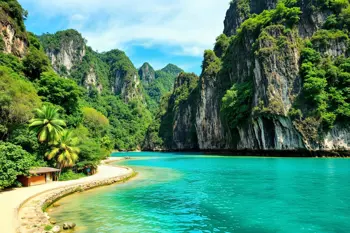
As the itinerary shifts to the southern provinces, the focus transitions from mountain trails to marine environments. Krabi and the surrounding Phang Nga Bay are widely recognized as primary destinations for technical adventure activities, including cliff climbing and sea kayaking through mangrove channels and limestone sea-cave lagoons 1, 2, 5. Railay Beach is frequently cited as the premier location for rock climbing, attracting those who seek vertical physical challenges within an island setting 15.
Marine-based adventures often include snorkeling and diving excursions. Destinations such as the Similan Islands are highlighted for their biodiversity, though accessibility is highly seasonal, typically closing to visitors from mid-May to mid-October due to weather conditions 6, 16. Beyond diving, the Ang Thong National Marine Park serves as a critical zone for those interested in kayaking and swimming, providing a varied terrain that is often managed through boat charters and professional guides to ensure safety across all water-based activities 9, 17.
Climate Considerations and Optimal Travel Windows
Environmental conditions play a decisive role in the feasibility of adventure activities in Thailand. Industry experts strongly recommend scheduling active trips during the dry season, which generally spans from November to early April 9. The period between November and February is specifically identified as the most suitable window, as the cooler, dry climate significantly enhances the accessibility of trekking routes and outdoor water sports 14. Traveling outside of this window can result in restricted access to remote mountain trails or marine protected areas due to seasonal rains and monsoons 16.
The humidity levels in the tropical climate also necessitate a period of acclimatization. Standard itineraries often schedule light physical tasks, such as flat-terrain temple walking in the early days, to allow participants to adjust to the local environment before embarking on more strenuous trekking or climbing activities 1. Understanding these seasonal constraints is a critical component of risk management, as weather conditions can dictate the specific routes and safety protocols required for high-risk physical activities 10, 14.
Financial Frameworks and Investment Expectations
The market for 10-day adventure packages displays significant price variance, generally falling between $1,200 and $2,500 USD per person, depending on the level of accommodation and the complexity of the logistics involved 9. These figures typically exclude international airfare, though they often bundle essential elements such as domestic transportation, specialized local guides, all necessary safety equipment for water sports, and most meals 4, 9. Pricing models tend to scale based on the accommodation tier, with options ranging from homestays and modest three-star lodgings to higher-end five-star resorts 2, 6.
| Package Component | Standard Inclusions | Typical Requirements |
|---|---|---|
| Guided Trekking | Private local guides, permits | Moderate to high fitness |
| Water Sports | Safety gear, boat charters | Basic swimming proficiency |
| Accommodations | Combination of resorts/homestays | Pre-trip health verification |
| Transportation | Domestic flights, private vans | Flexible luggage management |
Regulatory Oversight and Safety Standards
Participation in active 10-day packages requires an acknowledgment of the inherent risks involved in adventure tourism. Operators generally mandate that travelers carry comprehensive travel insurance specifically tailored to cover high-risk physical activities 10. While many packages are fully guided by certified professionals, travelers should verify that the operator provides appropriate safety equipment and maintains transparent standards for mountain trekking and water-based excursions 8, 9. Regulatory adherence in areas such as elephant tourism and marine conservation also remains a vital aspect of selecting a responsible tour provider, ensuring that the activities align with global animal welfare and environmental protection guidelines 19.
Sources
- Atravelq, Thailand Adventure Tour Package Research Data
- IDC Travel, Amazing Thailand 10 Days Adventure Tour Details
- Zicasso, Thailand Adventure and Culture Tour Overview
- Peterpans, Thailand 10-Day Adventure Specifications
- Zicasso, Adventures in Thailand Tour Logistics
- InsideAsia Tours, Southern Thailand Adventure Tour Data
- TourRadar, Thailand Nature Escape 10 Days Itinerary
- TourRadar, 10-Day Bangkok to Koh Samui Experiences
- General Industry Standards for Adventure Travel in Thailand
- World Nomads, Adventure Travel Insurance Guidelines
- Lonely Planet, Thailand Activity Hubs
- Intrepid Travel, Thailand Active Exploration Trips
- G Adventures, Thailand Active-Travel Packages
- Tourism Authority of Thailand, Seasonal Travel Recommendations
- Travel + Leisure, Krabi Rock Climbing Guide
- Scuba Travel, Similan Islands Seasonality
- National Park Service Thailand, Marine Park Activities
- Muay Thai Scholar, Training Standards
- World Animal Protection, Elephant-Friendly Tourism Practices
Authored by 24Trendz team