Ways to manage plantar fasciitis at home: An evidence-based care guide
People searching for ways to manage plantar fasciitis at home commonly want relief from sharp heel pain, particularly the pain that appears with the first steps after waking. Home care generally centers on daily stretching, supportive shoes, ice or massage, and gradual adjustment of activity rather than relying on a single remedy. 1
Understanding the condition and its symptoms
Plantar fasciitis affects the plantar fascia, a thick band of connective tissue extending from the heel toward the toes and helping support the arch. The condition is commonly associated with repeated loading, microtears, or degeneration near the fascia’s attachment to the heel bone. Although the name suggests inflammation, clinical references note that inflammation may not be the primary process in many cases. 2
A typical symptom pattern is stabbing or aching pain under the heel with the first steps in the morning or after sitting for a while. The discomfort may ease as the foot moves, then return after prolonged standing, walking, exercise, or at the end of the day. Risk factors described in clinical sources include tight calf or Achilles structures, high or low arches, prolonged standing on hard surfaces, running, dancing, and changes in body weight. 3
Reduce aggravating load without complete inactivity
Resting from activities that clearly worsen heel pain is a common first step, but prolonged total rest is not always necessary. A practical approach is to temporarily reduce high-impact exercise, long walks, or extended standing while continuing movement that remains tolerable. Running and other repetitive-impact activities can place additional stress on the plantar fascia, especially when symptoms are already increasing. 4
Activity should be adjusted according to symptoms rather than resumed suddenly after several quiet days. The available guidance describes plantar fasciitis as a load-related condition that often responds to graduated loading, calf and foot-muscle conditioning, and consistent management. Recovery is not always rapid: meaningful improvement is often reported over six to 12 weeks, while some clinical guidance describes improvement over four to eight weeks when home measures are followed consistently. 5
Stretch the calf and plantar fascia daily
Stretching is a central home-care measure because tight calf muscles can increase tension through the Achilles tendon and plantar fascia. A seated plantar-fascia stretch can be performed by pulling the toes back toward the shin while keeping the foot supported. One evidence-based protocol describes three repetitions of 30 seconds, performed three times daily. Calf stretches against a wall can be added to address the connected Achilles and calf tissues. 6
The morning routine is particularly useful because first-step pain often follows overnight tightening of the foot and calf. Stretching before standing can reduce the abrupt load placed on the fascia. Cleveland Clinic guidance recommends at least 10 minutes of stretching or exercise daily, while other clinical material emphasizes maintaining a structured program for at least eight weeks. Movements should be controlled and should not sharply increase pain. 3
Use footwear, inserts, and night splints strategically
Supportive footwear can reduce irritation during ordinary weight-bearing. Guidance on plantar fasciitis commonly favors shoes with cushioning, arch support, and some heel elevation over walking barefoot, wearing flip-flops, or using very flat, unsupportive soles. Shoes should also be considered indoors if bare floors reproduce symptoms. Footwear changes are intended to reduce strain during daily activity, not to replace stretching or appropriate load management. 1
Prefabricated or custom orthoses may help redistribute pressure, while heel cups can provide additional cushioning beneath the heel. Night splints hold the ankle and foot in a flexed position during sleep, maintaining a gentle stretch across the calf and arch. Clinical references list stretching, night splints, orthotics, and shoes with suitable heel elevation among conservative treatment options. Discomfort, poor fit, or sleep disruption can make continued use difficult, so tolerance and correct fitting matter. 2
Apply cold therapy and consider medication precautions
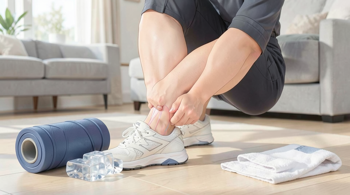
Ice can temporarily reduce pain after activity or during a painful flare. Home guidance commonly describes applying an ice pack for 15 to 20 minutes, three or four times daily, with a cloth barrier between the ice and skin. Rolling the foot over a frozen water bottle combines cooling with gentle movement and massage. Cold should not be applied directly to the skin or long enough to cause numbness or skin injury. 1
Over-the-counter nonsteroidal anti-inflammatory medicines, including ibuprofen or naproxen, are sometimes used for short-term discomfort when a physician has confirmed they are appropriate. These medicines are not suitable for everyone and may carry risks related to stomach, kidney, cardiovascular, pregnancy, or medication-interaction concerns. The supplied clinical guidance specifically qualifies their use by recommending clearance from a physician rather than treating them as universally appropriate. 1
Track progress and recognize when home care is insufficient
Consistent daily care is more informative than judging an intervention after one or two applications. A simple record can note morning pain, pain after activity, walking tolerance, footwear used, and whether stretching or icing changes symptoms. Most cases improve through conservative care, but recovery may take several weeks or months. Persistent symptoms after a consistent period of self-care warrant assessment to confirm the diagnosis and identify contributing factors. 7
Professional evaluation is more important when pain is severe, continues beyond roughly six weeks to three months despite consistent care, disrupts sleep, or interferes substantially with walking. Swelling, numbness, fever, or pain following an injury may indicate another condition and should not automatically be attributed to plantar fasciitis. Diagnosis is mainly clinical, although imaging may be used when a clinician needs to rule out other causes of heel pain. 8
Practical home-care sequence
A combined plan is generally more useful than selecting one isolated treatment. The following sequence brings together the measures emphasized across the supplied clinical and physiotherapy sources. It also acknowledges that footwear, activity level, calf flexibility, body weight, and foot structure can influence how much load the plantar fascia receives each day. 9
- Before the first steps, perform gentle plantar-fascia and calf stretches.
- Wear supportive shoes instead of walking barefoot or in flat, unsupportive footwear.
- Temporarily reduce running, jumping, and other activities that increase heel pain.
- Use ice or a frozen bottle for short, protected applications after aggravating activity.
- Consider an insert, heel cup, or night splint according to comfort and clinical advice.
- Progress activity gradually as morning and post-activity pain become more manageable.
Weight management may also reduce repeated stress on the plantar fascia during weight-bearing, although it is only one factor among several and should not replace local foot care. Long-term maintenance typically involves continuing supportive footwear, stretching, and sensible activity progression after symptoms improve. Recurrence is more likely when activity rises abruptly or previously aggravating footwear and habits return. 10
Sources
- NaplesPodiatrist
- Merck Manual Professional Edition
- Cleveland Clinic
- NBC News Select
- Better Health Osteopathy
- Redfern Physiotherapy and Sports Medicine
- Family Doctor
- MSD Manual Professional Edition
- Michigan Foot Doctors
- Acibadem Hospitals Group
Authored by 24Trendz team