Early warning signs of peripheral neuropathy: Clinical findings and when evaluation matters
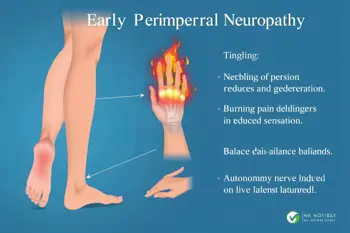
Early warning signs of peripheral neuropathy often include tingling, pins-and-needles sensations, burning, numbness, or unusual sensitivity in the toes, feet, fingers, or hands. Symptoms may develop gradually and can be easy to overlook, but their distribution, progression, and effect on balance or movement can provide important clinical information. Peripheral neuropathy involves damage to nerves outside the brain and spinal cord, and different symptoms appear depending on whether sensory, motor, or autonomic nerves are affected. 1
Subtle sensory changes in the feet and hands
The most recognizable early pattern is gradual tingling or numbness that starts in the toes or feet and may later move upward into the legs. Similar sensations can eventually affect the fingers and hands. Research describes this as a length-dependent pattern because the longest nerves are often affected first, with symptoms frequently occurring on both sides of the body. Symptoms may be more noticeable at night, although the timing and distribution vary among individuals. 1 5 7
Some people notice reduced ability to feel pain, temperature, vibration, or the position of the feet before they experience significant pain. Others develop heightened sensitivity, in which socks, shoes, bedsheets, or light touch cause discomfort. These contrasting findings can both reflect abnormal sensory nerve signaling. A person may describe the sensation as prickling, electrical, burning, freezing, stabbing, or like repeated pins and needles. 3 5 6
Pain and altered sensitivity
Neuropathic pain is not always proportional to an obvious injury. It may feel sharp, jabbing, throbbing, aching, burning, or electric-shock-like, and it commonly affects the feet, legs, hands, or arms. In some cases, even light contact produces marked pain, a phenomenon known as allodynia. This occurs because damaged nerves can send altered or inappropriate signals to the central nervous system. 1 2 3
Changes in sensation can create practical risks even when pain is mild. Reduced awareness of heat, cold, pressure, or injury may make it difficult to notice a blister, cut, burn, or developing foot wound. This concern is especially significant for people with diabetes, because diabetic peripheral neuropathy can reduce protective sensation and allow injuries to go unnoticed. New numbness, tingling, burning, weakness, or a foot wound should therefore be discussed with a healthcare professional. 5
Balance, coordination, and motor warning signs
Peripheral neuropathy can affect the nerves that control muscles as well as those that carry sensation. Early motor-related clues may include muscle weakness, twitching, cramps, reduced muscle tone, or difficulty performing familiar movements. Weakness can affect the hands, making gripping or handling objects more difficult, or the legs, making stairs and walking more challenging. Muscle wasting and foot drop, which involves difficulty lifting the front of the foot, are more advanced motor findings but remain important signs. 3 4
Loss of balance or coordination may result when the brain receives less accurate information about pressure, vibration, or limb position. A person may feel unsteady, trip more often, change the way they walk, or have difficulty knowing where the feet are without looking. These changes can occur with sensory neuropathy and may increase the likelihood of falls. Persistent balance problems, progressive weakness, or walking difficulty require clinical assessment rather than being attributed automatically to aging or ordinary clumsiness. 3 5 6
Autonomic symptoms beyond the limbs
Peripheral nerves also regulate automatic functions, including blood pressure, heart rate, sweating, digestion, and bladder activity. Autonomic involvement may produce dizziness when standing, changes in sweating, digestive symptoms, or alterations in urination. Blood-pressure changes can be particularly noticeable when moving from sitting or lying down to standing. These symptoms do not prove neuropathy by themselves, but their appearance alongside numbness, pain, or weakness can help identify broader nerve involvement. 1 2 4
Digestive and urinary changes may include constipation, diarrhea, or altered bladder function, while sexual dysfunction can also occur when autonomic nerves are affected. Symptoms may involve more than one nerve type at the same time, meaning sensory complaints can coexist with movement changes or blood-pressure problems. Reporting the full combination of symptoms helps clinicians distinguish a localized nerve problem from a more diffuse peripheral neuropathy pattern. 1 3 4
Conditions and exposures associated with neuropathy
Peripheral neuropathy has many possible causes, including diabetes, traumatic injury, infections, autoimmune disease, inherited disorders, metabolic conditions, toxins, alcohol use disorder, and certain medicines. Diabetes is one of the most common causes, and the National Institute of Diabetes and Digestive and Kidney Diseases reports that up to one-half of people with diabetes have peripheral neuropathy. High blood glucose and elevated blood fats can damage nerves and the small blood vessels that nourish them. 1 5
Medication and nutritional history can also be relevant. The medical literature identifies chemotherapy agents, amiodarone, some HIV medicines, alcohol, vitamin B12 deficiency, and monoclonal gammopathies among potential causes. In some patients, testing does not identify a clear cause. A new symptom pattern should therefore be evaluated in the context of medical conditions, medicines and supplements, alcohol exposure, family history, and the speed at which symptoms developed. 2 7
Assessment and symptoms requiring prompt attention
Evaluation generally begins with a medical history and neurological examination. Clinicians may assess strength, sensation, vibration, reflexes, coordination, gait, and the distribution of symptoms. Depending on the presentation, testing may investigate blood glucose, vitamin B12 status, thyroid or kidney disease, inflammation, or abnormal blood proteins. Electromyography and nerve-conduction studies can help locate nerve dysfunction and distinguish patterns involving the nerve axon or its insulating myelin. 6 7
Rapidly progressive symptoms are more concerning than slowly developing, symmetrical tingling. Prompt medical attention is warranted for quickly worsening weakness, major difficulty walking, new loss of bladder or bowel control, or breathing or swallowing difficulty. Severe pain, marked asymmetry, repeated falls, or symptoms that begin soon after a new medicine or toxic exposure also deserve timely review. These warning patterns can indicate a condition requiring assessment beyond routine monitoring. 3 7
Sources
- Mayo Clinic, Peripheral neuropathy: Symptoms and causes
- Cleveland Clinic, Peripheral Neuropathy: What It Is, Symptoms and Treatment
- NHS inform, Peripheral neuropathy
- Penn Medicine, Peripheral Neuropathy: Symptoms and Causes
- National Institute of Diabetes and Digestive and Kidney Diseases, Peripheral Neuropathy
- Merck Manual Professional Edition, Peripheral Neuropathy
- PubMed, Peripheral Neuropathy: A Review
Authored by 24Trendz team