Gentle ways to support scalp health naturally: An evidence-based overview of follicle environment and maintenance
Viewing the scalp as an extension of facial skin is a fundamental shift in contemporary dermatological understanding 1, 2. When the scalp environment is compromised through inflammation, imbalanced oil production, or moisture loss, the hair follicles embedded in the tissue may struggle to function optimally 3. Adopting a consistent, gentle care routine prioritizes barrier integrity and microbiome balance, potentially improving hair retention and growth outcomes by providing a stable foundation for follicle cycling 4, 5.
Understanding the Scalp-Hair Connection
Hair follicles are complex structures located in the dermis, supported by blood vessels, oil-producing sebaceous glands, and immune cells 4. Chronic, low-grade inflammation-whether caused by environmental pollutants, UV exposure, or an accumulation of product residue-can disrupt the natural hair growth cycle 3. When the scalp is healthy, it maintains an intact skin barrier and a stable microbiome, which helps regulate oil levels and limit oxidative stress 5, 6.
The hair growth cycle consists of three primary phases: the growth phase (anagen), the transition phase (catagen), and the resting/shedding phase (telogen) 4. Research indicates that oxidative stress can damage follicle cells before hair even emerges, effectively shortening the anagen phase and leading to premature shedding 3. Consequently, supporting the scalp is not merely a cosmetic endeavor but a biological one, aimed at preserving the environment necessary for follicles to remain in the active growth stage for their full duration 3, 7.
The Role of the Scalp Microbiome
The scalp hosts a complex ecosystem of bacteria and fungi that typically maintain a healthy pH range between 4.5 and 5.5 9. When this delicate community is disrupted, a state known as dysbiosis occurs, which is frequently associated with symptoms such as persistent itching, flaking, and sensitivity 6, 9. Managing this environment requires avoiding harsh surfactants and excessive washing practices that strip away natural sebum, which is essential for maintaining the scalp’s protective barrier 6, 10.
Dandruff and seborrheic dermatitis are common markers of a disrupted microbiome, often involving an inflammatory response to yeasts such as Malassezia in sebum-rich areas 12, 13. Contrary to common misconceptions, these conditions are not simply signs of poor hygiene 14. While gentle cleaning remains important, persistent cases of flaking often respond better to targeted ingredients like zinc pyrithione or salicylic acid rather than relying on oils alone, which may inadvertently feed the yeast species contributing to the irritation 12, 15.
Establishing a Gentle Maintenance Routine
A balanced scalp care routine generally focuses on five stages: cleansing, exfoliating, treating, hydrating, and protecting 11. Cleansing should be tailored to individual scalp needs-such as sweat production, lifestyle, and hair type-rather than following a fixed schedule 14. Exfoliation is beneficial for clearing dead skin cells that can block follicles, but it should be performed with caution, typically once every one to two weeks, to avoid damaging the delicate skin surface 8, 11.
| Action | Purpose | Frequency Recommendation |
|---|---|---|
| Gentle Cleansing | Remove buildup and excess oil | 2–4 times per week or as needed |
| Safe Exfoliation | Unclog follicles and remove dead skin | Once every 1–2 weeks maximum |
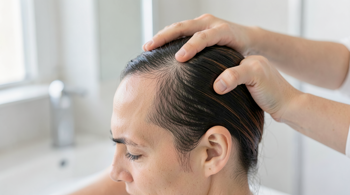
| Scalp Massage | Improve circulation to the dermis | As part of a daily or weekly ritual |
Safety Considerations for Botanical Ingredients
While many seek natural oils or botanical extracts to support scalp health, these substances are not inherently safe for all users 15. Concentrated essential oils, in particular, can cause significant irritation or allergic contact dermatitis if applied undiluted 15, 20. Furthermore, these substances can be toxic if ingested, necessitating careful handling and storage 19. Patch testing new products on a small area of skin behind the ear is a prudent step to ensure no adverse reaction occurs before widespread application 15.
Ingredients such as tea tree oil or witch hazel are frequently cited for their ability to manage scalp balance, yet they must be used as intended by professionals rather than in high concentrations 6. If a topical treatment causes burning, increased itching, or redness, it should be discontinued immediately 15. Relying on evidence-backed, pharmacy-grade ingredients for persistent issues is generally more reliable than attempting to manage severe inflammatory conditions with unproven homemade mixtures 15.
Diet, Lifestyle, and Internal Health
Systemic factors also play a critical role in scalp vitality. A balanced diet provides the nutrients necessary for the normal function of skin and hair follicles, though supplementation should be approached with caution 15. While individuals often turn to biotin for hair support, clinical evidence for its effectiveness in the absence of a deficiency is limited 18. Furthermore, high-dose biotin can interfere with critical laboratory tests, potentially leading to inaccurate diagnostic results 17.
Lifestyle factors, including high stress levels and frequent use of heat styling tools, can exacerbate scalp issues by drying out the skin or increasing inflammation 15. Gentle care habits, such as avoiding vigorous scratching and using lukewarm water rather than hot water during washing, help maintain the integrity of the scalp barrier and prevent unnecessary physical trauma to the follicles 15.
When to Seek Professional Evaluation
Not all scalp symptoms can be managed with home care. Clinical intervention is required when symptoms persist despite the implementation of a gentle, consistent routine 15. Red flags that warrant a visit to a healthcare provider or dermatologist include the presence of pus, severe pain, spreading redness, thick or crusted plaques, and patchy or sudden hair loss 15, 19. These signs may indicate underlying medical conditions that necessitate professional diagnosis and targeted, perhaps regenerative or medicinal, treatment plans 5.
Sources
- American Academy of Dermatology: https://www.aad.org/public/everyday-care/hair-scalp-care/hair-care/healthy-hair-tips
- WellnessZing: https://wellnesszing.com/scalp-care-routine-for-hair-growth/
- Ethique: https://ethique.co.nz/blogs/hair/scalp-health-hair-growth-connection
- eHome Remedies: https://ehomeremedies.com/natural-hair-treatment/
- Dr. Bloem: https://drbloem.com/essential-scalp-health-tips-for-hair-growth/
- Good4MeToYou: https://good4metoyou.com/how-to-improve-scalp-health-naturally-the-ultimate-2026-guide/
- ScalpInsight: https://scalpinsight.com/natural-scalp-treatment-a-complete-guide-to-healthier-scalp-care/
- Gloavia: https://gloavia.com/blogs/the-glo-journal/how-to-build-a-scalp-first-hair-care-routine-for-thicker-healthier-hair
- The Glossy Locks: https://theglossylocks.com/keep-scalp-moisturized-naturally/
- MediSecret: https://medisecret.com/ayurvedic-rituals-for-healthy-hair-and-scalp/
- The Right Hairstyles: https://therighthairstyles.com/scalp-care-routine/
- DermNet: https://dermnetnz.org/topics/seborrhoeic-dermatitis
- Cleveland Clinic: https://my.clevelandclinic.org/health/diseases/14403-seborrheic-dermatitis
- NHS: https://www.nhs.uk/conditions/dandruff/
- Mayo Clinic: https://www.mayoclinic.org/diseases-conditions/dandruff/diagnosis-treatment/drc-20353854
- National Center for Biotechnology Information: https://www.ncbi.nlm.nih.gov/pmc/articles/PMC4651417/
- U.S. Food and Drug Administration: https://www.fda.gov/consumers/consumer-updates/biotin-may-interfere-lab-tests
- Harvard Health Publishing: https://www.health.harvard.edu/blog/does-biotion-really-work-for-hair-growth-202303082900
- MedlinePlus: https://medlineplus.gov/ency/article/000963.htm
- Poison Control: https://www.poison.org/articles/essential-oils
Authored by 24Trendz team