Best hospitals for Pain Management: A comparative guide to multidisciplinary care
“Best hospitals for Pain Management” is a broad comparison rather than a single official ranking. The programs reviewed here differ in the pain conditions they treat, the specialists involved, the availability of procedures and rehabilitation, and the practical requirements for accessing care.
How to interpret “best” in pain management
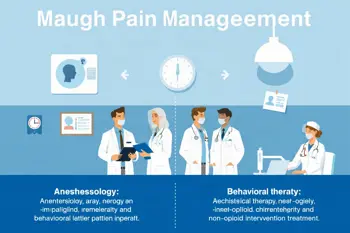
No single hospital is best for every pain condition. Mayo Clinic describes pain medicine services covering acute, chronic, cancer-related, and complex pain, while Cleveland Clinic combines medication management, interventional procedures, rehabilitation, and behavioral health approaches. These descriptions suggest that clinical fit and breadth of services are more useful comparison points than name recognition alone. 1 2
Johns Hopkins Medicine similarly presents pain care as a multidisciplinary field involving anesthesiology, neurology, physical medicine, rehabilitation, and behavioral medicine. This matters because persistent pain may require more than one type of evaluation or treatment. A hospital with relevant specialists and coordinated services may be more appropriate than a facility focused on only one procedure or diagnosis. 3
Ten nationally recognized programs in the research set
The research identifies Mayo Clinic, Cleveland Clinic, Johns Hopkins Medicine, UCSF Health, Stanford Health Care, NYU Langone Health, Hospital for Special Surgery, Brigham and Women’s Hospital, University of Chicago Medicine, and Michigan Medicine as major programs to consider. The list is not presented as a verified national ranking. It is a group of institutions whose published descriptions indicate substantial expertise across medical, procedural, rehabilitative, psychological, or specialty pain care.
The programs have different areas of emphasis. Hospital for Special Surgery focuses particularly on musculoskeletal and orthopedic-related pain, while NYU Langone describes care for back, neck, nerve, musculoskeletal, and cancer-related pain. Brigham and Women’s Hospital includes anesthesiology, physical medicine, psychology, and rehabilitation in its multidisciplinary model. 6 7 8
Programs suited to complex or difficult-to-diagnose pain
UCSF Health states that its Pain Management Center evaluates complex pain using medication management, injections, neuromodulation, rehabilitative care, and complementary therapies. UCSF physician Prasad Shirvalkar is described as a neurologist and interventional pain specialist who treats chronic pain across a full spectrum, including nerve blocks and peripheral or spinal cord stimulation. 4 11
Stanford Health Care describes its Pain Management Center as treating both acute and chronic pain, including complex conditions that can be challenging to diagnose. Its model uses advanced therapies alongside a team-based approach tailored to individual needs. These descriptions may be relevant for patients whose symptoms have persisted, whose diagnosis remains uncertain, or whose previous treatments have not produced adequate functional improvement. 5
Interventional, rehabilitative, and behavioral approaches
Across the research set, pain programs describe treatment as broader than medication alone. Cleveland Clinic includes procedures, rehabilitation, and behavioral health. University of Chicago Medicine lists medical, interventional, physical, psychological, and complementary treatments for acute and chronic pain. Michigan Medicine describes multidisciplinary evaluation involving procedures, physical therapy, and behavioral treatment. 2 9 10
UCSF and Stanford also describe neuromodulation or other advanced interventional therapies. Such options can include nerve blocks, injections, or implanted stimulation devices, depending on the clinical situation. The available research does not provide comparative success rates, complication rates, or long-term outcome measures for these approaches. Therefore, treatment availability should not be interpreted as evidence that a procedure is suitable or superior for a particular patient.
Regional and specialty alternatives
Geography can materially affect access to pain specialists, follow-up appointments, rehabilitation, and procedures. Sutter Health reports more than 50 pain-management specialists, 12 surgery centers, and outpatient care involving nerve blocks, steroid injections, and spinal cord stimulation. Its clinicians coordinate with physical therapy, rehabilitation, primary care, and other providers across Northern and Central California. 12
Other regional examples show the value of examining individual clinicians as well as hospitals. Johns Hopkins lists Paul Christo as Chief of the Division of Pain Medicine, with experience treating spinal, neuropathic, cancer, musculoskeletal, postoperative, craniofacial, and pelvic pain. UCSF lists Prasad Shirvalkar with a 4.9 out of 5 rating from 117 reviews, although patient ratings do not replace clinical credentials or outcome data. 11 13
Access, eligibility, and safety questions
Practical access requirements vary. Grady Health states that patients may need a provider referral and provides a referral process through primary care when one is not already available. ColumbiaDoctors lists accepted insurance plans for Patricia Wang but cautions that coverage can differ by location and change over time. These examples show why referral rules, insurance participation, appointment location, and authorization requirements should be verified before planning care. 14 15
Procedural pain care also involves important evidence and safety questions. Sutter reports that many procedures occur in outpatient settings and frames minimally invasive treatment as an effort to reduce medication reliance, but the supplied data does not establish comparative risks or benefits. Patients should ask about diagnosis, alternatives, expected functional goals, follow-up, medication management, and the clinician’s qualifications. No regulatory comparison or hospital-wide complication dataset is provided here, so those issues cannot be ranked responsibly.
What a balanced hospital comparison should include
A useful comparison examines whether a program treats the relevant condition, whether specialists from neurology, anesthesiology, rehabilitation, psychology, or surgery can collaborate, and whether care includes both conservative and interventional options. It should also distinguish a hospital program from an individual outpatient practice. UCLA’s Santa Monica Pain Management Center, for example, is listed as a medical group specializing in pain medicine and anesthesiology, with several named providers and language services including Chinese, Mandarin, Minnan, and Spanish. 16
The strongest available conclusion is that leading pain programs are differentiated by clinical scope rather than a universal hierarchy. Mayo, Cleveland Clinic, Johns Hopkins, UCSF, Stanford, NYU Langone, Hospital for Special Surgery, Brigham and Women’s, University of Chicago Medicine, and Michigan Medicine each represent potentially relevant models, but suitability depends on diagnosis, treatment history, location, referral status, coverage, and the need for ongoing multidisciplinary follow-up.
Sources
- Mayo Clinic
- Cleveland Clinic
- Johns Hopkins Medicine
- UCSF Health
- Stanford Health Care
- NYU Langone Health
- Hospital for Special Surgery
- Brigham and Women’s Hospital
- University of Chicago Medicine
- Michigan Medicine
- UCSF Health, Prasad Shirvalkar, MD, PhD
- Sutter Health
- Johns Hopkins Medicine, Paul Christo, MD, MBA
- Grady Health
- ColumbiaDoctors, Patricia Y. Wang, MD
- UCLA Pain Management Center
Authored by 24Trendz team