Best sciatica pain doctors in the United States
For the millions of Americans searching for the best sciatica pain doctors in the United States, the landscape of qualified specialists spans multiple disciplines, from interventional pain medicine and physical medicine and rehabilitation to neurosurgery and orthopedic spine surgery. Sciatica, clinically described as lumbar radiculopathy, is not a standalone diagnosis but a symptom of underlying nerve compression, meaning the quality of care depends heavily on identifying the precise structural cause before treatment begins. 1
Understanding Sciatica and Why Specialist Selection Matters
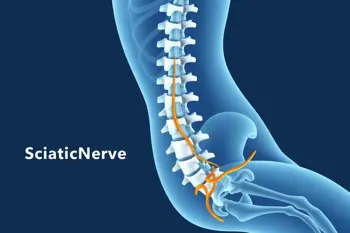
Sciatica describes pain radiating along the sciatic nerve, which originates in the lower back, travels through the hips and buttocks, and branches down each leg. The sciatic nerve is considered the largest nerve in the body, with a diameter of up to 2 cm. 2 Common causes include herniated discs, spinal stenosis, and bone spurs compressing nerve roots at lumbar vertebral levels. Symptoms range from mild burning and tingling to severe weakness in the leg, and in rare cases, the condition may present as part of Cauda Equina Syndrome, a medical emergency involving numbness in the saddle area and loss of bladder or bowel control. 3
Sciatica is more common in people between the ages of 20 and 60, and a sedentary lifestyle, obesity, and diabetes can increase the risk of developing this condition. 4 Research consistently shows that approximately 80% of acute sciatica cases improve with conservative care within 6 to 12 weeks, which means specialist selection is especially critical for patients whose pain persists beyond that window. 5 The right type of doctor depends on severity, duration, and whether surgical evaluation is warranted.
Top Academic Medical Centers for Sciatica Care
Several major academic institutions are consistently cited as national leaders in spine and nerve pain care. The Hospital for Special Surgery in New York City is ranked by U.S. News and World Report as the nation's leading hospital for orthopedic conditions, including spine care. 6 Mayo Clinic, with campuses in Rochester, Minnesota, Phoenix and Scottsdale, Arizona, and Jacksonville, Florida, offers multidisciplinary pain management clinics integrating surgical and non-surgical approaches to sciatica, and its department houses physicians trained across dozens of relevant specialties. 7
Cleveland Clinic's Spine Health Center provides specialized, coordinated care for lumbar radiculopathy, with a focus on both conservative treatments and advanced surgical interventions. 8 The UCSF Spine Center in San Francisco, co-directed by Dr. Christopher P. Ames and Dr. Praveen V. Mummaneni, is another nationally prominent program. Dr. Mummaneni has been selected by U.S. News and World Report as one of the best doctors in the nation every year since 2005. 9 Johns Hopkins Hospital maintains a renowned Department of Neurosurgery specializing in complex spinal cord and nerve root decompression. 10
Notable Sciatica Pain Specialists Across the Country
The research data identifies several highly credentialed practitioners operating across the United States. At UCSF Health, Dr. Nu Cindy Chai, MD, is a neurologist and pain medicine physician rated 4.9 out of 5 across 256 reviews, with published research specifically focused on lumbar radiculopathy and neuropathic pain treatments. 11 Also at UCSF, Dr. Jang Won Yoon, MD, directs the minimally invasive spine surgery program and leads AI-driven research applying smartphone-tracked motion patterns to predict surgical outcomes. 12
At Cleveland Clinic in Ohio, Dr. Michael Steinmetz, MD, serves as Chairman of the Department of Neurosurgery, holds board certification from the American Board of Neurological Surgery, and has published more than 145 articles in peer-reviewed journals covering complex spine surgery and minimally invasive techniques, earning a rating of 4.9 from 224 patients. 13 At Cleveland Clinic Florida in Weston, Dr. Hoon Choi, MD, PhD, serves as Director of Spine Surgery and brings a unique surgeon-engineer background including over 100 peer-reviewed publications and expertise in robotic spine surgery, with a patient rating of 4.8 from 180 reviews. 14
Interventional Pain Specialists and Non-Surgical Leaders
For patients seeking non-surgical pathways, interventional pain medicine physicians are often the most appropriate first specialist. Dr. Mayank Gupta, MD, President and CEO of Kansas Pain Management, is a board-certified interventional pain physician who has received the Castle Connolly Top Doctor designation every year from 2015 through 2026. He has authored over 100 scientific publications, serves as Director-at-Large for the American Society of Interventional Pain Physicians, and holds an adjunct faculty position at Kansas City University. 15
Dr. Suneetha Budampati, MD, at National Spine and Pain Centers in Arlington, Virginia, is board certified in both Interventional Pain Medicine and Physical Medicine and Rehabilitation, with clinical interests specifically including sciatica, herniated disc, spinal stenosis, and epidural steroid injection therapy, earning a rating of 4.8 out of 5 from 43 patients. 16 A 2025 meta-analysis of 72 randomized controlled trials involving 7,701 patients confirmed that transforaminal epidural steroid injections provide meaningful relief for sciatica caused by disc herniation, with effects lasting up to 12 months in many patients. 17
Regional Specialists Worth Noting by Geography
Geographic distribution of top sciatica specialists is broad. In Atlanta, Dr. Tim Yoon, MD, PhD, at Emory Healthcare, is an internationally recognized spine surgeon who has received the Harry Farfan Award from the North American Spine Society and the ISSLS Prize twice from the International Society for the Study of the Lumbar Spine, with a patient rating of 4.88 from 813 reviews. 18 At the University of Virginia in Charlottesville, Dr. Chun-Po Yen, MD, in Neurosurgery-Spine, holds a rating of 4.8 from 621 patients and has completed dual residency training and a minimally invasive spine fellowship, co-authoring over 100 scholarly publications. 19
In Sonora and Modesto, California, Dr. Anh Xuan Le, MD, at Adventist Health and the Northern California Spine Institute, is a board-certified, fellowship-trained orthopedic spine surgeon with a 4.9 rating from 417 reviews. He serves as assistant clinical professor of orthopedic surgery at UC Davis School of Medicine and focuses on guiding patients through both non-surgical and surgical options. 20 In Grand Junction, Colorado, Dr. Basheal Agrawal, MD, certified by the American Board of Neurological Surgeons and trained through a dual fellowship at Cleveland Clinic, holds a near-perfect patient rating of 4.99 from 99 reviews at Intermountain Health. 21
How to Evaluate and Choose a Sciatica Specialist
Patients are generally advised to seek board-certified specialists affiliated with major academic medical centers for the highest standard of evidence-based sciatica treatment. 22 The type of physician matters: physiatrists focus on rehabilitation and non-surgical management, interventional pain specialists perform image-guided procedures such as epidural injections and nerve blocks, and neurosurgeons or orthopedic spine surgeons are appropriate when structural compression requires surgical correction. Many top-tier programs use a stepped approach, prioritizing physical therapy and epidural steroid injections before considering surgical options like microdiscectomy. 23
Patients should verify board certifications through the American Board of Medical Specialties, confirm that the physician accepts relevant insurance plans before scheduling, and consider whether telehealth consultation is available for initial evaluation. Several of the UCSF and Emory physicians profiled in this report offer telehealth visits, which can facilitate earlier access to expert opinion. Important caution: not all presentations of sciatica require the same level of specialist intervention, and the risks of invasive procedures including infection, nerve injury, and failed back surgery syndrome are real considerations that should be discussed with any treating physician before advancing to procedural or surgical care.
Sources
- SEVA Healthcare - sevahealthcare.com
- Pain Physicians NY - painfreenyc.com
- Jonathan R. Stieber, MD - stiebermd.com
- Pain Management NYC - painmanagementnyc.com
- SEVA Healthcare - sevahealthcare.com
- U.S. News and World Report - health.usnews.com
- Mayo Clinic - mayoclinic.org
- Cleveland Clinic - my.clevelandclinic.org
- UCSF Health - ucsfhealth.org
- Johns Hopkins Medicine - hopkinsmedicine.org
- UCSF Health - ucsfhealth.org
- UCSF Health - ucsfhealth.org
- Cleveland Clinic - providers.clevelandclinic.org
- Cleveland Clinic Florida - providers-florida.clevelandclinic.org
- Dr. Mayank Gupta MD - mayankguptamd.com
- National Spine and Pain Centers - treatingpain.com
- SEVA Healthcare - sevahealthcare.com
- Emory Healthcare - providers.emoryhealthcare.org
- UVA Health - uvahealth.com
- Adventist Health - doctors.adventisthealth.org
- Intermountain Health - doctors.intermountainhealth.org
- Spine-health - spine-health.com
- Pain Specialists of America - psadocs.com
Authored by 24Trendz team