Warning Signs of Crohn’s Disease: Clinical Context and When Symptoms Need Attention
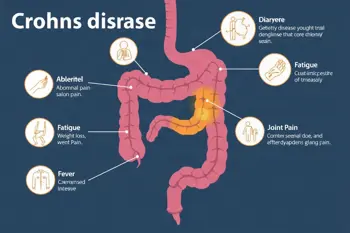
Warning signs of Crohn’s disease may include persistent diarrhea, recurring abdominal pain, unintended weight loss, fatigue, fever, blood in the stool, and symptoms outside the digestive tract. Because Crohn’s disease can develop gradually and can resemble other conditions, the pattern, duration, and combination of symptoms matter more than any single complaint. 1
Digestive symptoms that may signal Crohn’s disease
The most frequently reported symptoms are diarrhea, cramping or pain in the abdomen, and weight loss. Crohn’s disease can affect any part of the digestive tract, although the small intestine and the beginning of the large intestine are common sites. Symptoms may vary according to the location and severity of inflammation, so one person may have mainly loose stools while another experiences pain, reduced appetite, nausea, or vomiting. 1
Blood in the stool, constipation, bloating, a feeling of fullness, or incomplete bowel movements can also occur. Blood may reflect inflammation or ulceration in the intestinal lining, while narrowing caused by long-term inflammation and scarring can contribute to obstructive symptoms. These findings are not specific to Crohn’s disease, but recurring or persistent symptoms warrant clinical assessment rather than being assumed to be a temporary stomach illness. 23
Weight loss, fatigue, fever, and anemia
Unintentional weight loss is an important warning sign because it may accompany reduced appetite, intestinal inflammation, or impaired absorption of nutrients. Fatigue can occur with active inflammation, anemia, or inadequate nutrition. NIDDK lists anemia and tiredness among possible symptoms, while clinical references also identify fever, appetite loss, nausea, and vomiting as manifestations that may accompany intestinal disease. 13
These general symptoms become more concerning when they continue alongside diarrhea or abdominal pain. Crohn’s disease often begins gradually, and periods of symptoms may alternate with remission, when symptoms disappear for weeks or years. A symptom-free interval therefore does not establish that inflammation has resolved or exclude the need for medical evaluation. 4
Symptoms beyond the digestive tract
Crohn’s disease may produce symptoms outside the intestine. Possible findings include joint pain or soreness, eye redness or pain, mouth sores, and skin changes such as red, tender bumps under the skin. These extraintestinal manifestations can appear with or without prominent digestive symptoms, making the overall pattern important when a person is being assessed for inflammatory bowel disease. 12
Joint or muscle pain, skin rashes, and eye inflammation are not unique to Crohn’s disease and can have many other causes. However, their occurrence with recurring diarrhea, abdominal cramping, weight loss, fever, or fatigue provides clinically relevant context. Reporting symptoms from different body systems can help a clinician determine whether a broader inflammatory condition should be considered. 12
Warning signs in children and adolescents
Children with Crohn’s disease may show digestive symptoms such as persistent diarrhea, abdominal pain, poor appetite, and weight loss. Growth-related changes can also be important indicators. Johns Hopkins identifies delayed growth or puberty as possible symptoms, while inadequate weight gain may signal that inflammation or poor absorption is affecting development. 2
Growth concerns may be overlooked if a child does not describe severe pain. A pattern of recurring bowel symptoms, fatigue, reduced appetite, or slowed physical development deserves discussion with a qualified clinician. Crohn’s disease can occur at any age, although it is commonly diagnosed in older children, teenagers, and young adults, particularly between ages 15 and 35. 24
Perianal symptoms and possible complications
Inflammation can affect tissue around the anus and may cause pain, swelling, fissures, drainage, or fistulas. A fistula is an abnormal tunnel that can form through the intestinal wall or to nearby skin. Perianal pain or drainage should not be dismissed, particularly when it occurs with diarrhea, abdominal pain, fever, or a known history of inflammatory bowel disease. 3
More serious complications can include abscesses, bowel narrowing, obstruction, and penetrating inflammation. Severe abdominal pain, persistent vomiting, marked abdominal swelling, heavy rectal bleeding, or inability to pass stool or gas may indicate a complication requiring urgent medical evaluation. These symptoms do not prove Crohn’s disease, but their potential severity makes prompt assessment important. 3
How Crohn’s disease is evaluated
There is no single test that confirms Crohn’s disease. Symptoms can resemble irritable bowel syndrome, infections, and other digestive disorders, and weight loss, fatigue, or abdominal pain alone do not identify a specific cause. Evaluation may involve a medical history, physical examination, blood or stool testing, endoscopy, biopsy, and imaging, depending on the suspected location and severity of inflammation. 35
Colonoscopy, video capsule endoscopy, and cross-sectional imaging such as computed tomography or magnetic resonance imaging are among the diagnostic approaches described for Crohn’s disease. Diagnosis is based on the combined clinical, endoscopic, histopathologic, and imaging picture. Because Crohn’s disease may progress gradually, documenting symptom frequency, bleeding, weight changes, fever, and symptoms outside the gut can provide useful information during evaluation. 36
Sources
- National Institute of Diabetes and Digestive and Kidney Diseases, Symptoms & Causes of Crohn’s Disease
- Johns Hopkins Medicine, Crohn’s Disease
- Merck Manual Consumer Version, Crohn Disease
- National Institute of Diabetes and Digestive and Kidney Diseases, Definition & Facts for Crohn’s Disease
- AARP, Don’t Ignore These 10 Warning Signs of Crohn’s Disease
- NCBI Bookshelf, StatPearls: Crohn Disease
Authored by 24Trendz team