home recovery for microneedling: A Clinical Aftercare Timeline
Home recovery for microneedling usually involves temporary redness, warmth, tightness, dryness, and sensitivity similar to a mild sunburn. The central aftercare principle is simple: keep freshly treated skin clean and hydrated, protect it from ultraviolet exposure, and avoid ingredients or activities that can intensify irritation while the barrier repairs. Recovery varies with needle depth, treatment area, and whether the procedure was performed at home or in a clinic, so provider-specific instructions take priority. 1
What happens during recovery
Microneedling creates controlled micro-injuries and temporary microchannels in the skin. These channels increase permeability for a limited period, meaning products may penetrate more readily than they normally would. The channels begin resealing within roughly 30 minutes and largely close within several hours when the skin is left unoccluded, although the surface barrier may remain sensitive for longer. The wound-healing response continues after visible redness fades, with collagen and elastin changes developing over approximately four to six weeks or longer. 1
Common short-term effects are not necessarily complications. Clinical recovery guidance describes a red or sunburn-like appearance for one to three days, tightness and mild swelling for up to five days, and light flaking or roughness for as long as seven days. Many people return to work the same day or the next day, but visible recovery does not mean the skin is ready for every active product. 3
The first hours after treatment
The first several hours are generally the most sensitive part of home recovery. Hands should be kept away from the face unless they have been thoroughly washed, and any product used should be specifically compatible with post-treatment skin. A practitioner-provided serum or treatment instruction should take precedence over general advice. If the skin feels warm, a cool compress may provide comfort, while rubbing, scrubbing, or applying multiple unfamiliar products can increase irritation. 4
- Use gentle handling and avoid unnecessary touching. 4
- Do not apply makeup during the immediate recovery window. 5
- Use a simple, fragrance-free hydrating product when permitted by the treatment instructions. 2
- If a plasma, growth-factor, or other clinician-directed treatment was applied, follow the specific washing instructions rather than a general schedule. 4
Days one through three
During the first 24 to 72 hours, the routine should remain deliberately limited. A gentle, non-exfoliating cleanser used with lukewarm water can remove surface residue without adding thermal or mechanical stress. A basic moisturizer and a hydrating serum containing hyaluronic acid are commonly recommended to support comfort and reduce the effects of increased water loss. Broad-spectrum SPF 30 or higher is important in the morning, particularly when outdoor exposure cannot be avoided. 1
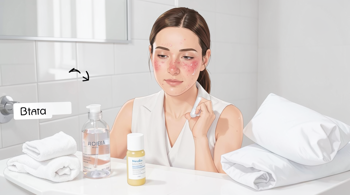
Redness commonly begins to subside within 24 to 48 hours, although tightness, dryness, and mild flaking may persist. Flaking skin should not be picked or physically exfoliated. Makeup is generally postponed for at least 24 hours, and some clinical protocols recommend 24 to 48 hours, because cosmetics can add ingredients and contact to a temporarily compromised barrier. 4 3
When to resume active skincare
Retinoids, exfoliating acids such as AHAs and BHAs, benzoyl peroxide, strong vitamin C formulas, fragrance, essential oils, and high-concentration irritants are commonly paused after microneedling. Supplied dermatology guidance places vitamin C reintroduction at about 48 hours and retinoids and exfoliating acids at 72 hours, while clinic protocols may recommend waiting five to seven days. The safer schedule depends on whether redness, stinging, peeling, or sensitivity remains present. 1 4
- First phase: gentle cleanser, uncomplicated hydration, and barrier-supporting moisturizer. 2
- Reintroduction phase: resume one active at a time only after visible irritation has settled. 3
- Delay physical scrubs and other exfoliating methods until the skin is fully comfortable. 5
Sun, exercise, and hygiene restrictions
Direct sun exposure is discouraged for at least 48 to 72 hours, followed by consistent broad-spectrum sunscreen use. Mineral sunscreen is preferred by some post-treatment protocols because it may be more tolerable on reactive skin. Exercise, sweating, saunas, hot tubs, swimming pools, and chlorine exposure are also commonly restricted for 24 to 48 hours, with some clinical guidance extending restrictions on sweating, sauna use, and chlorine to three to five days. 4 6
Hygiene is a central risk-control issue for at-home procedures. The device, hands, treatment area, and products must be clean because punctured skin offers a route for bacteria to enter. A clean pillowcase reduces avoidable contact during sleep, and shared towels, unclean devices, and unnecessary touching create additional contamination opportunities. These precautions do not eliminate every complication, but they address preventable sources of irritation and infection. 5 9
Normal symptoms, risks, and medical review
Expected recovery generally becomes less intense rather than progressively worse. Redness that spreads, increasing pain, marked swelling, unusual heat, blisters, yellow crusting, or other signs suggestive of infection fall outside the usual mild recovery pattern. A person who develops these findings should contact the treating clinic or a qualified medical professional promptly. At-home microneedling also carries hygiene and technique risks, so deeper treatments, persistent symptoms, or uncertainty about product timing warrant professional guidance rather than additional experimentation. 3 5
Results should be judged over weeks rather than immediately after treatment. The initial inflammatory response is separate from the longer remodeling phase, during which changes in texture, firmness, scars, fine lines, and uneven tone may gradually become visible. Recovery instructions can differ between cosmetic rollers, motorized pens, clinical microneedling, and sessions involving PRP or other materials. The treating professional's written protocol therefore remains the controlling reference when it conflicts with a general aftercare timeline. 1 7
Sources
- EvenSkyn, “What To Use After Microneedling at Home: A Derm's Guide”
- Banish, “What to Use After Microneedling at Home”
- Dr Hass Clinic, “Microneedling: Recovery and Aftercare”
- Express Med Spa, “Microneedling Aftercare: A Day-by-Day Guide”
- Pure Derma London, “Microneedling Aftercare and Hygiene”
- AesteticAdvice, “Microneedling Aftercare”
- SeoulCeuticals, “Microneedling Aftercare: The Day-by-Day Skincare Guide”
- American Academy of Dermatology, microneedling public guidance
- Cosmopolitan, microneedling aftercare guidance
Authored by 24Trendz team