Warning signs of vaginal cancer: Clinical context and recognition guidance
Warning signs of vaginal cancer include unusual vaginal bleeding, abnormal discharge, a vaginal lump, pelvic pain, and pain during sexual intercourse. These symptoms can also result from infections, hormonal changes, irritation, or other noncancerous conditions, so they cannot establish a diagnosis by themselves. Persistent or unexplained changes should be assessed by a qualified healthcare professional.
Why early symptoms can be difficult to recognize
Primary vaginal cancer begins in the vagina and is rare. More commonly, cancer found in the vagina has spread from another site, such as the cervix, and is classified according to where it began. The main primary types are squamous cell carcinoma, which develops in the surface lining, and adenocarcinoma, which develops in glandular tissue. Squamous cell carcinoma usually affects older adults and often develops slowly, while adenocarcinoma is less common overall.
Early vaginal cancer may cause no noticeable symptoms, which means the absence of symptoms does not exclude the disease. When symptoms occur, they may resemble common problems such as vaginal infection, dryness, irritation, or benign growths. This overlap can make changes easy to dismiss, particularly when bleeding or discharge is light. The National Cancer Institute and other clinical sources emphasize that abnormal bleeding, discharge, a lump, pelvic pain, urinary symptoms, and constipation can all warrant medical evaluation.
Unusual vaginal bleeding
Unexpected bleeding is one of the most important warning signs. It may occur between menstrual periods, after sexual intercourse, after a pelvic examination, or after menopause. Bleeding can range from light spotting to a more obvious flow, and it may occur with or without pain. Postmenopausal bleeding is not considered a normal menstrual change and should be discussed with a clinician, even when the amount is small.
Bleeding does not mean that cancer is present. Fibroids, cervical changes, infections, vaginal dryness, hormonal causes, and other conditions can produce similar symptoms. However, the pattern, timing, duration, and recurrence are clinically relevant. A healthcare professional may need to examine the vagina, cervix, and surrounding pelvic tissues to determine whether the source is vaginal, cervical, uterine, or related to another condition.
Changes in vaginal discharge
A new, persistent, watery, bloody, or foul-smelling discharge can be another warning sign. Discharge may be particularly concerning when it occurs together with spotting, pelvic discomfort, a lump, or pain during sex. The appearance or odor of discharge alone cannot distinguish cancer from infection or inflammation, because several gynecologic conditions can cause overlapping changes.
Clinical guidance from cancer organizations identifies abnormal discharge as a symptom that should be evaluated when it is unusual for the individual, continues, or has no clear explanation. Information about color, consistency, odor, quantity, and timing can help a clinician assess possible causes. Self-diagnosis based only on discharge characteristics is unreliable, and persistent symptoms should not be attributed automatically to aging, menopause, or a minor infection.
Lumps, sores, or abnormal tissue
A lump, mass, swelling, raised area, or feeling of fullness inside the vagina may be detected during washing, insertion of a tampon, sexual activity, or a medical examination. A sore that does not heal or an area that appears persistently irritated may also require assessment. Visible changes are not always present, and vaginal cancer cannot be reliably identified by appearance alone.
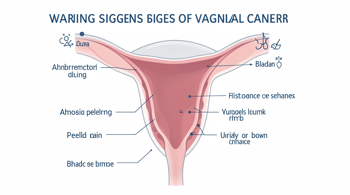
Many vaginal masses are not cancerous, and a lump can have causes unrelated to malignancy. Nevertheless, a new growth, persistent swelling, or unexplained sore should be examined rather than monitored indefinitely without medical advice. Professional assessment may include a pelvic examination and, when an abnormal area is identified, a biopsy to determine whether abnormal cells are present.
Pain and pressure symptoms
Pelvic pain, vaginal pain, pressure, or pain during sexual intercourse can occur with vaginal cancer. These symptoms may reflect the location of a lesion or involvement of nearby tissues, but they are nonspecific and are also associated with infections, inflammation, pelvic-floor disorders, dryness, and other gynecologic conditions. Pain that is new, persistent, worsening, or associated with bleeding or a mass deserves clinical attention.
Some people describe discomfort as deep pelvic pressure, pain at the vaginal opening, or pain during penetration. The timing and character of pain can help distinguish possible causes, although symptoms alone are not diagnostic. A clinician may ask about menstrual and menopausal status, sexual activity, discharge, prior gynecologic disease, and any history of abnormal screening results before deciding whether further testing is appropriate.
Urinary and bowel changes
Vaginal cancer can cause painful urination or difficulty urinating when a tumor affects nearby urinary structures. Constipation or painful bowel movements can occur if a tumor presses on the rectum or adjacent tissues. These symptoms are not specific to vaginal cancer and are more often associated with other urinary, gastrointestinal, pelvic, or medication-related causes.
Urinary or bowel symptoms become more important to report when they occur alongside bleeding, discharge, pelvic pain, or a vaginal mass. Medical evaluation may involve examination and imaging when clinically indicated, followed by biopsy if an abnormal area requires confirmation. Diagnosis depends on tissue findings, cancer type, location, and extent of disease, rather than on a symptom checklist alone.
When professional assessment is appropriate
Medical advice is appropriate for bleeding after menopause, bleeding after sex, repeated bleeding outside expected menstruation, unexplained watery or bloody discharge, a new vaginal lump, a persistent sore, pelvic pain, painful intercourse, painful urination, or new constipation. Because vaginal cancer is uncommon, these symptoms are more likely to have another explanation, but rarity should not be used to dismiss persistent or unusual changes.
Evaluation commonly begins with a clinical history and pelvic examination. Depending on findings, clinicians may use imaging and biopsy to establish the cause. Early detection can improve treatment outcomes, but routine cervical screening does not diagnose every vaginal abnormality, and an individual should report symptoms even if recent screening was normal. HPV vaccination, recommended cervical screening, and avoiding smoking may help reduce risk, although they do not eliminate the possibility of vaginal cancer.
Sources
- Harvard Health, Vaginal Cancer: https://www.health.harvard.edu/a_to_z/vaginal-cancer-a-to-z
- ColumbiaDoctors, Vaginal Cancer: Symptoms & Treatment: https://www.columbiadoctors.org/specialties/obstetrics-gynecology/our-services/gynecologic-cancer-care/conditions-we-treat/vaginal-cancer
- Jean Hailes, Vaginal cancer: https://www.jeanhailes.org.au/health-topics/gynaecological-cancers-jean-hailes/vaginal-cancer/
- Acibadem International, Vaginal Cancer: Signs, Diagnosis, And Care: https://acibademinternational.com/health-library/vaginal-cancer-what-is-normal-what-is-not-and-when-to-seek-care/
- Acibadem International, What Does Vaginal Cancer Look Like?: https://acibademinternational.com/health-library/what-does-vaginal-cancer-look-like-causes-explanations-and-next-steps/
- National Cancer Institute, Vaginal Cancer Treatment: https://www.cancer.gov/types/vaginal/patient/vaginal-treatment-pdq
- American Cancer Society, Signs and Symptoms of Vaginal Cancer: https://www.cancer.org/cancer/types/vaginal-cancer/detection-diagnosis-staging/signs-symptoms.html
- Centers for Disease Control and Prevention, Symptoms of Vaginal Cancer: https://www.cdc.gov/gynecologic-cancer/vaginal-cancer/symptoms.html
- Mayo Clinic, Vaginal Cancer: Symptoms and Causes: https://www.mayoclinic.org/diseases-conditions/vaginal-cancer/symptoms-causes/syc-20377249
- NHS, Vaginal cancer symptoms: https://www.nhs.uk/conditions/vaginal-cancer/symptoms/
Authored by 24Trendz team