Natural remedies for blood sugar management: Evidence, limits, and safety considerations
Natural remedies for blood sugar management range from everyday dietary practices to concentrated herbal supplements. Current research suggests that some approaches may modestly improve glucose measures, but none has been proven to cure diabetes or replace monitoring and prescribed treatment.
What the evidence says about herbal remedies
An umbrella review published in 2025 assessed eight meta-analyses and two systematic reviews of herbal medicines for type 2 diabetes. Ginger, turmeric, and Jinlida granules significantly reduced HbA1c compared with placebo, with reported mean differences of 0.467%, 0.486%, and 0.283%, respectively. The review rated the evidence for these findings as moderate to high certainty, while evidence for Berberis vulgaris, Gegen Qinlian decoction, and pycnogenol was described as very low certainty. 1
The same review reported that several herbs, including ginger, turmeric, cardamom, and Berberis vulgaris, were studied for insulin resistance and related metabolic outcomes. However, the existence of a statistically significant result does not establish that a preparation is suitable for every person, because studies differ in dose, formulation, duration, participant health status, and background medication. Herbal products also vary in concentration and manufacturing quality. 1
Ginger, turmeric, and cinnamon
Ginger has shown potential in clinical research involving people with type 2 diabetes. A systematic review reported improvements in fasting blood glucose, HbA1c, LDL cholesterol, and antioxidant status in some studies. Ginger was also among the herbs associated with a significant HbA1c reduction in the 2025 umbrella review. These findings support further evaluation, but they do not establish ginger as a substitute for diabetes medication or a standardized treatment. 13
Curcumin and turmeric have produced more consistent signals in newer pooled analyses, although important variation remains. A 2026 dose-response meta-analysis of 34 randomized controlled trials found reductions in fasting blood glucose, HbA1c, fasting insulin, HOMA-IR, and oral glucose tolerance test results. The analysis reported an HbA1c difference of 0.32 percentage points and noted that dosage, formulation, and whether participants had prediabetes or type 2 diabetes modified results. 6
Cinnamon is widely discussed for blood sugar management, but the evidence is mixed. A systematic review found that cinnamon, fenugreek, ginger, and saffron may improve selected glucose or lipid measures, while other studies reported limited glycaemic effects. Cinnamon can therefore be considered a culinary spice rather than a reliably effective therapy. Concentrated supplements should be assessed separately from normal food use because product composition and exposure can differ. 37
Bitter melon and other botanicals
Bitter melon, also known as Momordica charantia, has been investigated because its compounds may influence glucose uptake and insulin-related pathways. A 2025 GRADE-adherent meta-analysis included 25 trials and 34 sub-studies involving people with prediabetes or type 2 diabetes. It found significant reductions in fasting blood glucose, HbA1c, insulin, and HOMA-IR, but no significant effect on HOMA-beta, a measure related to pancreatic beta-cell function. 4
Other botanicals remain less established. A review described potential antidiabetic properties for plants such as fenugreek, saffron, Moringa oleifera, garlic, neem, mango leaf, and jamun seed, but it combined laboratory, animal, traditional, and clinical evidence. A systematic review also described fenugreek as producing modest glucose reductions with more noticeable effects on lipids, while findings for Moringa were mixed. These differences make broad claims about medicinal plants unreliable. 23
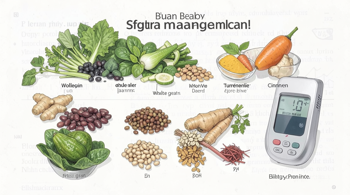
Food-based and lifestyle approaches
Natural blood sugar management is not limited to supplements. Research summaries identify fiber-rich foods, including vegetables, legumes, whole grains, nuts, and seeds, as useful for moderating the rise in glucose after meals. Replacing sugary drinks and refined carbohydrates with minimally processed carbohydrate sources is another practical dietary strategy. Weight loss, when appropriate for someone with overweight or obesity, can also improve blood glucose and insulin sensitivity in type 2 diabetes. 5
Physical activity, adequate sleep, and stress management are also components of diabetes self-management. Adults with diabetes are generally advised to work toward 150 minutes of moderate-intensity aerobic activity each week when medically appropriate. Activity can lower blood glucose and improve insulin sensitivity, but people using insulin or medicines that increase insulin release may need professional guidance because exercise can contribute to hypoglycaemia. 5
Emerging plant-based interventions
Some recent trials have examined standardized plant combinations rather than single herbs. A multicenter randomized controlled trial evaluated Totum-63, a polyphenol-rich blend of plant extracts, in people with prediabetes or early-stage type 2 diabetes. After six months, fasting plasma glucose was reduced compared with placebo by 3.8 mg/dL in the three-times-daily group and 5.5 mg/dL in the twice-daily group. The study was funded by the product manufacturer, an important consideration when interpreting results. 9
Gynostemma pentaphyllum has also been assessed in a meta-analysis of eight studies involving 584 patients. The reported pooled results showed reductions in fasting plasma glucose and HbA1c, although the available summary does not establish whether the evidence is sufficient for routine clinical use. A randomized trial of a specific carob liquid concentrate in people with prediabetes is another example of research into food-derived preparations. Such findings remain investigational until replicated across independent, high-quality studies. 810
Safety, interactions, and realistic expectations
No herbal or dietary supplement has been proven to cure diabetes. Supplements marketed as natural diabetes treatments may contain undeclared ingredients, inaccurate amounts, or contaminants. Products can also interact with glucose-lowering medicines, and combining several glucose-lowering approaches may increase the risk of hypoglycaemia. People taking insulin or medicines capable of causing low blood sugar should consult a healthcare professional before major changes to diet, exercise, or supplement use. 7
Apple cider vinegar illustrates why evidence and safety must be considered together. Limited studies suggest it may modestly affect post-meal glucose, but concentrated vinegar can irritate the throat and damage tooth enamel. Chromium supplements have also produced inconsistent findings for glucose control. The most defensible approach is to treat herbs and supplements as possible adjuncts requiring clinical review, while continuing prescribed treatment, glucose monitoring, and follow-up assessment. 5
Sources
- BMC Complementary Medicine and Therapies, umbrella review of herbal medicines for type 2 diabetes: https://link.springer.com/article/10.1186/s12906-025-05059-7
- Clinical Phytoscience, review of medicinal plants in diabetes management: https://link.springer.com/article/10.1186/s40816-026-00418-4
- The Open Public Health Journal, systematic review of herbal supplements in type 2 diabetes: https://mail.openpublichealthjournal.com/VOLUME/19/ELOCATOR/e18749445441060/FULLTEXT/
- Metabolism Open, meta-analysis of Momordica charantia: https://doi.org/10.1016/j.metop.2025.100407
- Medical News Today, summary of foods and natural remedies related to diabetes: https://www.medicalnewstoday.com/articles/oatmeal-avocado-peppermint-oil-type-2-diabetes-recent-evidence-natural-remedies
- Food Science & Nutrition, curcumin and turmeric dose-response meta-analysis: https://doi.org/10.1002/fsn3.71748
- NKC Health, evidence review of natural remedies for diabetes: https://www.nkchealth.org/blog/natural-remedies-diabetes-do-herbs-really-help-blood-sugar
- Frontiers in Pharmacology, meta-analysis of Gynostemma pentaphyllum: https://doi.org/10.3389/fphar.2026.1731723
- Nature Communications, randomized trial of Totum-63: https://www.nature.com/articles/s41467-026-75626-0
- Nutrients, randomized trial of carob liquid concentrate: https://www.mdpi.com/2072-6643/18/10/1521
Authored by 24Trendz team